Elizabeth Comack - Böcker
Visar alla böcker från författaren Elizabeth Comack. Handla med fri frakt och snabb leverans.
9 produkter
9 produkter
240 kr
Tillfälligt slut
The tension between traditionalist legal theories that maintain that the law dispenses justice in an impartial fashion and critical theories that maintain that the law reproduces gender, race, and class inequalities provides a context for this investigation into law`s complicity in perpetuating disparities. Police reports, prosecuting lawyer reports, memos, interviews with defense lawyers, sentencing reports, and other primary sources from Canadian violent crime cases illustrate the prejudicial strategies used in litigation. Linguistic nuances that describe a neighborhood celebration as a "birthday party" or a "drinking binge" are among the ways stereotypes are perpetuated. This analysis raises questions about how the law can be applied to realize a more just society.
356 kr
Tillfälligt slut
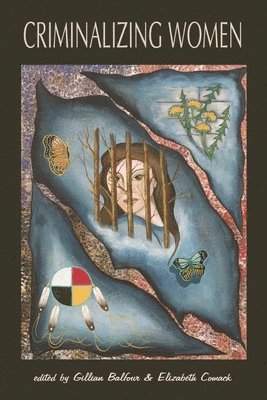
This reference focuses on the key issues addressed by feminists in their engagement with criminology over the past four decades. Exploring women`s lives as "errant females," this volume maps out the connections between the choices women make and their environment as linked to the wider socio-political context and considers feminist strategies used to address the conditions inside women`s prisons, defend criminalized women`s human rights, and draw attention to the systemic abuses against poor and racialized women.
356 kr
Tillfälligt slut
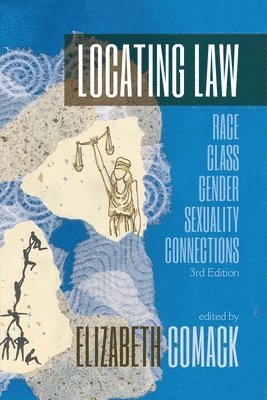
One primary concern within the study of law has been to understand the law/society relation. Underlying this concern is the belief that law has a distinctly social basis; it both shapes and is shaped by the society in which it operates. This book explores the law/society relation by locating law within the nexus of race/class/gender/sexuality relations in society. Recognizing that inequalities along these lines exist in society raises important questions: What role has law historically played in generating today's inequalities? Is law part of the problem or part of the solution? Can we use law as a strategy to achieve meaningful change? The essays in this new edition of Locating Law demonstrate law's role in a variety of specific contexts, including perpetuating colonialism in Canada, protecting corporations and holding women responsible for sexual violence against them. These analyses are sure to generate discussion and debate and, in the process, enhance our understanding of this important relation between law and society.
181 kr
Tillfälligt slut
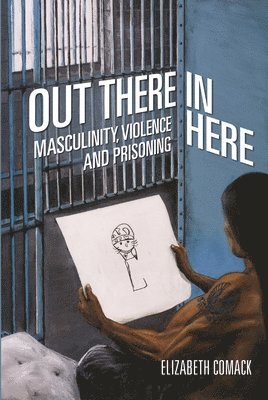
Moving between the spaces of the outside community and prison-"out there" and "in here"-this study explores the complicated connections between masculinity and violence in the lives of men incarcerated at a provincial prison. The discussion traces the men`s lives and highlights their understanding of their own violence, while looking at the ways in which prison perpetuates the violence inherent in dominant masculinity. By revealing the voices of the jailed men, this analysis is able to show that prison is a gendered space that is not a solution to the public`s concerns about crime and violence. Rather, it is a place in which masculine pressures encourage marginalized men to take part in aggression, dominance, and the exercise of brute power as legitimate social practices.
187 kr
Tillfälligt slut
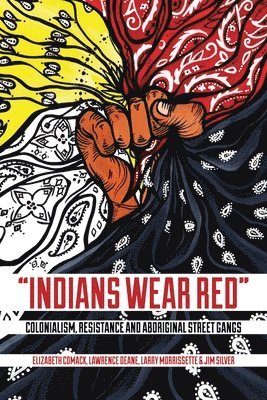
With the advent of Aboriginal street gangs such as Indian Posse, Manitoba Warriors, and Native Syndicate, Winnipeg garnered a reputation as the “gang capital of Canada.” Yet beyond the stereotypes of outsiders, little is known about these street gangs and the factors and conditions that have produced them. “Indians Wear Red” locates Aboriginal street gangs in the context of the racialized poverty that has become entrenched in the colonized space of Winnipeg’s North End. Drawing upon extensive interviews with Aboriginal street gang members as well as with Aboriginal women and elders, the authors develop an understanding from “inside” the inner city and through the voices of Aboriginal people – especially street gang members themselves.While economic restructuring and neo-liberal state responses can account for the global proliferation of street gangs, the authors argue that colonialism is a crucial factor in the Canadian context, particularly in western Canadian urban centres. Young Aboriginal people have resisted their social and economic exclusion by acting collectively as “Indians.” But just as colonialism is destructive, so too are street gang activities, including the illegal trade in drugs. Solutions lie not in “quick fixes” or “getting tough on crime” but in decolonization: re-connecting Aboriginal people with their cultures and building communities in which they can safely live and work.
381 kr
Tillfälligt slut
A primary concern within the study of law has been to understand the "law-society" relation. Underlying this concern is the belief that law has a distinctly social basis; it both shapes - and is shaped by - the society in which it operates. This book explores the law-society relation by locating law within the nexus of race/class/gender/sexuality relations in society. In addition to updating the material in the theoretical and substantive chapters, this third edition of Locating Law includes three new contributions: sentencing law and Aboriginal peoples; corporations and the law; and obscenity and indecency legislation. The analyses offered in the book are sure to generate discussion and debate and, in the process, enhance our understanding of law's location.
414 kr
Tillfälligt slut
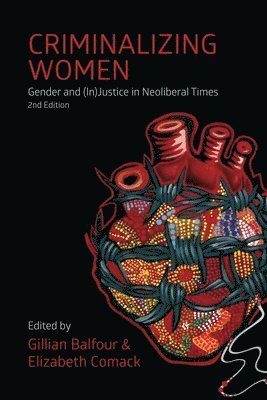
Criminalizing women has become all too frequent in these neoliberal times. Meanwhile, poverty, racism and misogyny continue to frame criminalized women's lives. Criminalizing Women introduces the key issues addressed by feminists engaged in criminology research over the past four decades. The contributors explore how narratives that construct women as errant females, prostitutes, street gang associates and symbols of moral corruption mask the connections between women's restricted choices and the conditions of their lives. The book shows how women have been surveilled, disciplined, managed, corrected and punished, and it considers the feminist strategies that have been used to address the impact of imprisonment and to draw attention to the systemic abuses against poor and racialized women.In addition to updating material in the introductions and substantive chapters, this second edition includes new contributions that consider the media representations of missing and murdered women in Vancouver's Downtown Eastside, the gendered impact of video surveillance technologies (cctv), the role of therapeutic interventions in the death of Ashley Smith, the progressive potential of the Inside/Out Prison Exchange Program and the use of music and video as decolonizing strategies.
263 kr
Tillfälligt slut
Published some two decades ago, Elizabeth Comack’s Women in Trouble explored the connections between the women’s abuse histories and their law violations as well as their experience of imprisonment in an aged facility. What has changed for incarcerated women in those twenty years? Are experiences of abuse continuing to have an impact on the lives of criminalized women? How do women find the experience of imprisonment in a new facility?Drawing on the stories of forty-two incarcerated women, Coming Back to Jail broadens the focus to examine the role of trauma in the women’s lives. Resisting the popular move to understand trauma in psychiatric terms — as post-traumatic stress disorder (ptsd) — the book frames trauma as “lived experience” and locates the women’s lives within the context of a settler-colonial, capitalist, patriarchal society. Doing so enables a better appreciation of the social conditions that produce trauma and the problems, conflicts and dilemmas that bring women into the criminal justice net.In Coming Back to Jail, Comack shows how — despite recent moves to be more “gender responsive” — the prisoning of women is ultimately more punishing than empowering. What is more, because the sources of the women’s trauma reside in the systemic processes that have contoured their lives and their communities, true healing will require changing women’s social circumstances on the outside so they no longer keep coming back to jail.
193 kr
Tillfälligt slut
Realizing a good life is almost always defined in material terms, typified by individuals (usually men) who have considerable wealth. But classed, gendered, and racialized social supports enable the "self-made man." Instead, this book turns to Indigenous knowledge about realizing a good life to explore how marginalized men endeavour to overcome systemic inequalities in their efforts to achieve wholeness, balance, connection, harmony, and healing.Twenty-three men, most of whom are Indigenous, share their stories of this journey. For most, the pathway started in challenging circumstances - intergenerational trauma, disrupted families and child welfare interventions, racism and bullying, and physical and sexual abuse. Most coped with the pain through drugging and drinking or joining a street gang, setting many on a trajectory to jail. Caught in the criminal justice net, realizing a good life was even more daunting as their identities and life chances became barriers.Some of the men, however, have made great strides to realize a good life. They tell us how they got out of "the problem," with insights on how to maintain sobriety, navigate systemic barriers, and forge connections and circles of support. Ultimately, it comes down to social supports - and caring. As one man put it, change happened when he "had to care for somebody else" in a way he wanted to be cared for.