Elizabeth Cook-Lynn - Böcker
Visar alla böcker från författaren Elizabeth Cook-Lynn. Handla med fri frakt och snabb leverans.
8 produkter
8 produkter
467 kr
Skickas inom 7-10 vardagar
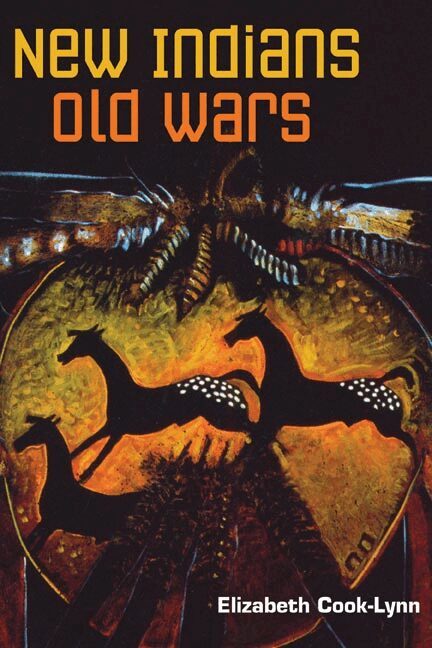
Challenging received American history and forging a new path for Native American studies Addressing Native American Studies' past, present, and future, the essays in New Indians, Old Wars tackle the discipline head-on, presenting a radical revision of the popular view of the American West in the process. Instead of luxuriating in its past glories or accepting the widespread historians' view of the West as a shared place, Elizabeth Cook-Lynn argues that it should be fundamentally understood as stolen. Firmly grounded in the reality of a painful past, Cook-Lynn understands the story of the American West as teaching the political language of land theft and tyranny. She argues that to remedy this situation, Native American studies must be considered and pursued as its own discipline, rather than as a subset of history or anthropology. She makes an impassioned claim that such a shift, not merely an institutional or theoretical change, could allow Native American studies to play an important role in defending the sovereignty of indigenous nations today.
Politics of Hallowed Ground
Wounded Knee and the Struggle for Indian Sovereignty
Häftad, Engelska, 1998
372 kr
Skickas inom 7-10 vardagar
Inside the Sioux Nation's pursuit of recognition and justiceThis book is the powerful story of the ongoing struggle of indigenous Americans in the twentieth century United States and of its shift in focus from traditional battlefield and massacre sites to federal courtrooms and the halls of Congress. The Politics of Hallowed Ground includes excerpts from the diary kept by Mario Gonzalez, the attorney for the Sioux Nation in its struggle for recognition of the Wounded Knee Massacre site as a national monument. Gonzalez's personal record of the struggle is coupled with commentary by Elizabeth Cook-Lynn, a Native American writer who places the work in its historical context. Together, the two voices will draw the reader into far more than the continuing struggle of the Sioux people to achieve justice. The book covers Sioux history from before the Wounded Knee tragedy to modern times, through the Sioux Nation's long and often rancorous dialogue with the U.S. government over control of South Dakota's Black Hills, traditional Sioux lands recognized by treaty in 1877 and never forfeited or sold. After reading a 13-year-old survivor's narrative of what happened at Wounded Knee and the list of the dead and wounded, readers will find it difficult not to share the Sioux perspective.
291 kr
Skickas inom 7-10 vardagar
Addressing Native American studies past, present, and future, the essays in New Indians, Old Wars tackle the discipline head-on, presenting a radical revision of the popular view of the American West in the process. Instead of luxuriating in the West's past glories or accepting the widespread historians' view of it as a shared place, Elizabeth Cook-Lynn argues that the American West should be fundamentally understood as stolen. Cook-Lynn says that the Indian Wars of Resistance to the nineteenth- and twentieth-century colonial effort to seize native lands and resources must be given standing in the face of the ever-growing imperial narrative of America--because the terror the world is now witnessing may be the direct consequence of events which began in America's earliest dealings with the natives of this continent. Cook-Lynn's story examines the ongoing and perennial relationship of conflict between colonizers and indigenous people, and it is a story that every American must read.Cook-Lynn understands that the story of the American West teaches the political language of land theft and tyranny. She argues that to remedy this situation, Native American studies must be considered and pursued as its own discipline, rather than as a subset of history or anthropology. She makes an impassioned claim that such a shift, not merely an institutional or theoretical change, could allow Native American studies to play an important role in defending the sovereignty of indigenous nations today.
377 kr
Skickas inom 10-15 vardagar
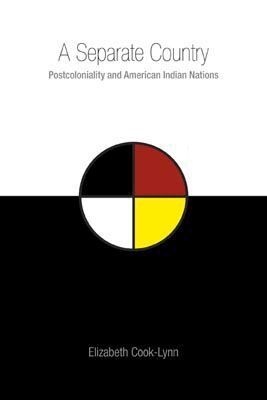
Elizabeth Cook-Lynn takes academia to task for its much-touted notion that "postcoloniality" is the current condition of Indian communities in the United States. She finds the argument neither believable nor useful—at best an ivory-tower initiative on the part of influential scholars, at worst a cruel joke. In this fin de career retrospective, Cook-Lynn gathers evidence that American Indians remain among the most colonized people in the modern world, mired in poverty and disenfranchised both socially and politically. Despite Native-initiated efforts toward seeking First Nationhood status in the U. S., Cook-Lynn posits, Indian lands remain in the grip of a centuries-old English colonial system—a renewable source of conflict and discrimination. She argues that proportionately in the last century, government-supported development of casinos and tourism—peddled as an answer to poverty—probably cost Indians more treaty-protected land than they lost in the entire nineteenth century. Using land issues and third-world theory to look at the historiography of the American Plains Indian experience, she examines colonization's continuing assault on Indigenous peoples. Also 04 Activeable in cloth, 978-0-89672-734-2, $65.00
720 kr
Skickas inom 10-15 vardagar
Elizabeth Cook-Lynn takes academia to task for its much-touted notion that "postcoloniality" is the current condition of Indian communities in the United States. She finds the argument neither believable nor useful—at best an ivory-tower initiative on the part of influential scholars, at worst a cruel joke. In this fin de career retrospective, Cook-Lynn gathers evidence that American Indians remain among the most colonized people in the modern world, mired in poverty and disenfranchised both socially and politically. Despite Native-initiated efforts toward seeking First Nationhood status in the U. S., Cook-Lynn posits, Indian lands remain in the grip of a centuries-old English colonial system—a renewable source of conflict and discrimination. She argues that proportionately in the last century, government-supported development of casinos and tourism—peddled as an answer to poverty—probably cost Indians more treaty-protected land than they lost in the entire nineteenth century. Using land issues and third-world theory to look at the historiography of the American Plains Indian experience, she examines colonization's continuing assault on Indigenous peoples.
445 kr
Skickas inom 3-6 vardagar
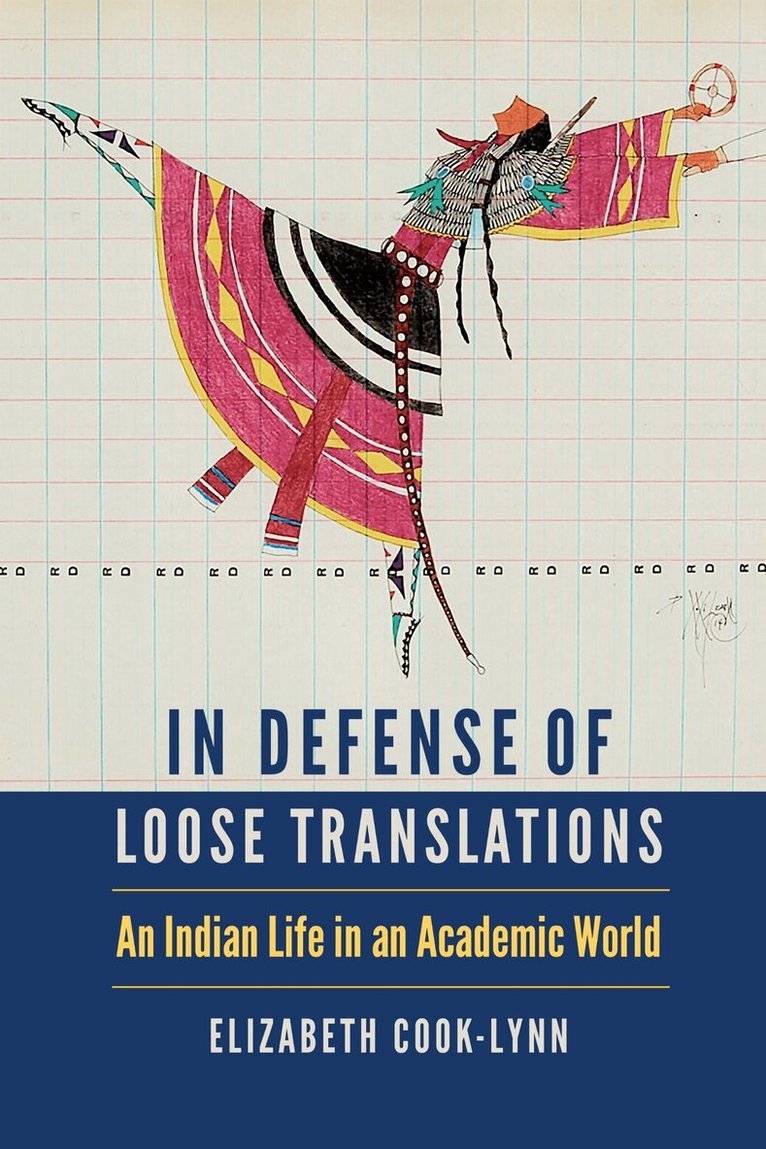
In Defense of Loose Translations is a memoir that bridges the personal and professional experiences of Elizabeth Cook-Lynn. Having spent much of her life illuminating the tragic irony of being an Indian in America, this provocative and often controversial writer narrates the story of her intellectual life in the field of American Indian studies.Drawing on her experience as a twentieth-century child raised in a Sisseton Santee Dakota family and under the jurisdictional policies that have created significant social isolation in American Indian reservation life, Cook-Lynn tells the story of her unexpectedly privileged and almost comedic “affirmative action” rise to a professorship in a regional western university.Cook-Lynn explores how different opportunities and setbacks helped her become a leading voice in the emergence of American Indian studies as an academic discipline. She discusses lecturing to professional audiences, activism addressing nonacademic audiences, writing and publishing, tribal-life activities, and teaching in an often hostile and, at times, corrupt milieu.Cook-Lynn frames her life’s work as the inevitable struggle between the indigene and the colonist in a global history. She has been a consistent critic of the colonization of American Indians following the treaty-signing and reservation periods of development. This memoir tells the story of how a thoughtful critic has tried to contribute to the debate about indigenousness in academia.
276 kr
Skickas inom 10-15 vardagar
In Defense of Loose Translations is a memoir that bridges the personal and professional experiences of Elizabeth Cook-Lynn. Having spent much of her life illuminating the tragic irony of being an Indian in America, this provocative and often controversial writer narrates the story of her intellectual life in the field of American Indian studies.Drawing on her experience as a twentieth-century child raised in a Sisseton Santee Dakota family and under the jurisdictional policies that have created significant social isolation in American Indian reservation life, Cook-Lynn tells the story of her unexpectedly privileged and almost comedic “affirmative action” rise to a professorship in a regional western university.Cook-Lynn explores how different opportunities and setbacks helped her become a leading voice in the emergence of American Indian studies as an academic discipline. She discusses lecturing to professional audiences, activism addressing nonacademic audiences, writing and publishing, tribal-life activities, and teaching in an often hostile and, at times, corrupt milieu.Cook-Lynn frames her life’s work as the inevitable struggle between the indigene and the colonist in a global history. She has been a consistent critic of the colonization of American Indians following the treaty-signing and reservation periods of development. This memoir tells the story of how a thoughtful critic has tried to contribute to the debate about indigenousness in academia.
348 kr
Skickas inom 7-10 vardagar
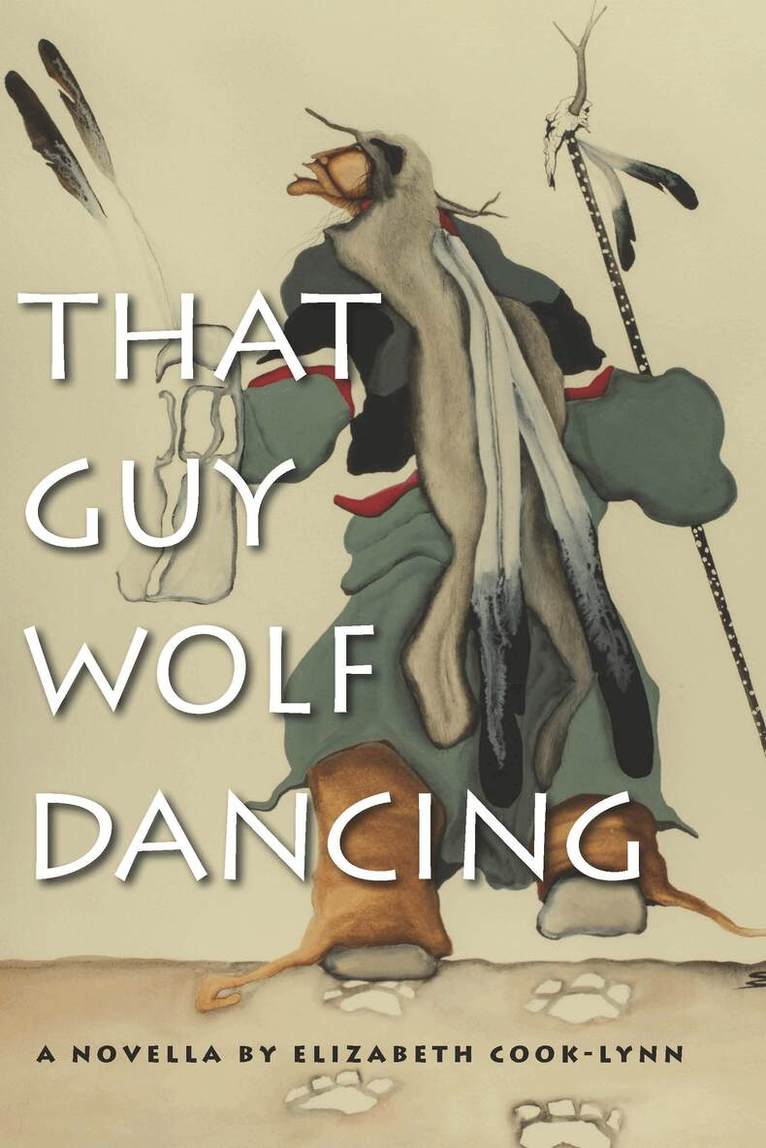
From one of the writers of the twentieth-century Native American Literary Renaissance comes a remarkable tale about how to acknowledge the past and take a chance on the future. Rooted in tribal-world consciousness, That Guy Wolf Dancing is the story of a young tribal wolf-man becoming a part of his not-sonatural world of non-tribal people. Twenty-something Philip Big Pipe disappears from an unsettled life he can hardly tolerate and ends up in an off-reservation town. When he leaves, he doesn’t tell anyone where he is going or what his plans, if he has any, might be. Having never taken himself too seriously, he now faces a world that feels very foreign to him. As he struggles to adapt to the modern universe, Philip, ever a “wolf dancer,” must improvise, this time to a sound others provide for him. Like the wolf, Philip sometimes feels hunted, outrun, verging on extinction. Only by moving rhythmically in a dissident, dangerous, and iconic world can Philip Big Pipe let go of the past and craft a new future.