Elizabeth Eva Leach - Böcker
Visar alla böcker från författaren Elizabeth Eva Leach. Handla med fri frakt och snabb leverans.
11 produkter
11 produkter
914 kr
Skickas inom 10-15 vardagar
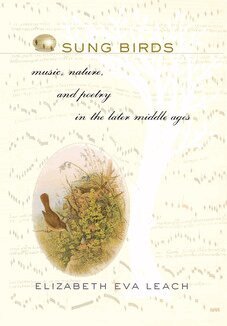
Is birdsong music? The most frequent answer to this question in the Middle Ages was resoundingly "no." In Sung Birds, Elizabeth Eva Leach traces postmedieval uses of birdsong within Western musical culture. She first explains why such melodious sound was not music for medieval thinkers and then goes on to consider the ontology of music, the significance of comparisons between singers and birds, and the relationship between art and nature as enacted by the musical performance of late-medieval poetry. If birdsong was not music, how should we interpret the musical depiction of birdsong in human music-making? What does it tell us about the singers, their listeners, and the moral status of secular polyphony? Why was it the fourteenth century that saw the beginnings of this practice, continued to this day in the music of Messiaen and others? Leach explores medieval arguments about song, language, and rationality whose basic terms survive undiminished into the present. She considers not only lyrics that have their singers voice the songs or speech of birds but also those that represent other natural, nonmusical, sounds such as human cries or the barks of dogs. The dangerous sweetness of birdsong was invoked in discussions of musical ethics, which, because of the potential slippage between irrational beast and less rational woman in comparisons with rational human masculinity, depict women's singing as less than fully human. Leach's argument comes full circle with the advent of sound recording. This technological revolution-like its medieval equivalent, the invention of the music book-once again made the relationship between music and nature an acute preoccupation of Western culture.
1 249 kr
Skickas inom 3-6 vardagar
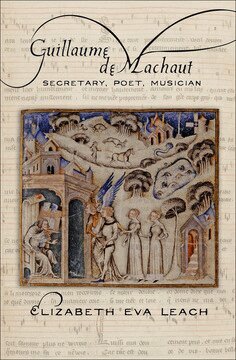
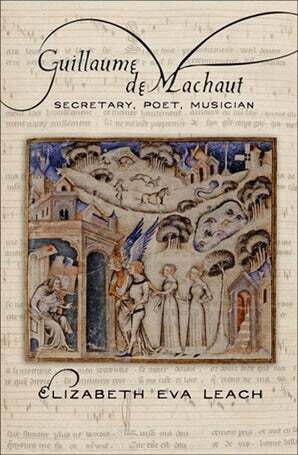
At once a royal secretary, a poet, and a composer, Guillaume de Machaut was one of the most protean and creative figures of the late Middle Ages. Rather than focus on a single strand of his remarkable career, Elizabeth Eva Leach gives us a book that encompasses all aspects of his work, illuminating it in a distinctively interdisciplinary light. The author provides a comprehensive picture of Machaut's artistry, reviews the documentary evidence about his life, charts the different agendas pursued by modern scholarly disciplines in their rediscovery and use of specific parts of his output, and delineates Machaut's own poetic and material presentation of his authorial persona.Leach treats Machaut's central poetic themes of hope, fortune, and death, integrating the aspect of Machaut's multimedia art that differentiates him from his contemporaries' treatment of similar thematic issues: music. In restoring the centrality of music in Machaut's poetics, arguing that his words cannot be truly understood or appreciated without the additional layers of meaning created in their musicalization, Leach makes a compelling argument that musico-literary performance occupied a special place in the courts of fourteenth-century France.
736 kr
Skickas inom 3-6 vardagar
At once a royal secretary, a poet, and a composer, Guillaume de Machaut was one of the most protean and creative figures of the late Middle Ages. Rather than focus on a single strand of his remarkable career, Elizabeth Eva Leach gives us a book that encompasses all aspects of his work, illuminating it in a distinctively interdisciplinary light. The author provides a comprehensive picture of Machaut's artistry, reviews the documentary evidence about his life, charts the different agendas pursued by modern scholarly disciplines in their rediscovery and use of specific parts of his output, and delineates Machaut's own poetic and material presentation of his authorial persona.Leach treats Machaut's central poetic themes of hope, fortune, and death, integrating the aspect of Machaut's multimedia art that differentiates him from his contemporaries' treatment of similar thematic issues: music. In restoring the centrality of music in Machaut's poetics, arguing that his words cannot be truly understood or appreciated without the additional layers of meaning created in their musicalization, Leach makes a compelling argument that musico-literary performance occupied a special place in the courts of fourteenth-century France.
1 238 kr
Skickas inom 7-10 vardagar
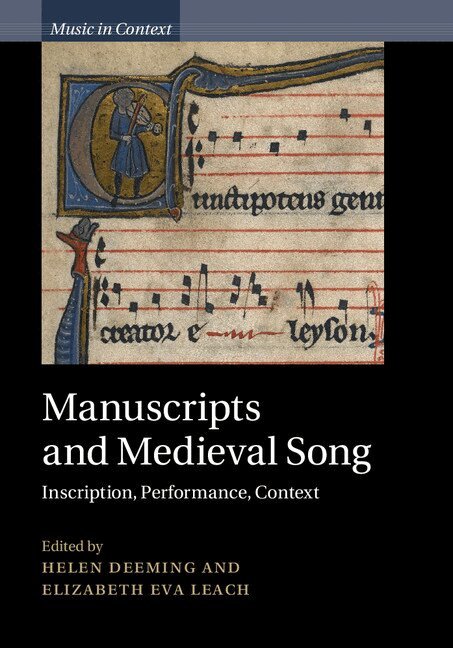
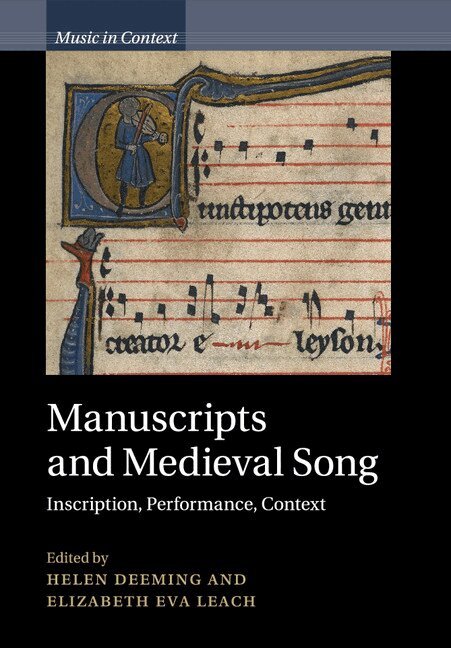
The manuscript sources of medieval song rarely fit the description of 'songbook' easily. Instead, they are very often mixed compilations that place songs alongside other diverse contents, and the songs themselves may be inscribed as texts alone or as verbal and musical notation. This book looks afresh at these manuscripts through ten case studies, representing key sources in Latin, French, German, and English from across Europe during the Middle Ages. Each chapter is authored by a leading expert and treats a case study in detail, including a listing of the manuscript's overall contents, a summary of its treatment in scholarship, and up-to-date bibliographical references. Drawing on recent scholarly methodologies, the contributors uncover what these books and the songs within them meant to their medieval audience and reveal a wealth of new information about the original contexts of songs both in performance and as committed to parchment.
333 kr
Skickas inom 7-10 vardagar
The manuscript sources of medieval song rarely fit the description of 'songbook' easily. Instead, they are very often mixed compilations that place songs alongside other diverse contents, and the songs themselves may be inscribed as texts alone or as verbal and musical notation. This book looks afresh at these manuscripts through ten case studies, representing key sources in Latin, French, German, and English from across Europe during the Middle Ages. Each chapter is authored by a leading expert and treats a case study in detail, including a listing of the manuscript's overall contents, a summary of its treatment in scholarship, and up-to-date bibliographical references. Drawing on recent scholarly methodologies, the contributors uncover what these books and the songs within them meant to their medieval audience and reveal a wealth of new information about the original contexts of songs both in performance and as committed to parchment.
529 kr
Skickas inom 10-15 vardagar
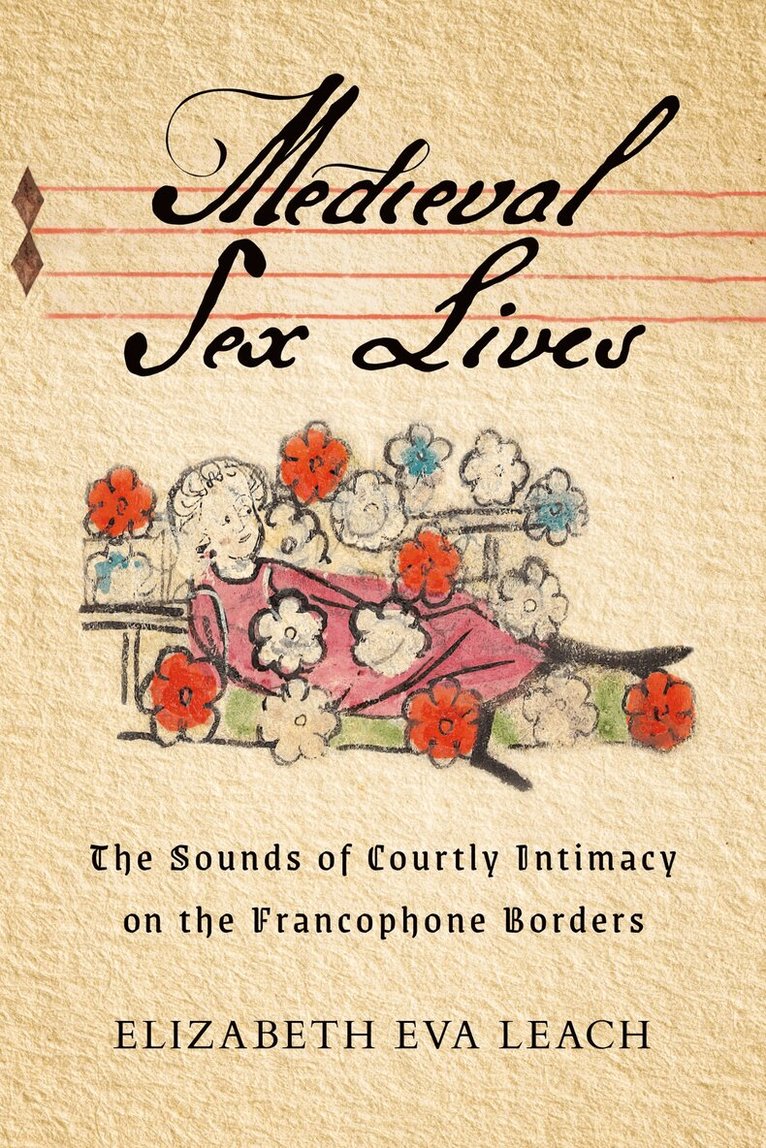
Medieval Sex Lives examines courtly song as a complex cultural product and social force in the early fourteenth century, exploring how it illuminates the relationship between artistic production and the everyday lives of the elites for whom this music and poetry was composed and performed. In a focused analysis of the Oxford Bodelian Library's Douce 308 manuscript—a fourteenth-century compilation that includes over five hundred Old French lyrics composed over two centuries alongside a narrative account of elaborate courtly festivities centered on a week-long tournament—Elizabeth Eva Leach explores two distinct but related lines of inquiry: first, why the lyric tradition of "courtly love" had such a long and successful history in Western European culture; and, second, why the songs in the Bodleian manuscript would have been so important to the book's compilers, owners, and readers. The manuscript's lack of musical notation and authorial attributions make it unusual among Old French songbooks; its arrangement of the lyrics by genre invites inquiry into the relationship between this long musical tradition and the emotional and sexual lives of its readers. Combining an original account of the manuscript's contents and their likely social milieu with in-depth musical and poetic analyses, Leach proposes that lyrics, whether read or heard aloud, provided a fertile means of propagating and enabling various sexual scripts in the Middle Ages. Drawing on musicology, literary history, and the sociology and psychology of sexuality, Medieval Sex Lives presents a provocative hypothesis about the power of courtly songs to model, inspire, and support sexual behaviors and fantasies.
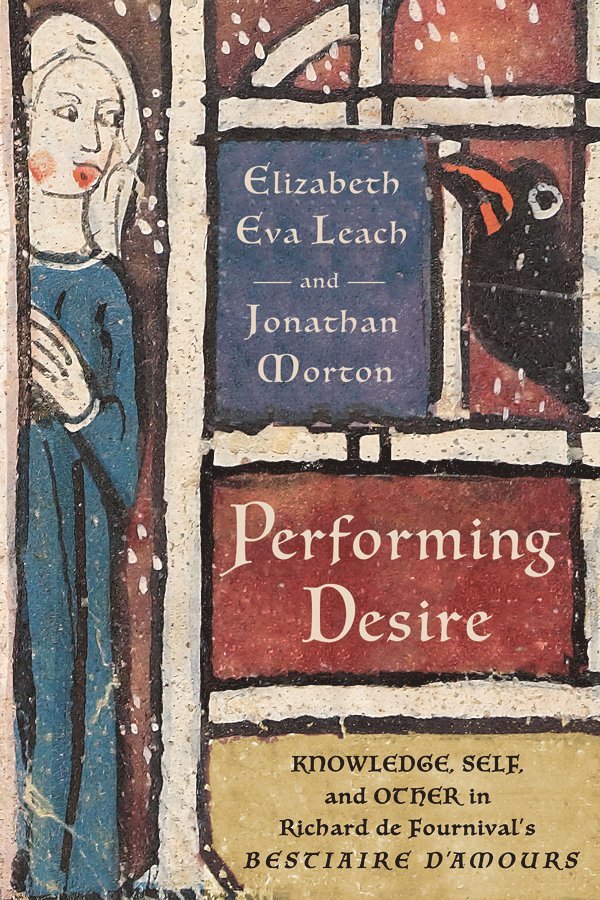
Performing Desire
Knowledge, Self, and Other in Richard De Fournival's "Bestiaire D'amours"
Inbunden, Engelska, 2025
673 kr
Skickas inom 7-10 vardagar
Performing Desire examines the intellectual and philosophical complexity of a monument of medieval literature: the mid-thirteenth-century Bestiaire d'amours of Richard de Fournival. Although the Bestiaire was recognized in its time as significant, as evinced by numerous surviving manuscript copies and its influence on other literary works, modern scholarship has tended to neglect it. Performing Desire remedies this omission by detailing the contributions of the Bestiaire to medieval literature and thought.Attending to the phenomenology, psychology, and philosophy of Fournival's Bestiaire, Elizabeth Eva Leach and Jonathan Morton reconsider the work as a literary experiment that explores erotic desire and the construction of a self. Leach and Morton further show that the Bestiaire is as much a meditation on sound and performance as it is a study of desire. Synthesizing methods from musicology, literary studies, and manuscript studies, Leach and Morton consider the complex and hybridized workings of text, image, sound, and cues for performance in the surviving manuscripts of the Bestiaire. Through their analysis, Leach and Morton find that the distinctive aspect of the Bestiaire's philosophical method is its self-conscious status as a performance between the oral and the literary, the voice and the page. It is this aspect, they contend, that left such a mark on the medieval European tradition of philosophical fiction. In Performing Desire, Richard de Fournival's hybrid text emerges as one of the most philosophically sophisticated and important works of medieval literature not only in French but in any language.
Del 24 - Studies in Medieval and Renaissance Music
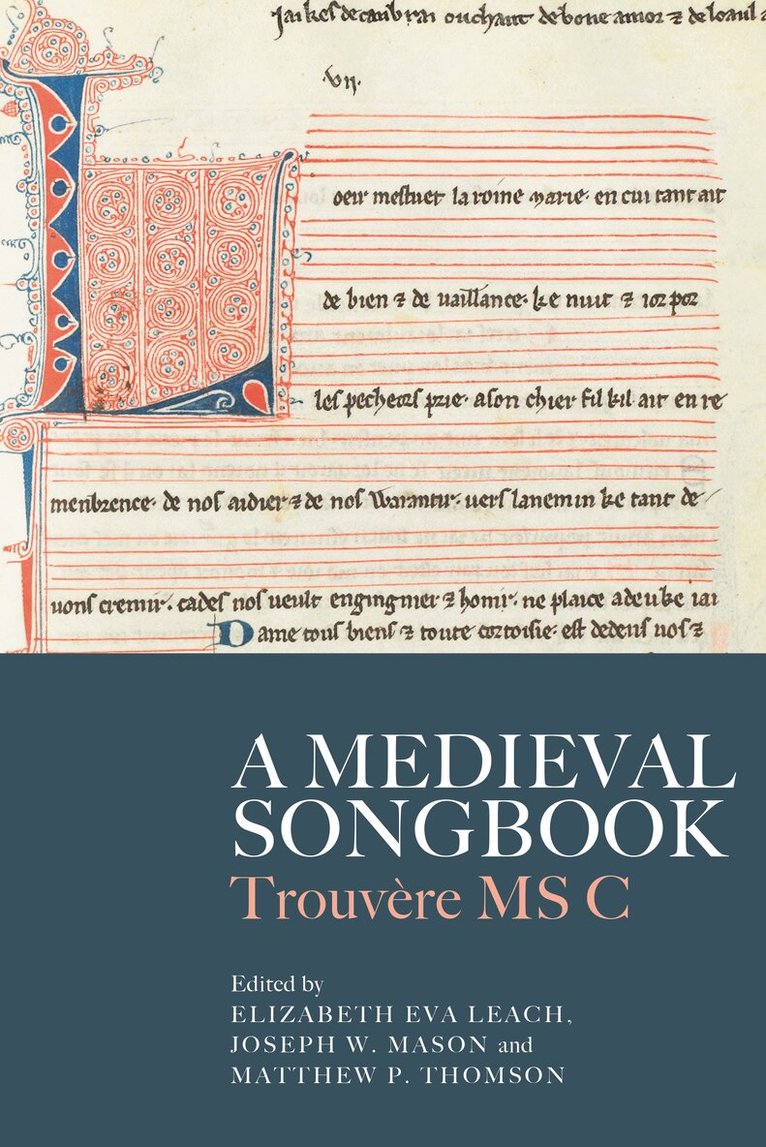
Medieval Songbook
Trouvère MS C
Inbunden, Engelska, 2022
1 195 kr
Skickas inom 7-10 vardagar
Detailed exploration of an enigmatic manuscript containing the texts to hundreds of songs, but no musical notation.The medieval songbook known variously as trouvère manuscript C or the "Bern Chansonnier" (Bern, Burgerbibliothek, Cod. 389) is one of the most important witnesses to musical life in thirteenth-century France. Almost certainly copied in Metz, it provides the texts to over five hundred Old French songs, and is a unique insight into cultures of song-making and copying on the linguistic and political borders between French and German-speaking lands in the Middle Ages. Notably, the names of trouvères, including several female poet-musicians, are found in its margins, names which would be unknown today without this evidence. However, the manuscript has received relatively little scholarly attention, partly because the songs' musical staves remained empty for reasons now unknown, and partly because of where it was copied.This collection of essays is the first to consider C on its own terms and from a range of disciplinary perspectives, including philology, art history, literary studies, and musicology. The contributors explore the process of creating the complex object that is a music manuscript, examining the work of the scribes and artists who worked on C, and questioning how scribes acquired and organised exemplars for copying. The peculiarly Messine flavour of the repertoire and authors is also discussed, with contributors showing that C frames the tradition of Old French song from a unique perspective. As a whole, the volume demonstrates how in this eastern hub of music and poetry, poet-composers, readers, and scribes interacted with the courtly song tradition in fascinating and unusual ways.
Del 1 - Studies in Medieval and Renaissance Music
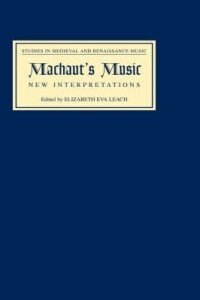
Machaut's Music: New Interpretations
Inbunden, Engelska, 2003
1 212 kr
Skickas inom 10-15 vardagar
Guillaume de Machaut was the foremost poet-composer of his time. Studies look at all aspects of his prodigious output.Guillaume de Machaut (1300-1377) is regarded as the greatest French poet-composer of the middle ages, as he was during his lifetime. A trained secretary, with a passion for collecting, copying and ordering his own work, the numberof surviving notated musical works attributed to him far exceeds that of any of his contemporaries. All the main genres of song - lais, virelais, balades, and rondeaux - together with Machaut's motets, and his famous Masscycle are considered here from a variety of perspectives. These incorporate the latest scholarly understanding of both Machaut's poetry and music, and the material form they take when notated in the surviving manuscripts. The bookthus presents a detailed picture of the current range of interpretative approaches to Machaut's music, focusing variously on counterpoint, musica ficta, text setting, musico-poetic meanings, citation and intertextuality, tonality, and compositional method. Several of Machaut's works are discussed by a pair of contributors, who reach conclusions at times mutually reinforcing or complementary, at times contradictory and mutually exclusive. That Machaut's music thrives on such constructive debate and disagreement is a tribute to his scope as an artist, and his musico-poetic achievement.Contributors: JENNIFER BAIN, MARGARET BENT, CHRISTIAN BERGER, JACQUES BOOGAART,THOMAS BROWN, ALICE V. CLARK, JANE E. FLYNN, JEHOASH HIRSHBERG, KARL KUEGLE, ELIZABETH EVA LEACH, DANIEL LEECH-WILKINSON, ETER M. LEFFERTS, WILLIAM PETER MAHRT, KEVIN N. MOLL, VIRGINIA NEWES, YOLANDA PLUMLEY, OWEN REES, ANNE STONE.ELIZABETH EVA LEACH lectures in music at Royal Holloway, University of London.
Del 4 - Studies in Medieval and Renaissance Music
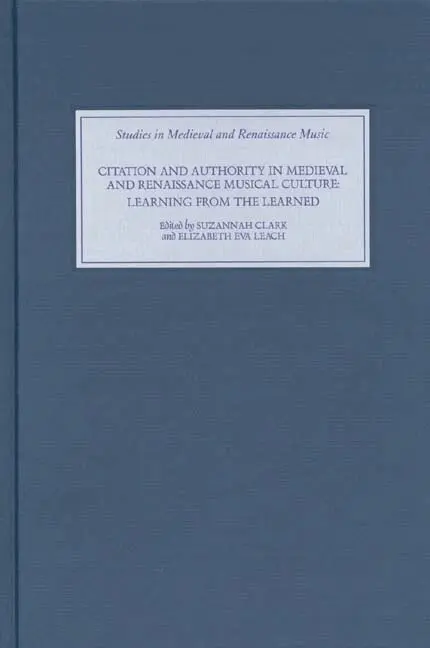
Citation and Authority in Medieval and Renaissance Musical Culture
Learning from the Learned. Essays in Honour of Margaret Bent
Inbunden, Engelska, 2005
1 212 kr
Skickas inom 10-15 vardagar
Essays - collected in honour of Margaret Bent - examining how medieval and Renaissance composers responded to the tradition in which they worked through a process of citation of and commentary on earlier authors.Essays in honour of Margaret Bent.The chapters of this book probe the varied functions of citation and allusion in medieval and renaissance musical culture. At its most fundamental level musical culture relied on shared models for musical practice, used by singers and composers as they learned their craft. Several contributors to this volume investigate general models, which often drew on earlier musical works, internalized in the process of composers' own training as singers.In written theoretical musical pedagogy, conversely, citation of authority is deliberate and intentional. The adaptation of accepted wisdom in theoretical treatises was the means by which newer authors stamped their own authority. Further kinds of citation occur in specific musical texts, either within the words set to music or in the music itself.The diverse functions of citation and allusion for the creator, reader, scribe, performer and listener are here given due consideration. In doing so, this volume is a fitting tribute to Margaret Bent, whose pedagogy, publications, and presence are honoured in this Festschrift.Contributors: SUSAN RANKIN, GILLES RICO, CHRISTIAN THOMAS LEITMEIR, BARBARA HAGGH, LEOFRANC HOLFORD-STREVENS, ANDREW WATHEY, KEVIN BROWNLEE, ALICE V. CLARK, LAWRENCE M. EARP, VIRGINIA NEWES, JOHN MILSOM, DAVID HOWLETT, REINHARD STROHM, THEODOR DUMITRESCU, CRISTLE COLLINS JUDD, BONNIE J. BLACKBURN
660 kr
Tillfälligt slut
Co-edition with Cornell University Press Selling rights for Europe (excl. UK) At once a royal secretary, a poet, and a composer, Guillaume de Machaut was one of the most protean and creative figures of the late Middle Ages. Rather than focus on a single strand of his remarkable career, Elizabeth Eva Leach gives us a book that encompasses all aspects of his work, illuminating it in a distinctively interdisciplinary light. The author provides a comprehensive picture of Machaut's artistry, reviews the documentary evidence about his life, charts the different agendas pursued by modern scholarly disciplines in their rediscovery and use of specific parts of his output, and delineates Machaut's own poetic and material presentation of his authorial persona. Leach treats Machaut's central poetic themes of hope, fortune, and death, integrating the aspect of Machaut's multimedia art that differentiates him from his contemporaries' treatment of similar thematic issues: music. In restoring the centrality of music in Machaut's poetics, arguing that his words cannot be truly understood or appreciated without the additional layers of meaning created in their musicalization, Leach makes a compelling argument that musico-literary performance occupied a special place in the courts of fourteenth-century France. This publication is GPRC-labeled (Guaranteed Peer-Reviewed Content).