Elizabeth F. Evans - Böcker
Visar alla böcker från författaren Elizabeth F. Evans. Handla med fri frakt och snabb leverans.
5 produkter
5 produkter
536 kr
Skickas inom 7-10 vardagar
254 kr
Skickas inom 7-10 vardagar
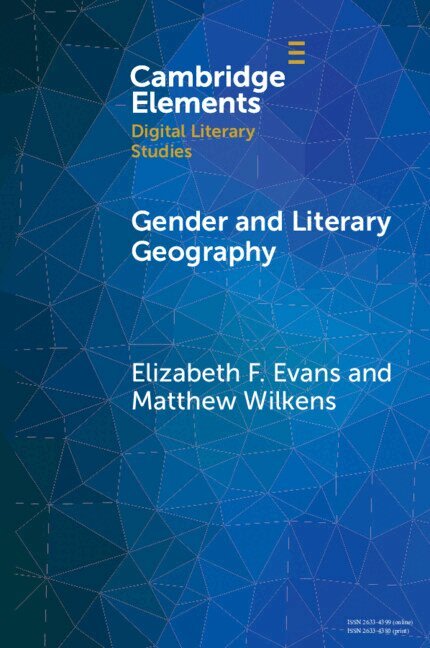
Our analysis of over 20,000 books published in Britain between 1800 and 2009 compares the geographic attention of fiction authored by women and by men; of books that focus on women and men as characters; and of works published in different eras. We find that, while there were only modest differences in geographic attention in books by men and women authors, there were dramatic geographic differences in books with highly gendered character space. Counter to expectation, the geographic differences between differently gendered characters were remarkably stable across these centuries. We also examine and complicate the power attributed to separate-sphere ideology. And we demonstrate a surprising reversal of critical expectation: in fiction, broadly natural spaces were more strongly associated with men, while urban spaces were more aligned with women. As it uncovers spatial patterns in literary history, this study casts new light on well-known texts and reimagines literature's broader engagement with gender and geography.
787 kr
Skickas inom 7-10 vardagar
Our analysis of over 20,000 books published in Britain between 1800 and 2009 compares the geographic attention of fiction authored by women and by men; of books that focus on women and men as characters; and of works published in different eras. We find that, while there were only modest differences in geographic attention in books by men and women authors, there were dramatic geographic differences in books with highly gendered character space. Counter to expectation, the geographic differences between differently gendered characters were remarkably stable across these centuries. We also examine and complicate the power attributed to separate-sphere ideology. And we demonstrate a surprising reversal of critical expectation: in fiction, broadly natural spaces were more strongly associated with men, while urban spaces were more aligned with women. As it uncovers spatial patterns in literary history, this study casts new light on well-known texts and reimagines literature's broader engagement with gender and geography.
Threshold Modernism
New Public Women and the Literary Spaces of Imperial London
Häftad, Engelska, 2021
493 kr
Skickas inom 7-10 vardagar
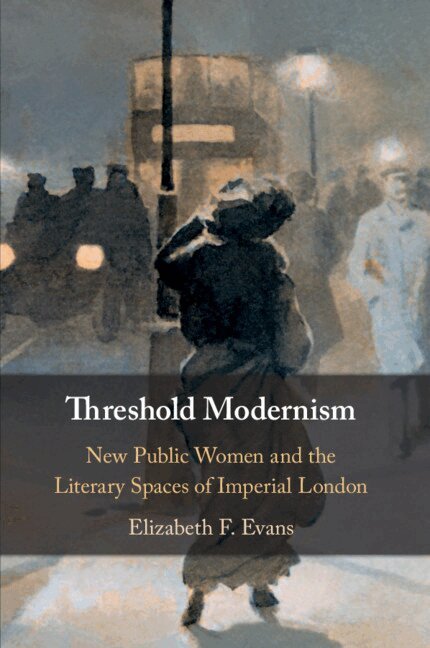
Threshold Modernism reveals how changing ideas about gender and race in late nineteenth- and early twentieth-century Britain shaped - and were shaped by - London and its literature. Chapters address key sites, especially department stores, women's clubs, and city streets, that coevolved with controversial types of modern women. Interweaving cultural history, narrative theory, close reading, and spatial analysis, Threshold Modernism considers canonical figures such as George Gissing, Henry James, Dorothy Richardson, H. G. Wells, and Virginia Woolf alongside understudied British and colonial writers including Amy Levy, B. M. Malabari, A. B. C. Merriman-Labor, Duse Mohamed Ali, and Una Marson. Evans argues that these diverse authors employed the 'new public women' and their associated spaces to grapple with widespread cultural change and reflect on the struggle to describe new subjects, experiences, and ways of seeing in appropriately novel ways. For colonial writers of color, those women and spaces provided a means through which to claim their own places in imperial London.
Threshold Modernism
New Public Women and the Literary Spaces of Imperial London
Inbunden, Engelska, 2018
1 325 kr
Skickas inom 7-10 vardagar
Threshold Modernism reveals how changing ideas about gender and race in late nineteenth- and early twentieth-century Britain shaped - and were shaped by - London and its literature. Chapters address key sites, especially department stores, women's clubs, and city streets, that coevolved with controversial types of modern women. Interweaving cultural history, narrative theory, close reading, and spatial analysis, Threshold Modernism considers canonical figures such as George Gissing, Henry James, Dorothy Richardson, H. G. Wells, and Virginia Woolf alongside understudied British and colonial writers including Amy Levy, B. M. Malabari, A. B. C. Merriman-Labor, Duse Mohamed Ali, and Una Marson. Evans argues that these diverse authors employed the 'new public women' and their associated spaces to grapple with widespread cultural change and reflect on the struggle to describe new subjects, experiences, and ways of seeing in appropriately novel ways. For colonial writers of color, those women and spaces provided a means through which to claim their own places in imperial London.