Elizabeth Garber - Böcker
Visar alla böcker från författaren Elizabeth Garber. Handla med fri frakt och snabb leverans.
7 produkter
7 produkter
898 kr
Tillfälligt slut
Language of Physics
The Calculus and the Development of Theoretical Physics in Europe, 1750–1914
Inbunden, Engelska, 1998
1 069 kr
Skickas inom 10-15 vardagar
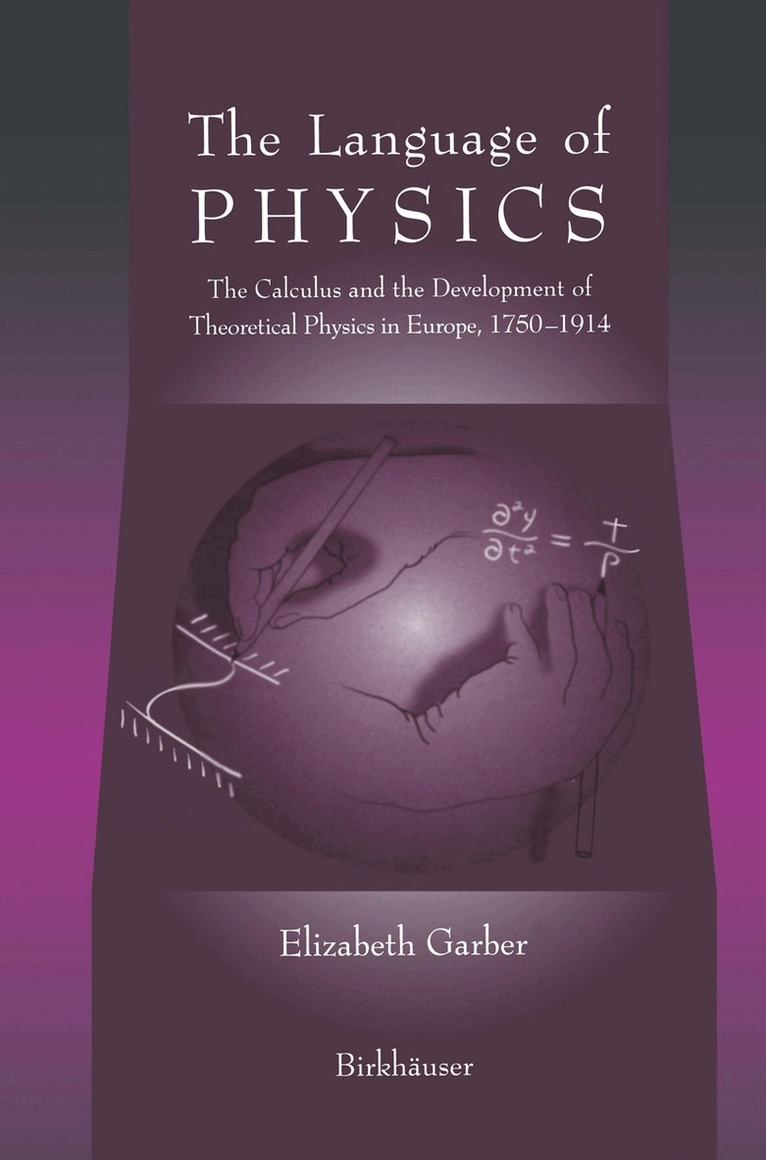
This study began as an attempt to understand mechanics in the nineteenth century. The terms mechanics and mechanical world view were being used as general descriptions of nineteenth-century physicists' assumptions and interpretations of nature. However, there were no studies of the particulars of these assumptions or the range and content of these interpretations. Rene Dugas' work on classical mechanics focused on France. The search for the particulars of these forms of "mechanics" led me to explore precisely what mechanics meant to physicists of a century and more ago. However, none of Lagrange's, Hamilton's, or Jacobi's "mechanics," while ele gant, fits easily within the history of physics. Lagrange reduced mechanics to an exercise in analysis; Hamilton and Jacobi used mechanics to explore solutions to partial differential equations. They were mathematicians doing mathematics. As I went deeper into the matter it became obvious that, in the nineteenth century, there were two kinds of mechanics, each containing a variety of forms, one physical, the other mathematical. There were a group of men using mechanics to understand nature and another group using the equations of mechanics to explore the calcu lus. However, when tracing these two traditions back into the eighteenth century, physics disappeared altogether.
2 030 kr
Skickas inom 10-15 vardagar
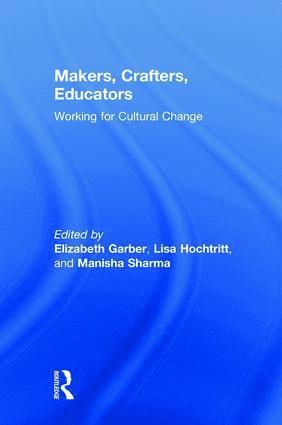
Makers, Crafters, Educators brings the do-it-yourself (DIY) ethos of maker and crafter movements into educational environments, and examines the politics of cultural change that undergird them. Addressing making and crafting in relation to community and schooling practices, culture, and place, this edited collection positions making as an agent of change in education. In the volume’s five sections—Play and Hacking, Access and Equity, Interdependence and Interdisciplinarity, Cultural and Environmental Sustainability, and Labor and Leisure—authors from around the world present a collage of issues and practices connecting object making, participatory culture, and socio-cultural transformation. Offering gateways into cultural practices from six continents, this volume explores the participatory culture of maker and crafter spaces in education and reveals how community sites hold the promise of such socio-cultural transformation.
639 kr
Skickas inom 10-15 vardagar
Makers, Crafters, Educators brings the do-it-yourself (DIY) ethos of maker and crafter movements into educational environments, and examines the politics of cultural change that undergird them. Addressing making and crafting in relation to community and schooling practices, culture, and place, this edited collection positions making as an agent of change in education. In the volume’s five sections—Play and Hacking, Access and Equity, Interdependence and Interdisciplinarity, Cultural and Environmental Sustainability, and Labor and Leisure—authors from around the world present a collage of issues and practices connecting object making, participatory culture, and socio-cultural transformation. Offering gateways into cultural practices from six continents, this volume explores the participatory culture of maker and crafter spaces in education and reveals how community sites hold the promise of such socio-cultural transformation.
1 209 kr
Skickas inom 10-15 vardagar
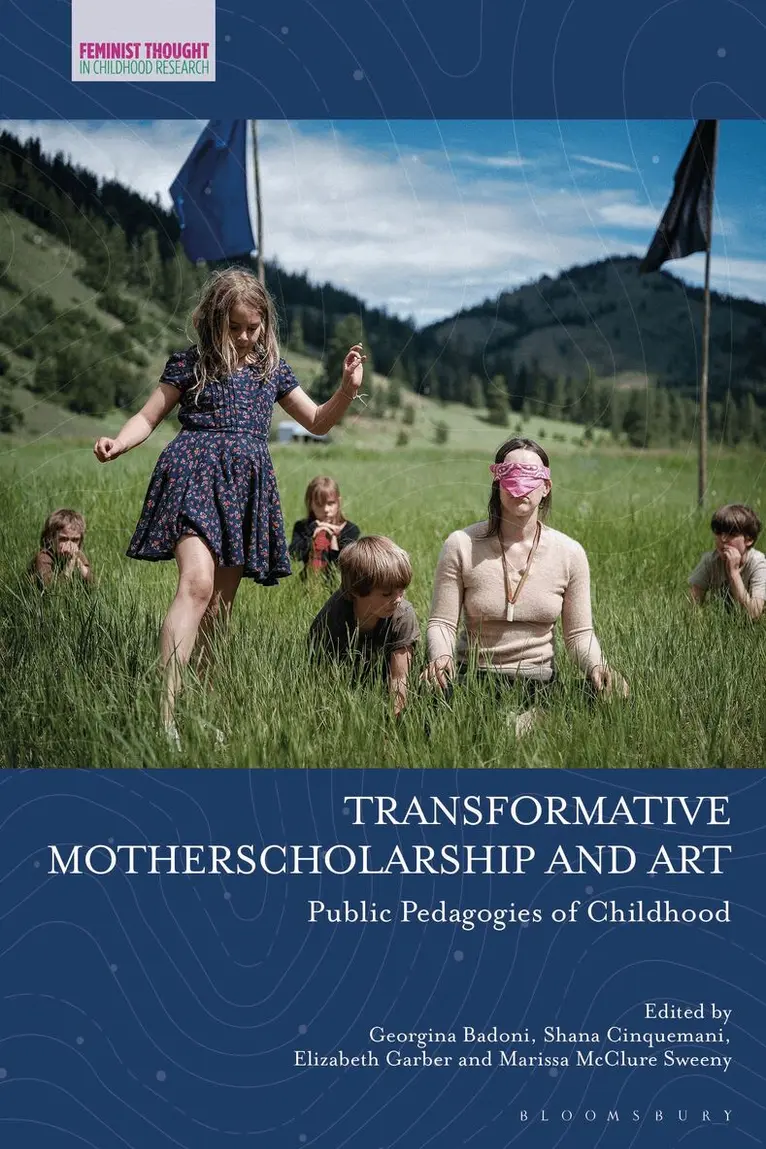
This book considers the identity of the motherscholar, a mother who draws from their practice of mothering to inform their art and scholarship and from their scholarship to inform how they mother. By considering the identity of the motherscholar the contributors from Canada, Finland, India, New Zealand, and the USA work to reconceptualize feminist approaches to childhood research and uncover formerly invisibilized public pedagogies of childhood. Through theoretical research, visual art, stories and oral histories, the contributors explore how their fused identities affect and multiply structural and interpersonal transformation in homes, in communities, and in pedagogical spaces. They describe a mother as a self-identifying or non-binary person with caregiving responsibilities including but not limited to biological mothers, adoptive mothers, stepmothers, alloparents, grandmothers, mothers who are childless, mothers who are grieving, and mothers who are experiencing infertility.
484 kr
Kommande
Language of Physics
The Calculus and the Development of Theoretical Physics in Europe, 1750–1914
Häftad, Engelska, 2012
1 064 kr
Skickas inom 10-15 vardagar
This study began as an attempt to understand mechanics in the nineteenth century. The terms mechanics and mechanical world view were being used as general descriptions of nineteenth-century physicists' assumptions and interpretations of nature. However, there were no studies of the particulars of these assumptions or the range and content of these interpretations. Rene Dugas' work on classical mechanics focused on France. The search for the particulars of these forms of "mechanics" led me to explore precisely what mechanics meant to physicists of a century and more ago. However, none of Lagrange's, Hamilton's, or Jacobi's "mechanics," while ele gant, fits easily within the history of physics. Lagrange reduced mechanics to an exercise in analysis; Hamilton and Jacobi used mechanics to explore solutions to partial differential equations. They were mathematicians doing mathematics. As I went deeper into the matter it became obvious that, in the nineteenth century, there were two kinds of mechanics, each containing a variety of forms, one physical, the other mathematical. There were a group of men using mechanics to understand nature and another group using the equations of mechanics to explore the calcu lus. However, when tracing these two traditions back into the eighteenth century, physics disappeared altogether.