• Fri frakt över 249 kr
  • •
  • Snabba leveranser
  • •
  • Billiga böcker
Kundservice

Du är på sajten för privatpersoner.

Företag, bibliotek eller offentlig verksamhet?

Du handlar på classic.bokus.com, där alla dina funktioner finns intakta.
Till classic.bokus.com
Bokus logotyp. Gå till startsidan.
  • Erbjudanden
  • Nyheter
  • Student
  • Topplistor
  • Barn & ungdom
  • Bokus Play
  • E-böcker
  • Pocketböcker
  • Spel & pussel

10% rabatt på allt med kod NYSTART10 →

Sidfot

Mina sidor

    Hjälp

    • Kundservice
    • Vanliga frågor och svar
    • Frakt och leverans
    • Retur vid ångerrätt
    • Reklamera vara
    • Betalning
    • Köpvillkor
    • Allmänna villkor
    • Information om webbplatsens tillgänglighet

    Om Bokus

    • Om oss
    • Pressrum
    • För studenter
    • För företag
    • För bibliotek och offentlig verksamhet
    • För leverantörer
    • Hållbarhet

    Populärt

    • Aktuella erbjudanden
    • Presentkort
    • Studentlitteratur
    • Nya böcker
    • Topplistor
    • Signerade böcker
    • Engelska böcker

    Inspiration

    • Boktips
    • BookTok
    • Populära bokserier
    • Barnbokskaraktärer
    • Populära författare
    Logotyp för Bokus
    Följ oss på Facebook (extern länk)Följ oss på Instagram (extern länk)Följ oss på YouTube (extern länk)Följ oss på TikTok (extern länk)
    bokus @ CookiesAnpassa cookiesIntegritetspolicyKöpvillkor
    Till Citymail hemsida (extern länk)Till Budbee hemsida (extern länk)Till Postnord hemsida (extern länk)Till Schenker hemsida (extern länk)Till Early Bird hemsida (extern länk)Till Walleys hemsida (extern länk)
    1. Naturvetenskap och teknik
    2. Matematik och naturvetenskap
    3. Fysik

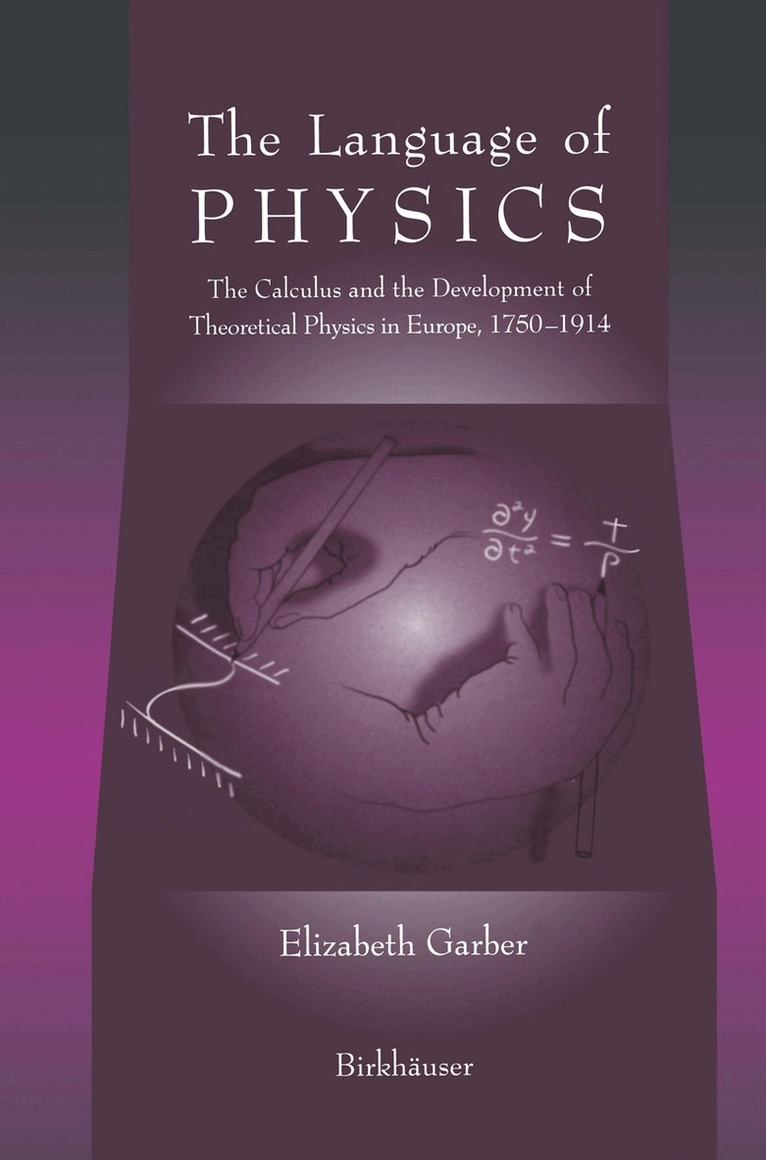
    Language of Physics

    The Calculus and the Development of Theoretical Physics in Europe, 1750–1914

    AvElizabeth Garber

    Inbunden, Engelska, 1998

    1 085 kr

    Beställningsvara. Skickas inom 10-15 vardagar. Fri frakt över 249 kr.

    Fler format och utgåvor

    E-bok

    1 413 kr

    Häftad

    1 085 kr

    Beskrivning

    This study began as an attempt to understand mechanics in the nineteenth century. The terms mechanics and mechanical world view were being used as general descriptions of nineteenth-century physicists' assumptions and interpretations of nature. However, there were no studies of the particulars of these assumptions or the range and content of these interpretations. Rene Dugas' work on classical mechanics focused on France. The search for the particulars of these forms of "mechanics" led me to explore precisely what mechanics meant to physicists of a century and more ago. However, none of Lagrange's, Hamilton's, or Jacobi's "mechanics," while ele­ gant, fits easily within the history of physics. Lagrange reduced mechanics to an exercise in analysis; Hamilton and Jacobi used mechanics to explore solutions to partial differential equations. They were mathematicians doing mathematics. As I went deeper into the matter it became obvious that, in the nineteenth century, there were two kinds of mechanics, each containing a variety of forms, one physical, the other mathematical. There were a group of men using mechanics to understand nature and another group using the equations of mechanics to explore the calcu­ lus. However, when tracing these two traditions back into the eighteenth century, physics disappeared altogether.

    Produktinformation

    • Utgivningsdatum:1998-12-01
    • Mått:155 x 235 x 24 mm
    • Vikt:772 g
    • Format:Inbunden
    • Språk:Engelska
    • Antal sidor:399
    • Upplaga:1999
    • Förlag:Birkhauser Boston Inc
    • ISBN:9780817640392

    Utforska kategorier

    • Fysik inom Naturvetenskap och teknik
    • Naturvetenskapens historia inom Naturvetenskap och teknik

    Recensioner i media

    "Garber discusses an interesting part of scientific development, using examples of theoretical physics and their historical steps." ---Mathematical Reviews "Garber argues her case convincingly... A very valuable addition to the existing literature on the history of modern physics. The book is also well written... Those who make an effort to follow the argument will gain many new insights and obtain a fresh outlook at the mathematization of physics in the 18th and 19th centuries." ---Physics World

    Innehållsförteckning

    • I: Introduction.- Mathematics and Modern Physics.- Modern Physics.- Earlier Historical Approaches to Modern Physics.- Mathematics as Language.- Organization of the Text.- I: Eighteenth-Century Science.- II: Vibrating Strings and Eighteenth-Century Mechanics.- III: Eighteenth-Century Physics and Mathematics: A Reassessment.- II: Transitions, 1790–1830.- IV: “Empirical Literalism”: Mathematical Versus Experimental Physics in France, 1790–1830.- V: On the Margins: Experimental Physics and Mathematics in the German States, 1790–1830.- VI: On the Margins: Experimental Philosophy and Mathematics in Britain, 1790–1830.- III: Transformations, 1830–1870.- VII: From Natural Philosophy and “Mixed Mathematics” to Theoretical and Experimental Physics: Britain, 1830–1870.- VIII: Physics and Mathematics in the German States, 1830–1870.- IV: Conclusions and Epilogue.- IX: Physics About 1870 and the “Decline” of French Physics.- X: Epilogue: Forging New Relationships: 1870–1914.