Elizabeth Griffiths – författare
Visar alla böcker från författaren Elizabeth Griffiths. Handla med fri frakt och snabb leverans.
5 produkter
Consumption and Gender in the Early Seventeenth-Century Household
The World of Alice Le Strange
Av Elizabeth Griffiths, Jane Whittle
E-bok, 2012
1718 kr
Lägg i varukorg
Lady Alice Le Strange of Hunstanton in Norfolk kept a continuous series of household accounts from 1610-1654. Jane Whittle and Elizabeth Griffiths have used the Le Stranges'' rich archive to reconstruct the material aspects of family life. This involves looking not only at purchases, but also at …
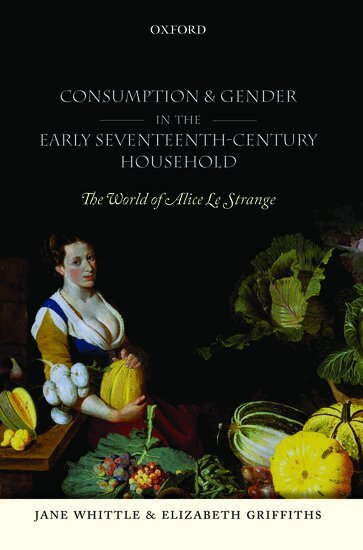
Consumption and Gender in the Early Seventeenth-Century Household
The World of Alice Le Strange
Av Jane Whittle, Elizabeth Griffiths
Inbunden, 2012
2753 kr
Lägg i varukorg
Lady Alice Le Strange of Hunstanton in Norfolk kept a continuous series of household accounts from 1610-1654. Jane Whittle and Elizabeth Griffiths have used the Le Stranges' rich archive to reconstruct the material aspects of family life. This involves looking not only at purchases, but also at …
Gangs in America's Communities
Av Elizabeth Griffiths, James C. Howell
E-bok, 2018
929 kr
Lägg i varukorg
"[Gangs in America′s Communities] is one of the most comprehensive treatments of gangs in the marketplace. . . . I highly recommend its adoption as you will not be disappointed and, most importantly, neither will your students." —Elvira White-Lewis, Texas A&M University-Commerce Gangs in America′s …
New Welsh Reader 133
Voices
Av Mark Blayney, Elizabeth Griffiths m. fl.
E-bok, 2023
102 kr
Lägg i varukorg
Female-led European literature with a focus on place in nonfiction, narrative voice in fiction and diversity in poetry. Plus illustrations by Katherine Cleaver. This edition presents the winner of the New Welsh Writing Awards 2023 Rheidol Prize for Prose with a Welsh Theme or Setting: …
Managing for Posterity
The Norfolk gentry and their estates c.1450-1700
Av Elizabeth Griffiths, Jane Whittle
Inbunden, 2022
521 kr
Tillfälligt slut
Securing the long-term survival and status of the family has always been the principal concern of the English aristocracy and gentry. Central to that ambition has been the successful management of their landed estates, whilst failure in this regard could spell ruination for an entire family. In the …