Elizabeth Gruber - Böcker
Visar alla böcker från författaren Elizabeth Gruber. Handla med fri frakt och snabb leverans.
4 produkter
4 produkter
724 kr
Skickas inom 10-15 vardagar
The work of Shakespeare and his contemporaries has often been the testing-ground for innovations in literary studies, but this has not been true of ecocriticism. This is partly because, until recently, most ecologically minded writers have located the origins of ecological crisis in the Enlightenment, with the legacies of the Cartesian cogito singled out as a particular cause of our current woes. Traditionally, Renaissance writers were tacitly (or, occasionally, overtly) presumed to be oblivious of environmental degradation and unaware that the episteme—the conceptual edifice of their historical moment—was beginning to crack. This perception is beginning to change, and Dr. Guber's work is poised to illuminate the burgeoning number of ecocritical studies devoted to this period, in particular, by showing how the classical concept of the cosmopolis, which posited the harmonious integration of the Order of Nature (cosmos) with the Order of Society (polis), was at once revived and also systematically dismantled in the Renaissance. Renaissance Ecopolitics from Shakespeare to Bacon: Rethinking Cosmopolis demonstrates that the Renaissance is the hinge, the crucial turning point in the human-nature relationship and examines the persisting ecological consequences of the nature-state’s demise.
2 430 kr
Skickas inom 10-15 vardagar
The work of Shakespeare and his contemporaries has often been the testing-ground for innovations in literary studies, but this has not been true of ecocriticism. This is partly because, until recently, most ecologically minded writers have located the origins of ecological crisis in the Enlightenment, with the legacies of the Cartesian cogito singled out as a particular cause of our current woes. Traditionally, Renaissance writers were tacitly (or, occasionally, overtly) presumed to be oblivious of environmental degradation and unaware that the episteme—the conceptual edifice of their historical moment—was beginning to crack. This perception is beginning to change, and Dr. Guber's work is poised to illuminate the burgeoning number of ecocritical studies devoted to this period, in particular, by showing how the classical concept of the cosmopolis, which posited the harmonious integration of the Order of Nature (cosmos) with the Order of Society (polis), was at once revived and also systematically dismantled in the Renaissance. Renaissance Ecopolitics from Shakespeare to Bacon: Rethinking Cosmopolis demonstrates that the Renaissance is the hinge, the crucial turning point in the human-nature relationship and examines the persisting ecological consequences of the nature-state’s demise.
727 kr
Skickas inom 10-15 vardagar
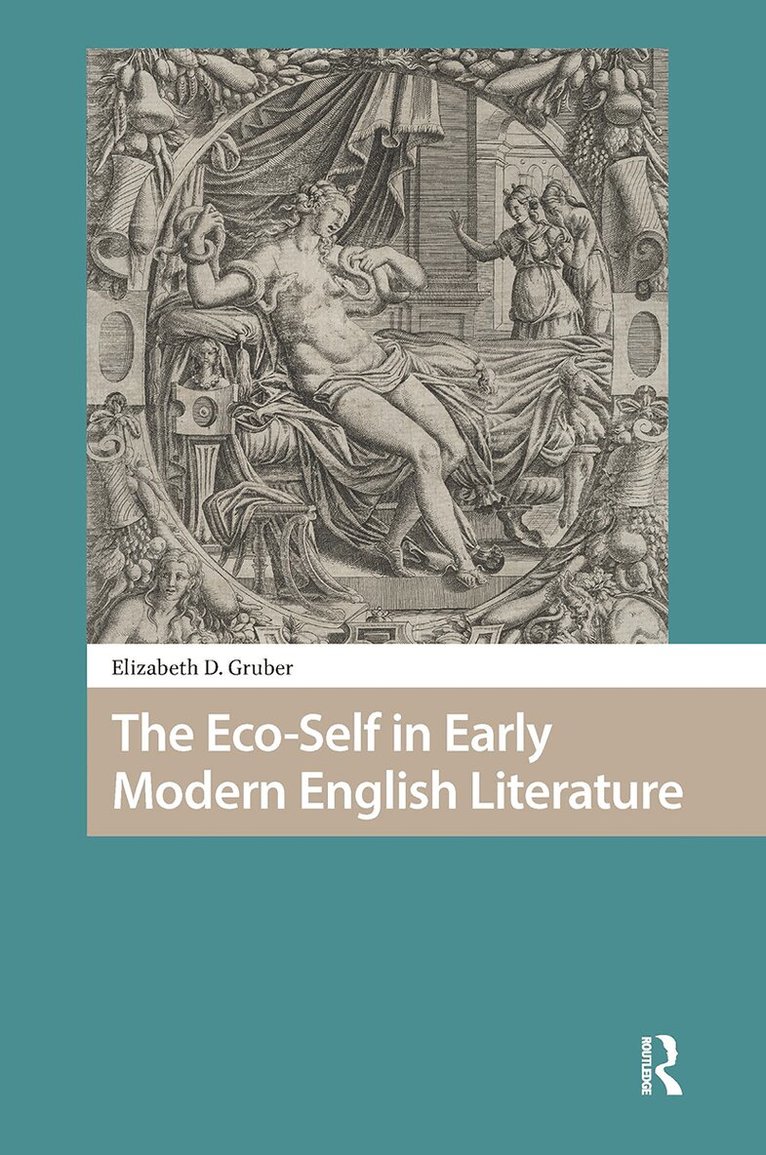
The Eco-Self in Early Modern English Literature tracks an important shift in early modern conceptions of selfhood, arguing that the period hosted the birth of a new subset of the human, the eco-self, which melds a deeply introspective turn with an abiding sense of humans’ embedment in the world. A confluence of cultural factors produced the relevant changes. Of paramount significance was the rapid spread of literacy in England and across Europe: reading transformed the relationship between self and world, retooled moral reasoning, and even altered human anatomy. This book pursues the salutary possibilities, including the ecological benefits, of this redesigned self by advancing fresh readings of texts by William Shakespeare, Christopher Marlowe, John Webster, and Margaret Cavendish. The eco-self offers certain refinements to ecological theory by renewing appreciation for the rational, deliberative functions that distinguish humans from other species.
Del 7 - Environmental Humanities in Pre-modern Cultures
Eco-Self in Early Modern English Literature
Inbunden, Engelska, 2023
1 860 kr
Skickas inom 10-15 vardagar
The Eco-Self in Early Modern English Literature tracks an important shift in early modern conceptions of selfhood, arguing that the period hosted the birth of a new subset of the human, the eco-self, which melds a deeply introspective turn with an abiding sense of humans’ embedment in the world. A confluence of cultural factors produced the relevant changes. Of paramount significance was the rapid spread of literacy in England and across Europe: reading transformed the relationship between self and world, retooled moral reasoning, and even altered human anatomy. This book pursues the salutary possibilities, including the ecological benefits, of this redesigned self by advancing fresh readings of texts by William Shakespeare, Christopher Marlowe, John Webster, and Margaret Cavendish. The eco-self offers certain refinements to ecological theory by renewing appreciation for the rational, deliberative functions that distinguish humans from other species.