Elizabeth M. Tracy - Böcker
Visar alla böcker från författaren Elizabeth M. Tracy. Handla med fri frakt och snabb leverans.
5 produkter
5 produkter
1 099 kr
Tillfälligt slut
Focusing on a program ("Homebuilders") that has attracted national attention, this book develops implications for family-centered curricula in such areas as social policy, direct practice, program design/management, practice research, theory and prevention.
1 069 kr
Tillfälligt slut
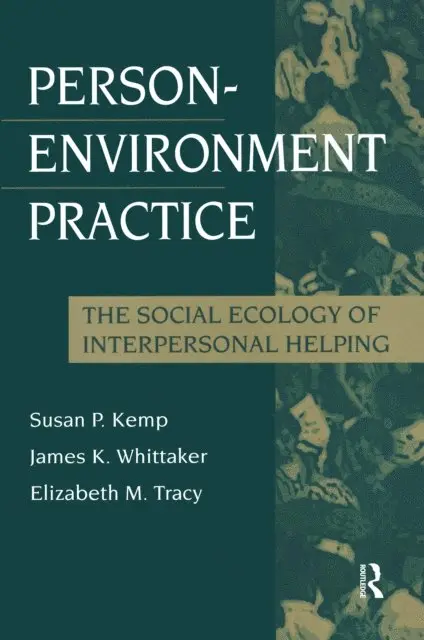
Person-Environment Practice addresses a core but long- neglected dimension in social work and human services practice; accurate environmental assessment and strategic environmental intervention. Despite the centrality of "person-environment" as a key construct in direct practice, the domain of environmental assessment/intervention has received relatively little systematic attention in the practice literature. For a variety of reasons, the core focus of direct practice assessment and change strategies has centered more on "person" than "environment." This book seeks to redress that imbalance. Ironically, the relative lack of attention to environmentally oriented practice persists even as current demands of practice fall increasingly under the rubric of what we here call "environmental intervention," defined as both action in the environment and the process of transforming individual and collective perspectives through critical analysis of the impact of environmental conditions. The authors argue that the ability to understand "environment" from the client's perspective and to function effectively in the environmental domain is central to many emergent areas of practice such as practice with extended families and personal networks, practice from a "strengths" perspective, and culturally competent practice. In Person-Environment Practice, the authors offer a coherent critique and overview of environmental assessment and intervention congruent with the demands of both newly emerging and established interpersonal helping approaches within social work's domain. Robert Halpern of the Erikson Institute for Advanced Studies in Child Development described the book as "as clear, thoughtful and subtle a discussion of how to consider the environment in interpersonal helping as I have seen in the literature" and Anthony Maluccio of Boston College called the book "a timely and exciting contribution, with appreciation and respect for social work practices and qualities of inspiration as well as intellectual stimulation" Susan P. Kemp is assistant professor, School of Social Work, The University of Washington, Seattle. James K. Whittaker is professor, School of Social Work, The University of Washington, Seattle. Elizabeth M. Tracy is associate professor, Mandel School of Applied Social Sciences, Case Western Reserve University, Cleveland, Ohio.
652 kr
Skickas inom 10-15 vardagar
Person-Environment Practice addresses a core but long- neglected dimension in social work and human services practice; accurate environmental assessment and strategic environmental intervention. Despite the centrality of "person-environment" as a key construct in direct practice, the domain of environmental assessment/intervention has received relatively little systematic attention in the practice literature. For a variety of reasons, the core focus of direct practice assessment and change strategies has centered more on "person" than "environment." This book seeks to redress that imbalance. Ironically, the relative lack of attention to environmentally oriented practice persists even as current demands of practice fall increasingly under the rubric of what we here call "environmental intervention," defined as both action in the environment and the process of transforming individual and collective perspectives through critical analysis of the impact of environmental conditions. The authors argue that the ability to understand "environment" from the client's perspective and to function effectively in the environmental domain is central to many emergent areas of practice such as practice with extended families and personal networks, practice from a "strengths" perspective, and culturally competent practice. In Person-Environment Practice, the authors offer a coherent critique and overview of environmental assessment and intervention congruent with the demands of both newly emerging and established interpersonal helping approaches within social work's domain. Robert Halpern of the Erikson Institute for Advanced Studies in Child Development described the book as "as clear, thoughtful and subtle a discussion of how to consider the environment in interpersonal helping as I have seen in the literature" and Anthony Maluccio of Boston College called the book "a timely and exciting contribution, with appreciation and respect for social work practices and qualities of inspiration as well as intellectual stimulation" Susan P. Kemp is assistant professor, School of Social Work, The University of Washington, Seattle. James K. Whittaker is professor, School of Social Work, The University of Washington, Seattle. Elizabeth M. Tracy is associate professor, Mandel School of Applied Social Sciences, Case Western Reserve University, Cleveland, Ohio.
983 kr
Skickas
This book emphasizes family-centered, social network, and school-based interventions in the preparation of social workers for direct and indirect practice with clients from vulnerable populations, especially the poor, people of color, and recent immigrant groups. With an eye to recent changes in social work practice and service delivery, including the impact of welfare reform and managed care on vulnerable families and children, Social Work Practice with Families and Children helps social work students and practitioners understand the increasingly complex needs of their clients. Three valuable appendixes include information about tools and instruments to support practice, child welfare resource centers, and electronic resources pertaining to the field.
2 420 kr
Skickas inom 3-6 vardagar
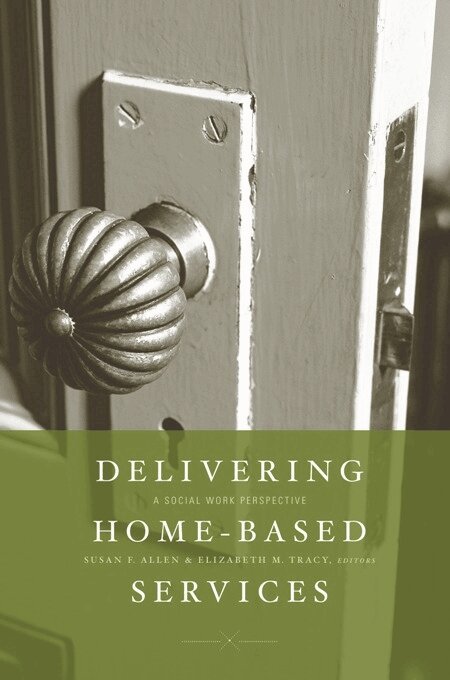
Service providers are increasingly called upon to serve clients at home, a setting even a seasoned professional can find difficult to negotiate. From monitoring the health of older populations to managing paroled offenders, preventing child abuse, and reunifying families, home-based services require models that ensure positive outcomes and address the ethical dilemmas that might arise in such sensitive contexts. The contributors to this volume are national experts in diverse fields of social work practice, policy, and research. Treating the home as an ecological setting that guides human development and family interaction, they present rationales for and overviews of evidence-based models across an array of populations and fields of practice. Part 1 provides historical background and contemporary applications for home-based services, highlighting ethical, administrative, and supervision issues and summarizing the social policies that shape service delivery.Part 2 addresses home-based practice in such fields as child and adult mental health, school social work, and hospice care, detailing the particular population being treated, the policy and agency context, theories and empirical data, and practice guidelines. Part 3, the editors present a unifying framework and suggest future directions for home-based social work.