Elizabeth Tandy Shermer - Böcker
Visar alla böcker från författaren Elizabeth Tandy Shermer. Handla med fri frakt och snabb leverans.
6 produkter
6 produkter
Indentured Students
How Government-Guaranteed Loans Left Generations Drowning in College Debt
Inbunden, Engelska, 2021
250 kr
Skickas inom 7-10 vardagar
The untold history of how America’s student-loan program turned the pursuit of higher education into a pathway to poverty.It didn’t always take thirty years to pay off the cost of a bachelor’s degree. Elizabeth Tandy Shermer untangles the history that brought us here and discovers that the story of skyrocketing college debt is not merely one of good intentions gone wrong. In fact, the federal student loan program was never supposed to make college affordable.The earliest federal proposals for college affordability sought to replace tuition with taxpayer funding of institutions. But Southern whites feared that lower costs would undermine segregation, Catholic colleges objected to state support of secular institutions, professors worried that federal dollars would come with regulations hindering academic freedom, and elite-university presidents recoiled at the idea of mass higher education. Cold War congressional fights eventually made access more important than affordability. Rather than freeing colleges from their dependence on tuition, the government created a loan instrument that made college accessible in the short term but even costlier in the long term by charging an interest penalty only to needy students. In the mid-1960s, as bankers wavered over the prospect of uncollected debt, Congress backstopped the loans, provoking runaway inflation in college tuition and resulting in immense lender profits.Today 45 million Americans owe more than $1.5 trillion in college debt, with the burdens falling disproportionately on borrowers of color, particularly women. Reformers, meanwhile, have been frustrated by colleges and lenders too rich and powerful to contain. Indentured Students makes clear that these are not unforeseen consequences. The federal student loan system is working as designed.
432 kr
Skickas inom 10-15 vardagar
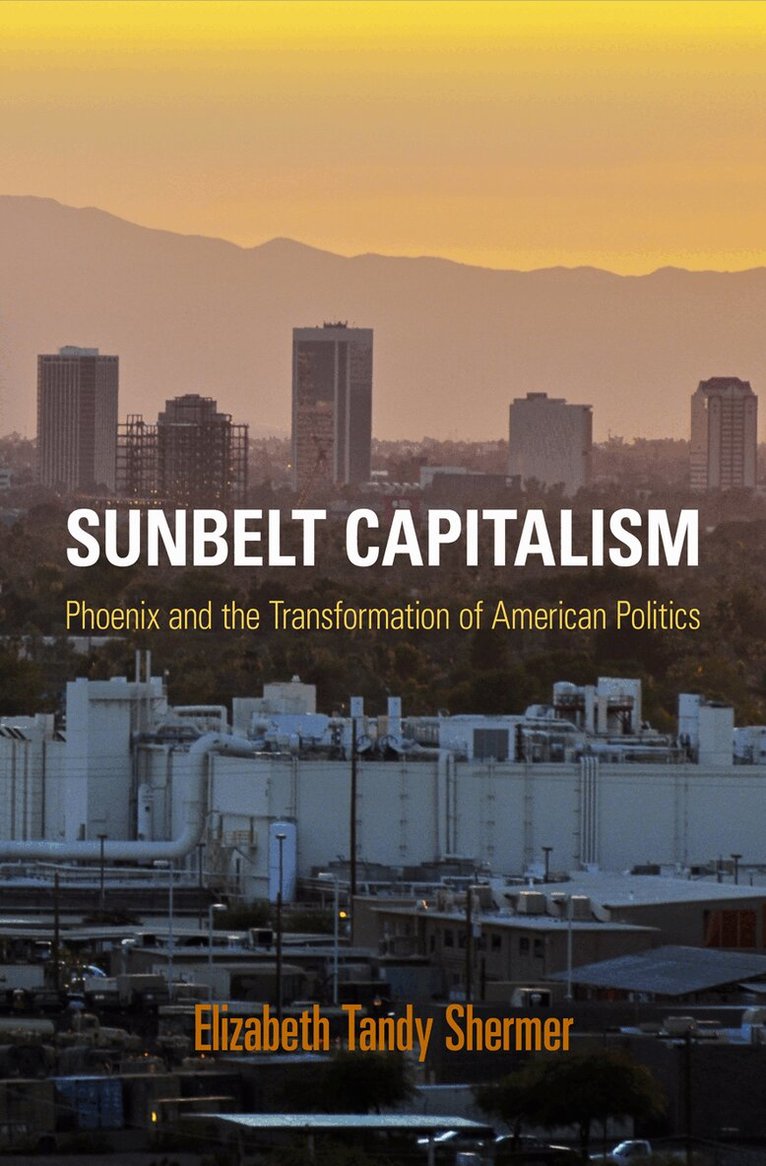
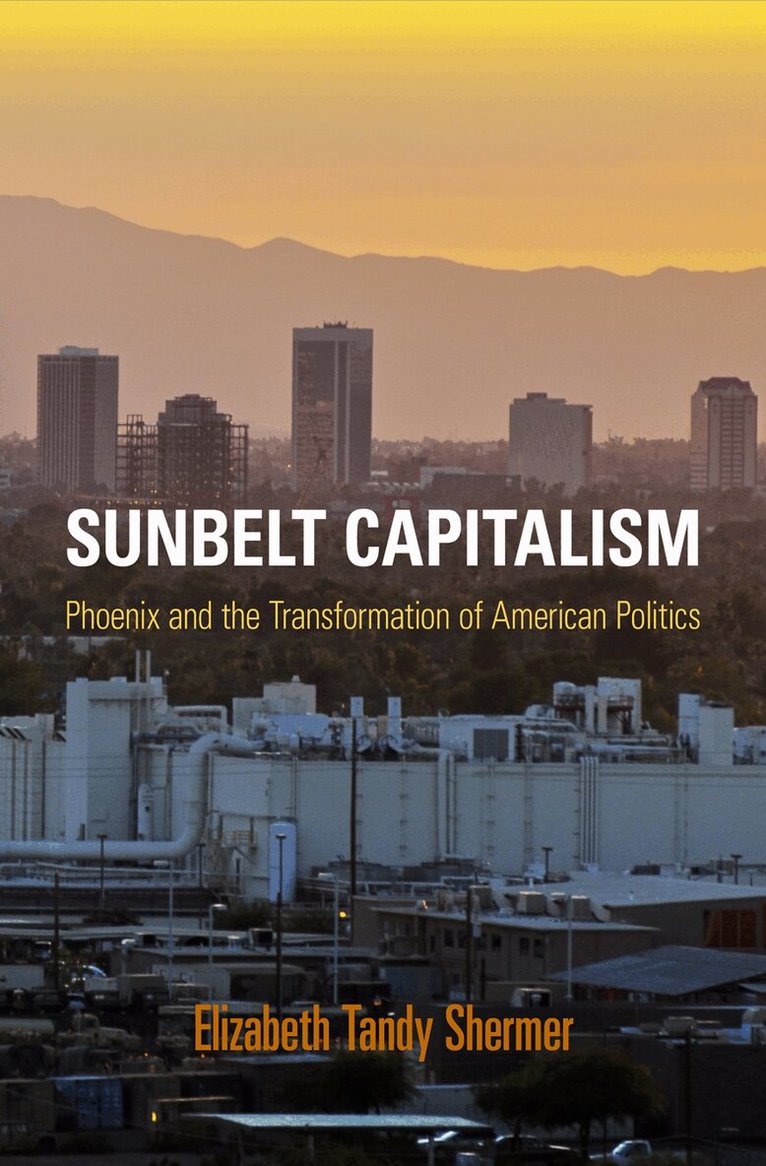
Few Sunbelt cities burned brighter or contributed more to the conservative movement than Phoenix. In 1910, eleven thousand people called Phoenix home; now, over four million reside in this metropolitan region. In Sunbelt Capitalism, Elizabeth Tandy Shermer tells the story of the city's expansion and its impact on the nation. The dramatic growth of Phoenix speaks not only to the character and history of the Sunbelt but also to the evolution in American capitalism that sustained it.In the 1930s, Barry Goldwater and other members of the Phoenix Chamber of Commerce feared the influence of New Deal planners, small businessmen, and Arizona trade unionists. While Phoenix's business elite detested liberal policies, they were not hostile to government action per se. Goldwater and his contemporaries instead experimented with statecraft now deemed neoliberal. They embraced politics, policy, and federal funding to fashion a favorable "business climate," which relied on disenfranchising voters, weakening unions, repealing regulations, and shifting the tax burden onto homeowners and consumers. These efforts allied them with executives at the helm of the modern conservative movement, whose success partially hinged on relocating factories from the Steelbelt to the kind of free-enterprise oasis that Phoenix represented. But the city did not sprawl in a vacuum. All Sunbelt boosters used the same incentives to compete at a fever pitch for investment, and the resulting drain of jobs and capital from the industrial core forced Midwesterners and Northeasterners into the brawl. Eventually this "Second War Between the States" reoriented American politics toward the principle that the government and the citizenry should be working in the interest of business.
426 kr
Skickas inom 7-10 vardagar
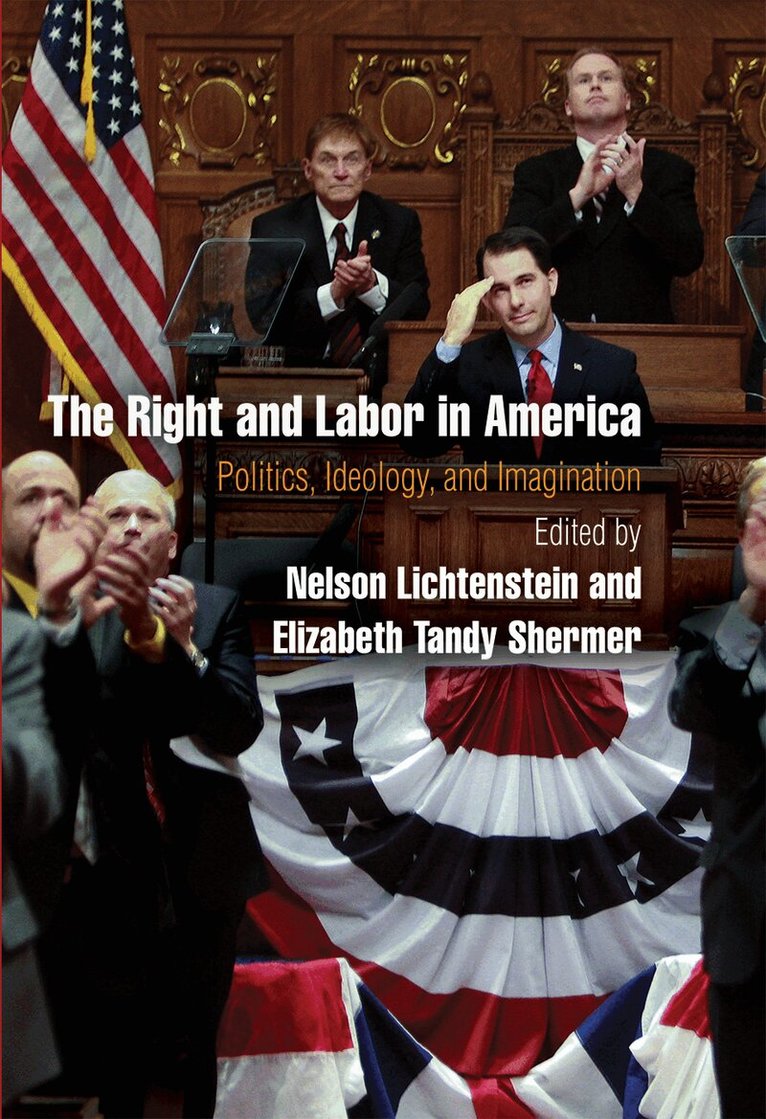
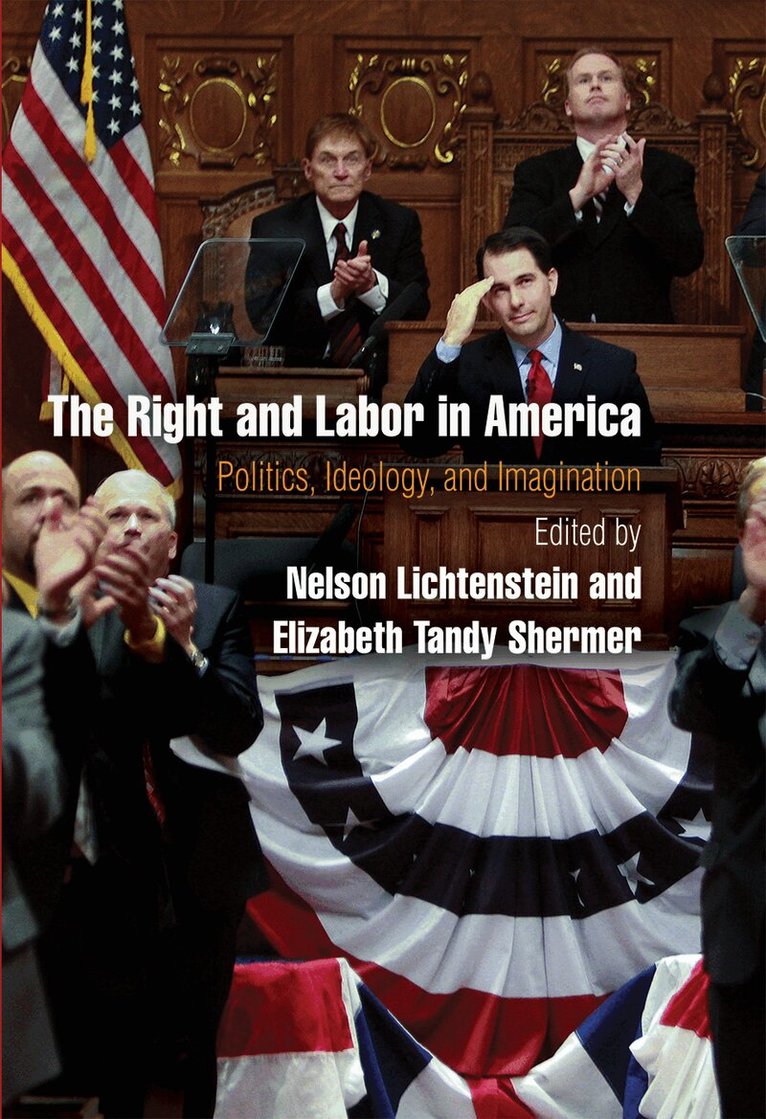
The legislative attack on public sector unionism that gave rise to the uproar in Wisconsin and other union strongholds in 2011 was not just a reaction to the contemporary economic difficulties faced by the government. Rather, it was the result of a longstanding political and ideological hostility to the very idea of trade unionism put forward by a conservative movement whose roots go as far back as the Haymarket Riot of 1886. The controversy in Madison and other state capitals reveals that labor's status and power has always been at the core of American conservatism, today as well as a century ago.The Right and Labor in America explores the multifaceted history and range of conservative hostility toward unionism, opening the door to a fascinating set of individuals, movements, and institutions that help explain why, in much of the popular imagination, union leaders are always "bosses" and trade union organizers are nothing short of "thugs." The contributors to this volume explore conservative thought about unions, in particular the ideological impulses, rhetorical strategies, and political efforts that conservatives have deployed to challenge unions as a force in U.S. economic and political life over the century. Among the many contemporary books on American parties, personalities, and elections that try to explain why political disputes are so divisive, this collection of original and innovative essays is essential reading.
399 kr
Skickas inom 7-10 vardagar
Nearly four million Americans worked on Barry Goldwater's behalf in the presidential election of 1964. These citizens were as dedicated to their cause as those who fought for civil rights and against the Vietnam War. Arguably, the conservative agenda that began with Goldwater has had effects on American politics and society as profound and far reaching as the liberalism of the 1960s. According to the essays in this volume, it's high time for a reconsideration of Barry Goldwater's legacy. Since Goldwater's death in 1998, politicians, pundits, and academics have been assessing his achievements and his shortcomings. The twelve essays in this volume thoroughly examine the life, times, and impact of 'Mr. Conservative.' Scrutinizing the transformation of a Phoenix department store owner into a politician, de facto political philosopher, and five-time US senator, contributors highlight the importance of power, showcasing the relationship between the nascent conservative movement's cadre of elite businessmen, newsmen, and intellectuals and their followers at the grassroots - or sagebrush - level. Goldwater, who was born in the Arizona Territory in 1909, was deeply influenced by his Western upbringing. With his appearance on the national stage in 1964, he not only articulated a new brand of conservatism but gave a voice to many Americans who were not enamored with the social and political changes of the era. He may have lost the battle for the presidency, but he energized a coalition of journalists, publishers, women's groups, and Southerners to band together in a movement that reshaped the nation.
602 kr
Skickas inom 7-10 vardagar
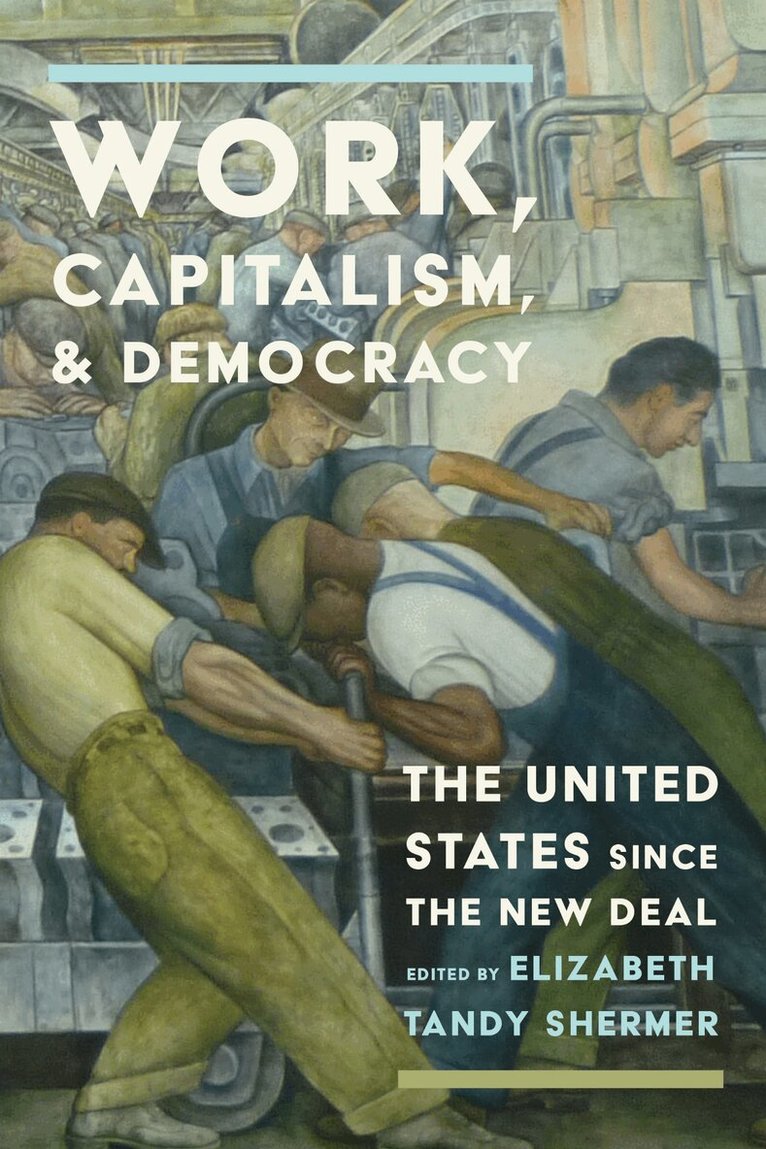
A collection of essays exploring the meaning of work, capitalism, and democracy in the past to shed light on the same conflicts todayChanges to the meaning and nature of work, capitalism, and democracy during and after the New Deal have been contested from the mid-twentieth century to the present day. Rather than rehashing the familiar, tidy story of a Democratic coalition coming together in the 1930s only to be felled by conservative movements in the 1970s, this volume instead emphasizes that the prosperity many white American families enjoyed did not stop the fights over whose work would be recognized, how corporations would be regulated, and whose democratic rights would be protected, both on and off the job. Cultural representations of the ideal worker, legal battles over workplace rights, political standoffs over inflation policies, dire warnings against too much regulation, and abuses of the tax code indicate there never really was a consensus on how democratic the country, its economic system, and its workplaces would be.As the collected essays suggest, backlash does not seem the right word to describe the challenges left-leaning politicians, environmental activists, and immigrants faced in the late twentieth century, when managing supply chains became far more lucrative than manufacturing the goods being shipped around the world. Using the broad categories of work, capitalism, and democracy to reinterrogate the past, contributors contend, is the only way to understand today's conflicts over the future of how Americans will work, how capitalism will function, and how the country will be governed.Contributors: Carl J. Bon Tempo, Daniel Geary, Shane Hamilton, Meg Jacobs, Nelson Lichtenstein, Reuel Schiller, Elizabeth Tandy Shermer, Lauren Rebecca Sklaroff, Samir Sonti, Joseph J. Thorndike, Jean-Christian Vinel, Leandra Zarnow.
630 kr
Kommande