Ellen Messer-Davidow – författare
Visar alla böcker från författaren Ellen Messer-Davidow. Handla med fri frakt och snabb leverans.
7 produkter
Making of Reverse Discrimination
How DeFunis and Bakke Bleached Racism from Equal Protection
Häftad, 2021
426 kr
Lägg i varukorg
In The Making of Reverse Discrimination Ellen Messer-Davidow offers a fresh and incisive analysis of the legal-judicial discourse of DeFunis v. Odegaard (1974) and Regents of the University of California v. Bakke (1978), the first two cases challenging race-conscious admissions to professional …
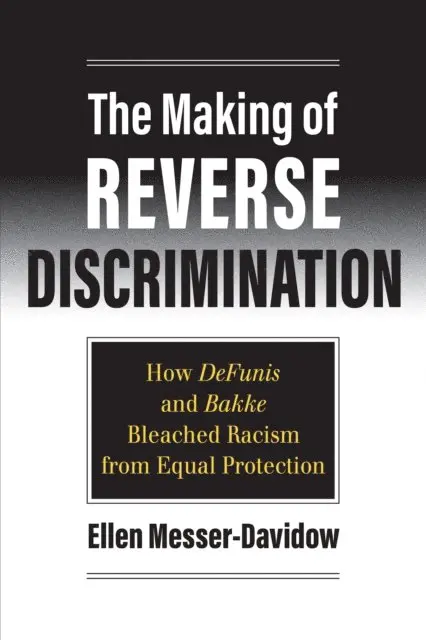
Making of Reverse Discrimination
How DeFunis and Bakke Bleached Racism from Equal Protection
E-bok, 2021
436 kr
Lägg i varukorg
In The Making of Reverse Discrimination Ellen Messer-Davidow offers a fresh and incisive analysis of the legal-judicial discourse of DeFunis v. Odegaard (1974) and Regents of the University of California v. Bakke (1978), the first two cases challenging race-conscious admissions to professional …
Knowledges
Historical and Critical Studies in Disciplinarity
Av Ellen Messer-Davidow, David R. Shumway m. fl.
Inbunden, 1993
983 kr
Lägg i varukorg
Socially and conceptually, we are disciplined by our disciplines. They help produce our world. They specify the objects we can study (genes, deviant persons, classic texts) and the relations that obtain among them (mutation, criminality, canonicity). They provide criteria for our knowledge (truth, …
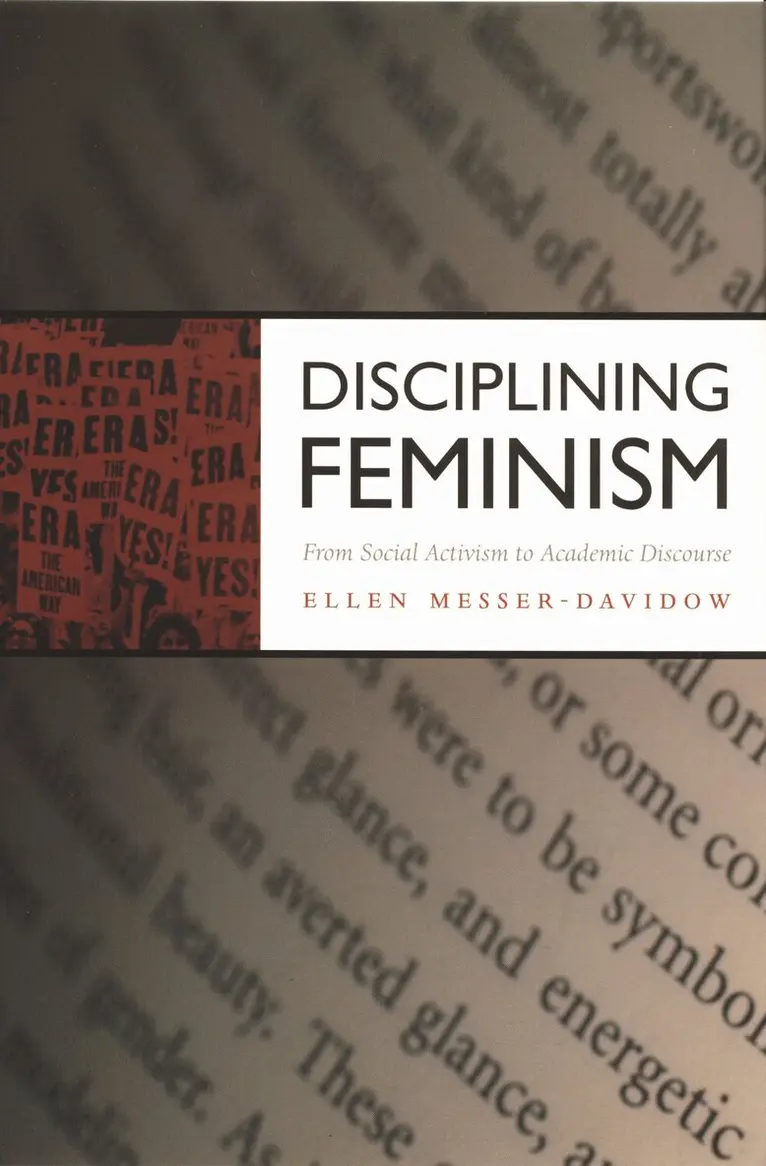
Disciplining Feminism
From Social Activism to Academic Discourse
Häftad, 2002
632 kr
Lägg i varukorg
How was academic feminism formed by the very institutions it originally set out to transform? This is the question Ellen Messer-Davidow seeks to answer in Disciplining Feminism. Launched thirty years ago as a bold venture to cut across disciplines and bridge the gap between scholarly knowledge and …
Disciplining Feminism
From Social Activism to Academic Discourse
E-bok, 2002
633 kr
Lägg i varukorg
How was academic feminism formed by the very institutions it originally set out to transform? This is the question Ellen Messer-Davidow seeks to answer in Disciplining Feminism. Launched thirty years ago as a bold venture to cut across disciplines and bridge the gap between scholarly knowledge and …
Making of Reverse Discrimination
How DeFunis and Bakke Bleached Racism from Equal Protection
Inbunden, 2021
1162 kr
Tillfälligt slut
In The Making of Reverse Discrimination Ellen Messer-Davidow offers a fresh and incisive analysis of the legal-judicial discourse of DeFunis v. Odegaard (1974) and Regents of the University of California v. Bakke (1978), the first two cases challenging race-conscious admissions to professional …
Disciplining Feminism
From Social Activism to Academic Discourse
Inbunden, 2002
1465 kr
Tillfälligt slut
How was academic feminism formed by the very institutions it originally set out to transform? This is the question Ellen Messer-Davidow seeks to answer in Disciplining Feminism. Launched thirty years ago as a bold venture to cut across disciplines and bridge the gap between scholarly knowledge and …