Ellen O'Gorman – författare
Visar alla böcker från författaren Ellen O'Gorman. Handla med fri frakt och snabb leverans.
13 produkter
13 produkter
E-bok
PDF, Engelska, 20131 433 kr
Läs direkt efter köp
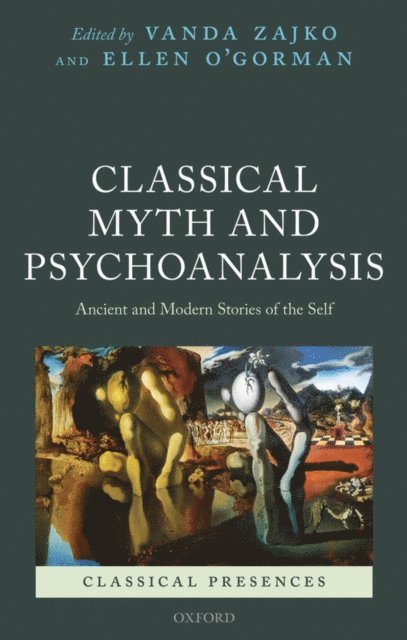
Since Freud published the Interpretation of Dreams in 1900 and utilized Sophocles'' Oedipus Rex to work through his developing ideas about the psycho-sexual development of children, it has been virtually impossible to think about psychoanalysis without reference to classical myth. Myth has the capacity to transcend the context of any particular retelling, continuing to transform our understanding of the present. Throughout the twentieth century,experts on the ancient world have turned to the insights of psychoanalytic criticism to supplement and inform their readings of classical myth and literature.This volume examines the inter-relationship of classical myth and psychoanalysis from the generation before Freud to the present day, engaging with debates about the role of classical myth in modernity, the importance of psychoanalytic ideas for cultural critique, and its ongoing relevance to ways of conceiving the self. The chapters trace the historical roots of terms in everyday usage, such as narcissism and the phallic symbol, in the reception of Classical Greece, and cover a variety of bothclassical and psychoanalytic texts.
Inbunden, Engelska, 2013
2 091 kr
Skickas inom 5-8 vardagar
Since Freud published the Interpretation of Dreams in 1900 and utilized Sophocles' Oedipus Rex to work through his developing ideas about the psycho-sexual development of children, it has been virtually impossible to think about psychoanalysis without reference to classical myth. Myth has the capacity to transcend the context of any particular retelling, continuing to transform our understanding of the present. Throughout the twentieth century, experts on the ancient world have turned to the insights of psychoanalytic criticism to supplement and inform their readings of classical myth and literature. This volume examines the inter-relationship of classical myth and psychoanalysis from the generation before Freud to the present day, engaging with debates about the role of classical myth in modernity, the importance of psychoanalytic ideas for cultural critique, and its ongoing relevance to ways of conceiving the self. The chapters trace the historical roots of terms in everyday usage, such as narcissism and the phallic symbol, in the reception of Classical Greece, and cover a variety of both classical and psychoanalytic texts.
Häftad, Engelska, 2006
689 kr
Skickas inom 7-10 vardagar
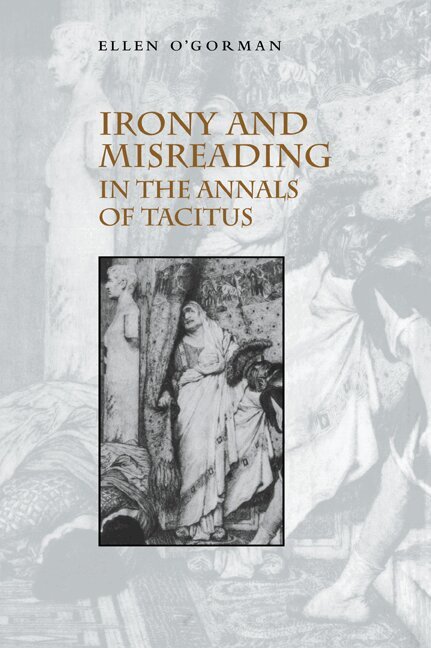
This 2000 book examines Tacitus' Annals as an ironic portrayal of Julio-Claudian Rome, through close analysis of passages in which characters engage in interpretation and misreading. By representing the misreading of signifying systems - such as speech, gesture, writing, social structures and natural phenomena - Tacitus obliquely comments upon the perversion of Rome's republican structure in the new principate. Furthermore, this study argues that the distinctively obscure style of the Annals is used by Tacitus to draw his reader into the ambiguities and compromises of the political regime it represents. The strain on language and meaning both portrayed and enacted by the Annals in this way gives voice to a form of political protest to which the reader must respond in the course of interpreting the narrative.
Inbunden, Engelska, 2000
1 485 kr
Skickas inom 7-10 vardagar
This 2000 book examines Tacitus' Annals as an ironic portrayal of Julio-Claudian Rome, through close analysis of passages in which characters engage in interpretation and misreading. By representing the misreading of signifying systems - such as speech, gesture, writing, social structures and natural phenomena - Tacitus obliquely comments upon the perversion of Rome's republican structure in the new principate. Furthermore, this study argues that the distinctively obscure style of the Annals is used by Tacitus to draw his reader into the ambiguities and compromises of the political regime it represents. The strain on language and meaning both portrayed and enacted by the Annals in this way gives voice to a form of political protest to which the reader must respond in the course of interpreting the narrative.
Häftad, Engelska, 2018
300 kr
Skickas
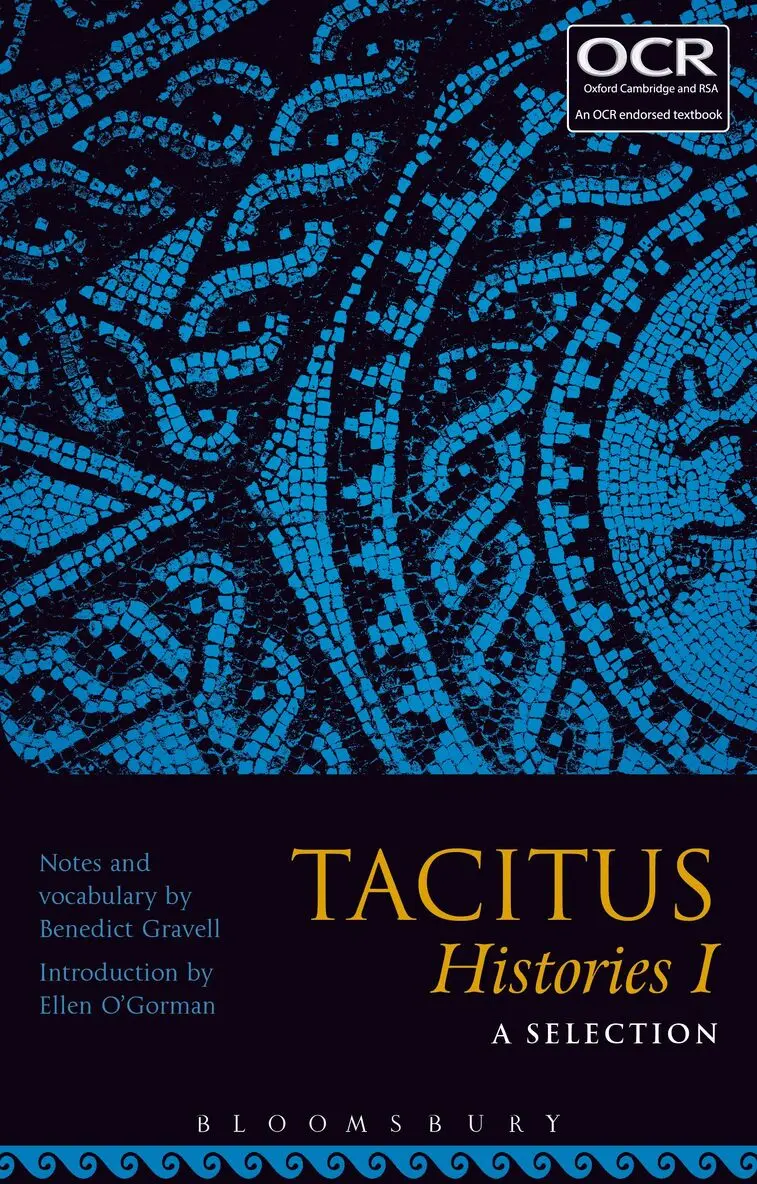
This is the endorsed publication from OCR and Bloomsbury for the Latin AS and A-Level (Group 1) prescription of Histories Book I sections 4 (finis Neronis ...) to 7, 12–14, 17–23 and 26, and the A-Level (Group 2) prescription of Histories Book I sections 27–36, 39–44 and 49, giving full Latin text, commentary and vocabulary, with a detailed introduction that also covers the prescribed text to be read in English for A Level.Histories I starts in AD 69, during the civil war after the death of Nero. Tacitus describes the unstable conditions in the Roman Empire, as different generals are elevated by their soldiers to the position of emperor. In the prescribed selection, rebellion and violence break out in the city of Rome, as the Praetorian Guard of the emperor Galba transfer their support to a controversial younger man, Otho. Tacitus vividly portrays the elderly Galba’s attempts to maintain order and discipline as power slips from his grasp, while Otho inspires the disorderly soldiers, keeping control only with difficulty over this volatile group of men.Resources are available on the Companion Website www.bloomsbury.com/ocr-editions-2019-2021
E-bok
Engelska, 2018331 kr
Läs direkt efter köp
This is the endorsed publication from OCR and Bloomsbury for the Latin AS and A-Level (Group 1) prescription of Histories Book I sections 4 (finis Neronis ...) to 7, 12–14, 17–23 and 26, and the A-Level (Group 2) prescription of Histories Book I sections 27–36, 39–44 and 49, giving full Latin text, commentary and vocabulary, with a detailed introduction that also covers the prescribed text to be read in English for A Level.Histories I starts in AD 69, during the civil war after the death of Nero. Tacitus describes the unstable conditions in the Roman Empire, as different generals are elevated by their soldiers to the position of emperor. In the prescribed selection, rebellion and violence break out in the city of Rome, as the Praetorian Guard of the emperor Galba transfer their support to a controversial younger man, Otho. Tacitus vividly portrays the elderly Galba''s attempts to maintain order and discipline as power slips from his grasp, while Otho inspires the disorderly soldiers, keeping control only with difficulty over this volatile group of men.Resources are available on the Companion Website www.bloomsbury.com/ocr-editions-2019-2021
E-bok
PDF, Engelska, 2018331 kr
Läs direkt efter köp
This is the endorsed publication from OCR and Bloomsbury for the Latin AS and A-Level (Group 1) prescription of Histories Book I sections 4 (finis Neronis ...) to 7, 12–14, 17–23 and 26, and the A-Level (Group 2) prescription of Histories Book I sections 27–36, 39–44 and 49, giving full Latin text, commentary and vocabulary, with a detailed introduction that also covers the prescribed text to be read in English for A Level.Histories I starts in AD 69, during the civil war after the death of Nero. Tacitus describes the unstable conditions in the Roman Empire, as different generals are elevated by their soldiers to the position of emperor. In the prescribed selection, rebellion and violence break out in the city of Rome, as the Praetorian Guard of the emperor Galba transfer their support to a controversial younger man, Otho. Tacitus vividly portrays the elderly Galba''s attempts to maintain order and discipline as power slips from his grasp, while Otho inspires the disorderly soldiers, keeping control only with difficulty over this volatile group of men.Resources are available on the Companion Website www.bloomsbury.com/ocr-editions-2019-2021
Inbunden, Engelska, 2020
1 573 kr
Skickas inom 10-15 vardagar
This study examines how Tacitus’ representation of speech determines the roles of speakers within the political sphere, and explores the possibility of politically effective speech in the principate. It argues against the traditional scholarly view that Tacitus refuses to offer a positive view of senatorial power in the principate: while senators did experience limitations and changes to what they could achieve in public life, they could aim to create a dimension of political power and efficacy through speeches intended to create and sustain relations which would in turn determine the roles played by both senators or an emperor. Ellen O’Gorman traces Tacitus’ own charting of these modes of speech, from flattery and aggression to advice, praise, and censure, and explores how different modes of speech in his histories should be evaluated: not according to how they conform to pre-existing political stances, but as they engender different political worlds in the present and future. The volume goes beyond literary analysis of the texts to create a new framework for studying this essential period in ancient Roman history, much in the same way that Tacitus himself recasts the political authority and presence of senatorial speakers as narrative and historical analysis.
E-bok
PDF, Engelska, 2020481 kr
Läs direkt efter köp
This study examines how Tacitus'' representation of speech determines the roles of speakers within the political sphere, and explores the possibility of politically effective speech in the principate. It argues against the traditional scholarly view that Tacitus refuses to offer a positive view of senatorial power in the principate: while senators did experience limitations and changes to what they could achieve in public life, they could aim to create a dimension of political power and efficacy through speeches intended to create and sustain relations which would in turn determine the roles played by both senators or an emperor. Ellen O''Gorman traces Tacitus'' own charting of these modes of speech, from flattery and aggression to advice, praise, and censure, and explores how different modes of speech in his histories should be evaluated: not according to how they conform to pre-existing political stances, but as they engender different political worlds in the present and future. The volume goes beyond literary analysis of the texts to create a new framework for studying this essential period in ancient Roman history, much in the same way that Tacitus himself recasts the political authority and presence of senatorial speakers as narrative and historical analysis.
E-bok
Engelska, 2020499 kr
Läs direkt efter köp
This study examines how Tacitus'' representation of speech determines the roles of speakers within the political sphere, and explores the possibility of politically effective speech in the principate. It argues against the traditional scholarly view that Tacitus refuses to offer a positive view of senatorial power in the principate: while senators did experience limitations and changes to what they could achieve in public life, they could aim to create a dimension of political power and efficacy through speeches intended to create and sustain relations which would in turn determine the roles played by both senators or an emperor. Ellen O''Gorman traces Tacitus'' own charting of these modes of speech, from flattery and aggression to advice, praise, and censure, and explores how different modes of speech in his histories should be evaluated: not according to how they conform to pre-existing political stances, but as they engender different political worlds in the present and future. The volume goes beyond literary analysis of the texts to create a new framework for studying this essential period in ancient Roman history, much in the same way that Tacitus himself recasts the political authority and presence of senatorial speakers as narrative and historical analysis.
Häftad, Engelska, 2022
463 kr
Skickas inom 10-15 vardagar
This study examines how Tacitus’ representation of speech determines the roles of speakers within the political sphere, and explores the possibility of politically effective speech in the principate. It argues against the traditional scholarly view that Tacitus refuses to offer a positive view of senatorial power in the principate: while senators did experience limitations and changes to what they could achieve in public life, they could aim to create a dimension of political power and efficacy through speeches intended to create and sustain relations which would in turn determine the roles played by both senators or an emperor. Ellen O’Gorman traces Tacitus’ own charting of these modes of speech, from flattery and aggression to advice, praise, and censure, and explores how different modes of speech in his histories should be evaluated: not according to how they conform to pre-existing political stances, but as they engender different political worlds in the present and future. The volume goes beyond literary analysis of the texts to create a new framework for studying this essential period in ancient Roman history, much in the same way that Tacitus himself recasts the political authority and presence of senatorial speakers as narrative and historical analysis.
E-bok
Engelska, 2019228 kr
Läs direkt efter köp
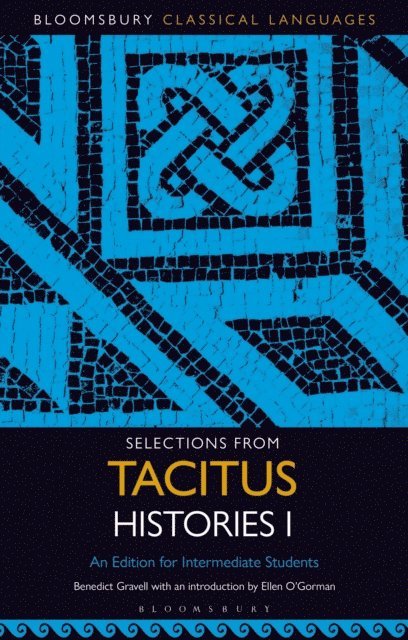
This is the first intermediate-student edition of a selection from Tacitus Histories I. Sections 4 (finis Neronis ...) to 7, 12–14, 17–23, 26–36, 39–44 and 49 are included as Latin text with an accompanying commentary and vocabulary. Focusing on a deliberately concise extract from the original, this edition is designed to be manageable for students reading the text for the first time while also perfectly encapsulating the interest of the longer work and inspiring further study of it. A detailed introduction explains points of historical and stylistic interest.Histories I starts in AD 69, during the civil war after the death of Nero. Tacitus describes the unstable conditions in the Roman Empire, as different generals are elevated by their soldiers to the position of emperor. In the prescribed selection, rebellion and violence break out in the city of Rome, as the Praetorian Guard of the emperor Galba transfer their support to a controversial younger man, Otho. Tacitus vividly portrays the elderly Galba's attempts to maintain order and discipline as power slips from his grasp, while Otho inspires the disorderly soldiers, keeping control only with difficulty over this volatile group of men.
E-bok
PDF, Engelska, 2019228 kr
Läs direkt efter köp
This is the first intermediate-student edition of a selection from Tacitus Histories I. Sections 4 (finis Neronis ...) to 7, 12–14, 17–23, 26–36, 39–44 and 49 are included as Latin text with an accompanying commentary and vocabulary. Focusing on a deliberately concise extract from the original, this edition is designed to be manageable for students reading the text for the first time while also perfectly encapsulating the interest of the longer work and inspiring further study of it. A detailed introduction explains points of historical and stylistic interest.Histories I starts in AD 69, during the civil war after the death of Nero. Tacitus describes the unstable conditions in the Roman Empire, as different generals are elevated by their soldiers to the position of emperor. In the prescribed selection, rebellion and violence break out in the city of Rome, as the Praetorian Guard of the emperor Galba transfer their support to a controversial younger man, Otho. Tacitus vividly portrays the elderly Galba's attempts to maintain order and discipline as power slips from his grasp, while Otho inspires the disorderly soldiers, keeping control only with difficulty over this volatile group of men.