Elspeth Jajdelska - Böcker
Visar alla böcker från författaren Elspeth Jajdelska. Handla med fri frakt och snabb leverans.
3 produkter
3 produkter
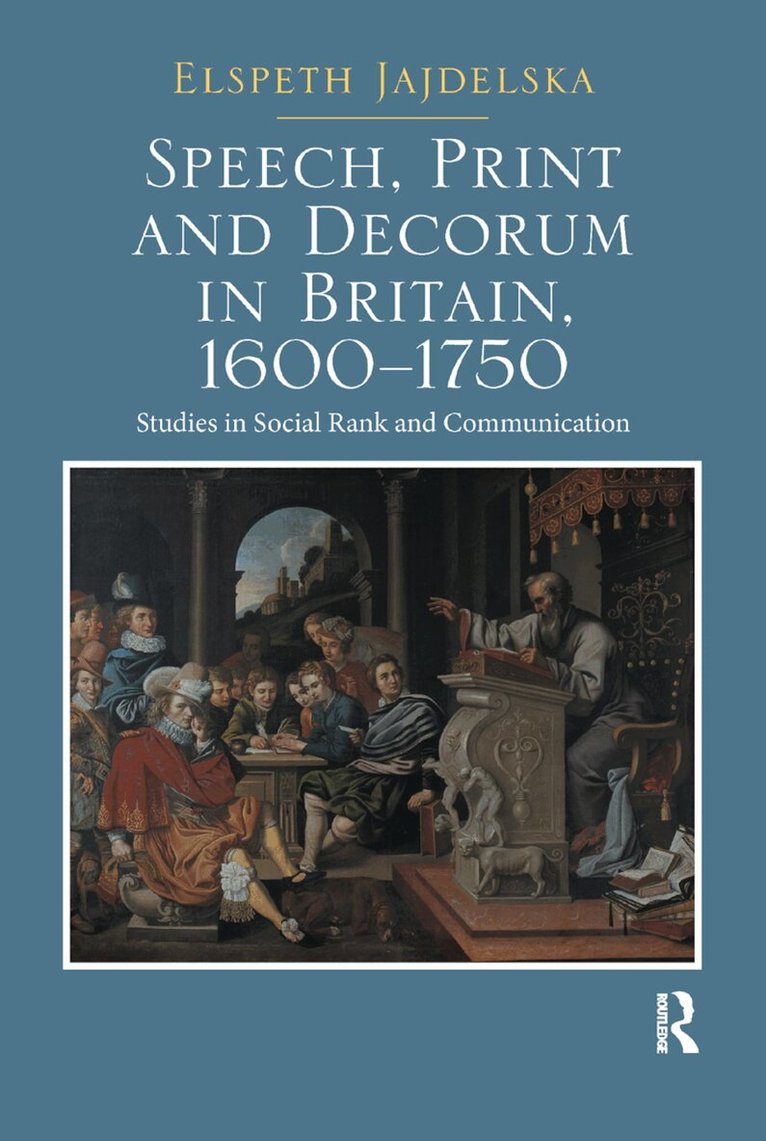
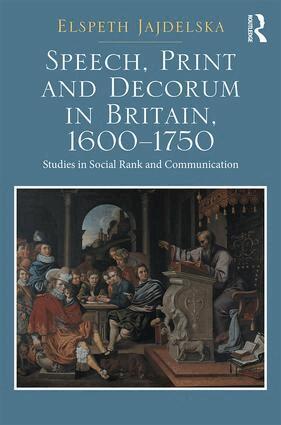
Speech, Print and Decorum in Britain, 1600--1750
Studies in Social Rank and Communication
Häftad, Engelska, 2019
727 kr
Skickas inom 10-15 vardagar
Filling an important gap in the history of print and reading, Elspeth Jajdelska offers a new account of the changing relationship between speech, rank and writing from 1600 to 1750. Jajdelska draws on anthropological findings to shed light on the different ways that speech was understood to relate to writing across the period, bringing together status and speech, literary and verbal decorum, readership, the material text and performance. Jajdelska's ambitious array of sources includes letters, diaries, paratexts and genres from cookery books to philosophical discourses. She looks at authors ranging from John Donne to Jonathan Swift, alongside the writings of anonymous merchants, apothecaries and romance authors. Jajdelska argues that Renaissance readers were likely to approach written and printed documents less as utterances in their own right and more as representations of past speech or as scripts for future speech. In the latter part of the seventeenth century, however, some readers were treating books as proxies for the author's speech, rather than as representations of it. These adjustments in the way speech and print were understood had implications for changes in decorum as the inhibitions placed on lower-ranking authors in the Renaissance gave way to increasingly open social networks at the start of the eighteenth century. As a result, authors from the lower ranks could now publish on topics formerly reserved for the more privileged. While this apparently egalitarian development did not result in imagined communities that transcended class, readers of all ranks did encounter new models of reading and writing and were empowered to engage legitimately in the gentlemanly criticism that had once been the reserve of the cultural elites. Shortlisted for the European Society for the Study of English (ESSE) book prize 2018
857 kr
Skickas inom 7-10 vardagar
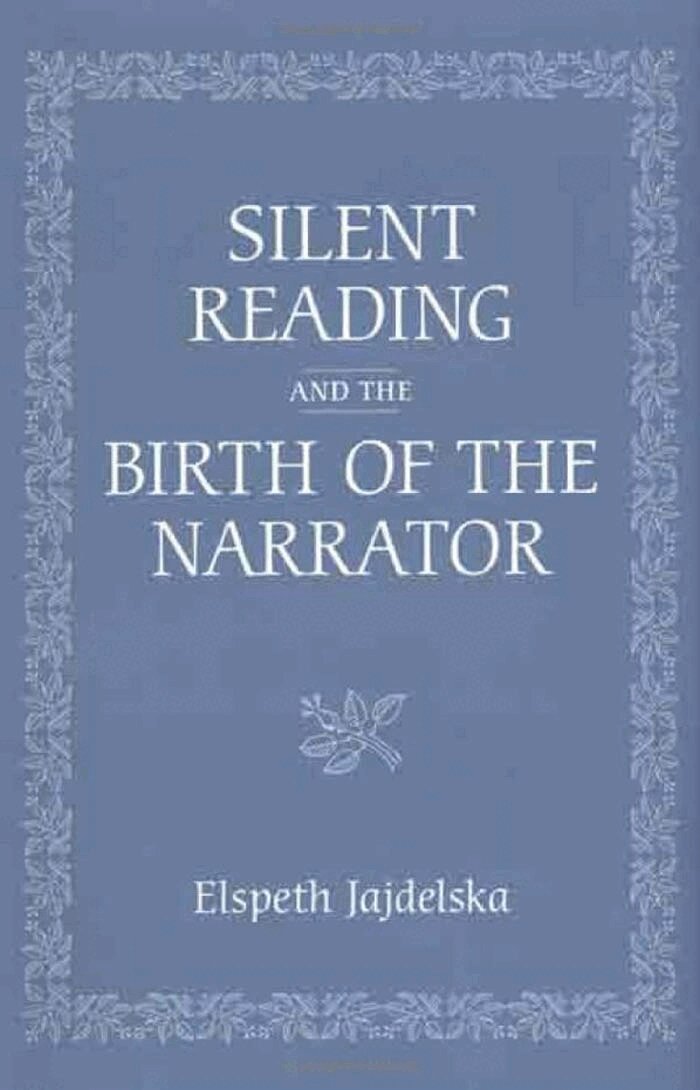
Although there is abundant evidence that silent reading existed in antiquity, the question remains as to when it became widespread. Silent Reading and the Birth of the Narrator asserts that, due to a rise in the late-seventeenth and early-eighteenth centuries in the number of parents who could afford to let their children read freely, widely, and for prolonged periods, an entire generation grew into fluent, silent readers in the later 1700s. At that point in time, the reader ceased to be a mouthpiece of the writer, becoming instead a silent hearer of an imagined writer's words.Elspeth Jajdelska uses historical, linguistic, and literary evidence to discuss the reorientation of the text and reader towards one another. She specifically investigates changes in punctuation, sentence structure, and letter and diary writing in the period to illuminate the emergence of a new prose style and the birth of the narrator. Unique to Jajdelska's study is the consideration of silent reading as something that explains changes in literary history. She also incorporates new insights on the history of reading, the novel, the diary, and the English language, using rigorous linguistic analysis and evidence drawn from the study of psychology. Based on a wealth of compelling arguments, Silent Reading and the Birth of the Narrator is an important addition to literary studies, eighteenth-century history, and book and print culture.
Speech, Print and Decorum in Britain, 1600--1750
Studies in Social Rank and Communication
Inbunden, Engelska, 2016
2 586 kr
Skickas inom 10-15 vardagar
Filling an important gap in the history of print and reading, Elspeth Jajdelska offers a new account of the changing relationship between speech, rank and writing from 1600 to 1750. Jajdelska draws on anthropological findings to shed light on the different ways that speech was understood to relate to writing across the period, bringing together status and speech, literary and verbal decorum, readership, the material text and performance. Jajdelska's ambitious array of sources includes letters, diaries, paratexts and genres from cookery books to philosophical discourses. She looks at authors ranging from John Donne to Jonathan Swift, alongside the writings of anonymous merchants, apothecaries and romance authors. Jajdelska argues that Renaissance readers were likely to approach written and printed documents less as utterances in their own right and more as representations of past speech or as scripts for future speech. In the latter part of the seventeenth century, however, some readers were treating books as proxies for the author's speech, rather than as representations of it. These adjustments in the way speech and print were understood had implications for changes in decorum as the inhibitions placed on lower-ranking authors in the Renaissance gave way to increasingly open social networks at the start of the eighteenth century. As a result, authors from the lower ranks could now publish on topics formerly reserved for the more privileged. While this apparently egalitarian development did not result in imagined communities that transcended class, readers of all ranks did encounter new models of reading and writing and were empowered to engage legitimately in the gentlemanly criticism that had once been the reserve of the cultural elites. Shortlisted for the European Society for the Study of English (ESSE) book prize 2018