Emanuela Merelli – författare
Visar alla böcker från författaren Emanuela Merelli. Handla med fri frakt och snabb leverans.
4 produkter
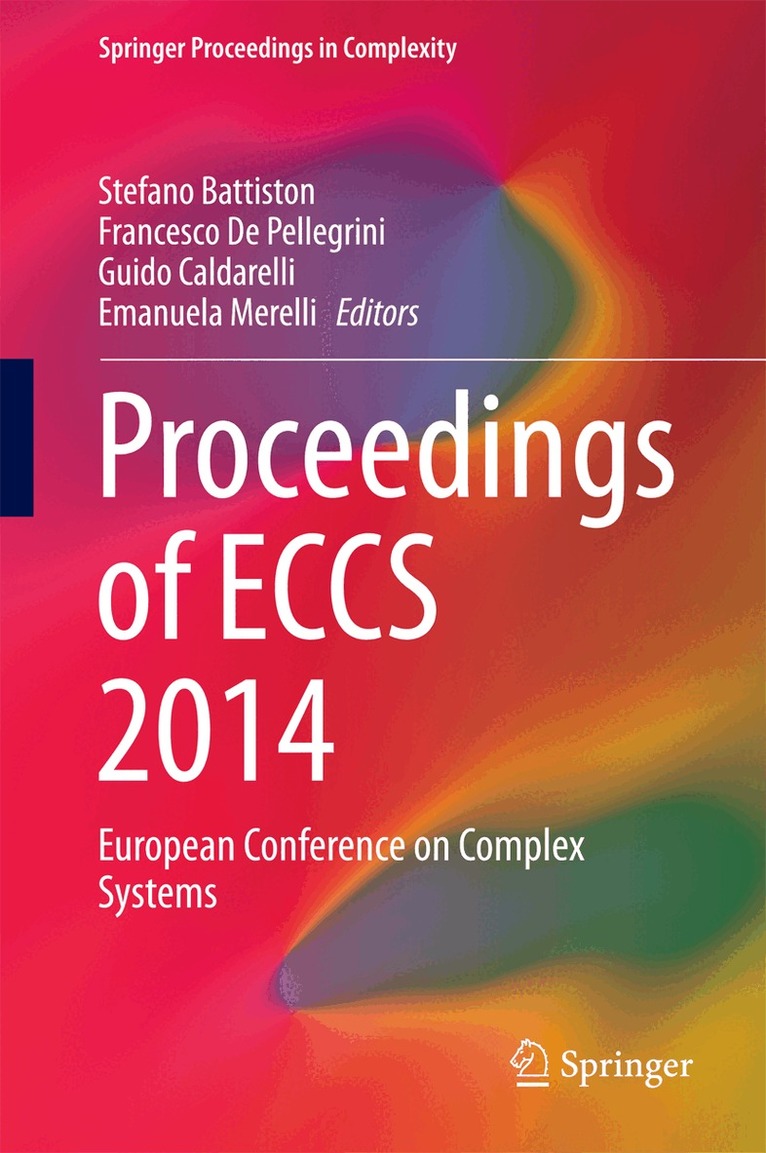
Proceedings of ECCS 2014
European Conference on Complex Systems
Av Stefano Battiston, Francesco De Pellegrini m. fl.
Inbunden, 2016
1690 kr
Lägg i varukorg
This work provides a careful selection of extended contributions presented at the 2014 ECCS conference and its satellite meetings, reflecting the scope and diversity of both fundamental and applied research areas in the field. The ECCS meeting, held under the patronage of the Complex Systems …
Proceedings of ECCS 2014
European Conference on Complex Systems
Av Emanuela Merelli, Guido Caldarelli m. fl.
E-bok, 2016
2111 kr
Lägg i varukorg
This work provides a careful selection of extended contributions presented at the 2014 ECCS conference and its satellite meetings, reflecting the scope and diversity of both fundamental and applied research areas in the field. The ECCS meeting, held under the patronage of the Complex Systems …
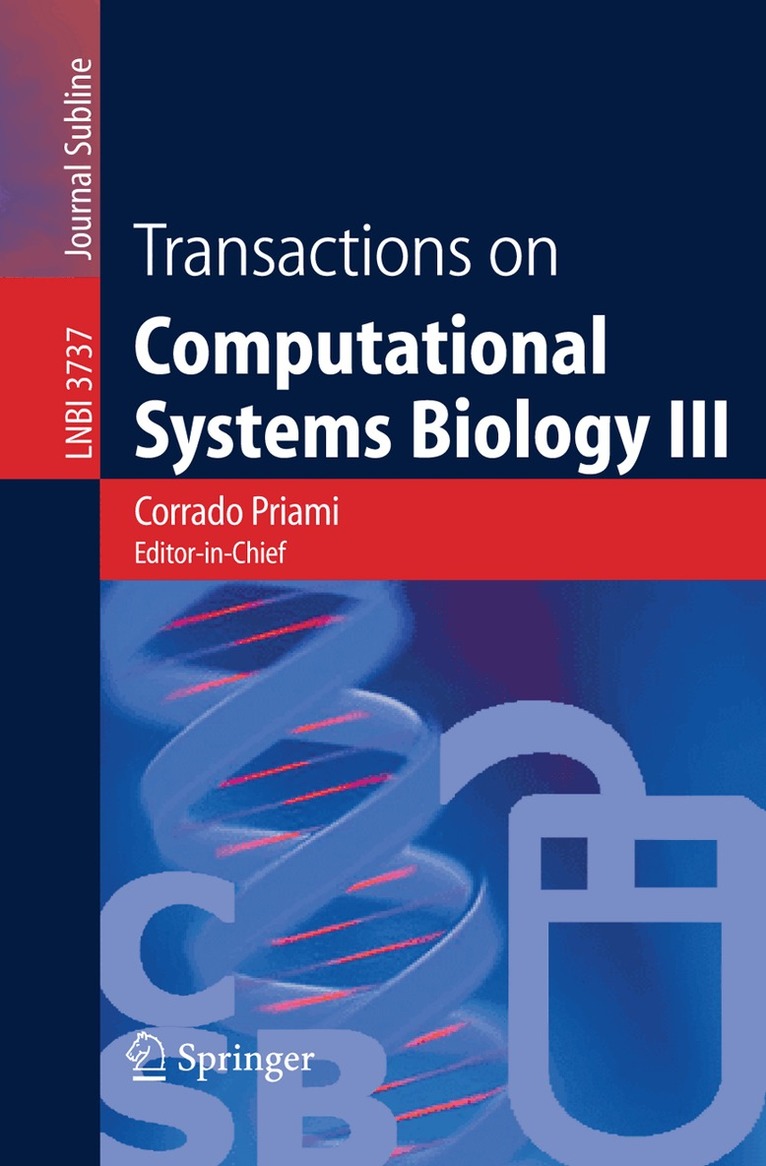
Transactions on Computational Systems Biology III
Av Corrado Priami, Emanuela Merelli m. fl.
Häftad, 2005
552 kr
Lägg i varukorg
In the last few decades, advances in molecular biology and in the research - frastructure in this ?eld has given rise to the "omics" revolution in molecular biology,alongwiththeexplosionofdatabases:fromgenomicstotranscriptomics, proteomics, interactomics,and metabolomics. However,the huge amount of …
Transactions on Computational Systems Biology III
Av Andrea Omicini, Pedro Pablo Gonzalez m. fl.
E-bok, 2005
734 kr
Lägg i varukorg