Emily A. Winkler - Böcker
Visar alla böcker från författaren Emily A. Winkler. Handla med fri frakt och snabb leverans.
6 produkter
6 produkter
1 438 kr
Skickas inom 7-10 vardagar
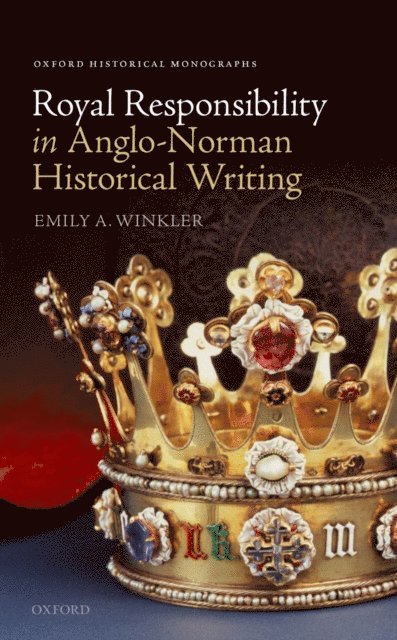
It has long been established that the crisis of 1066 generated a florescence of historical writing in the first half of the twelfth century. Emily A. Winkler presents a new perspective on previously unqueried matters, investigating how historians' individual motivations and assumptions produced changes in the kind of history written across the Conquest. She argues that responses to the Danish Conquest of 1016 and the Norman Conquest of 1066 changed dramatically within two generations of the latter conquest. Repeated conquest could signal repeated failures and sin across the orders of society, yet early twelfth-century historians in England not only extract English kings and people from a history of failure, but also establish English kingship as a worthy office on a European scale.Royal Responsibility in Anglo-Norman Historical Writing illuminates the consistent historical agendas of four historians: William of Malmesbury, Henry of Huntingdon, John of Worcester, and Geffrei Gaimar. In their narratives of England's eleventh-century history, these twelfth-century historians expanded their approach to historical explanation to include individual responsibility and accountability within a framework of providential history. In this regard, they made substantial departures from their sources. These historians share a view of royal responsibility independent both of their sources (primarily the Anglo-Saxon Chronicle) and of any political agenda that placed English and Norman allegiances in opposition. Although the accounts diverge widely in the interpretation of character, all four are concerned more with the effectiveness of England's kings than with the legitimacy of their origins. Their new, shared view of royal responsibility represents a distinct phenomenon in England's twelfth-century historiography.
1 072 kr
Skickas inom 7-10 vardagar
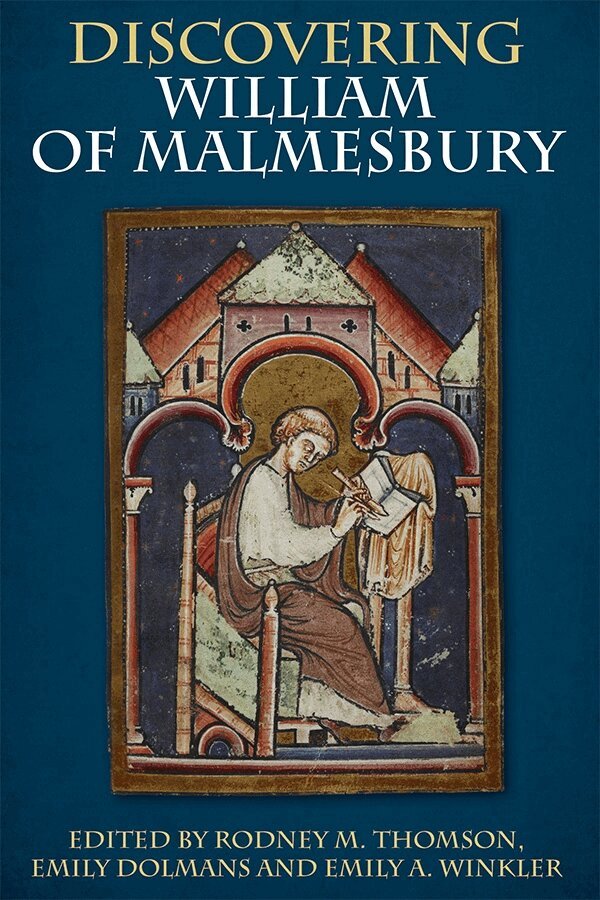
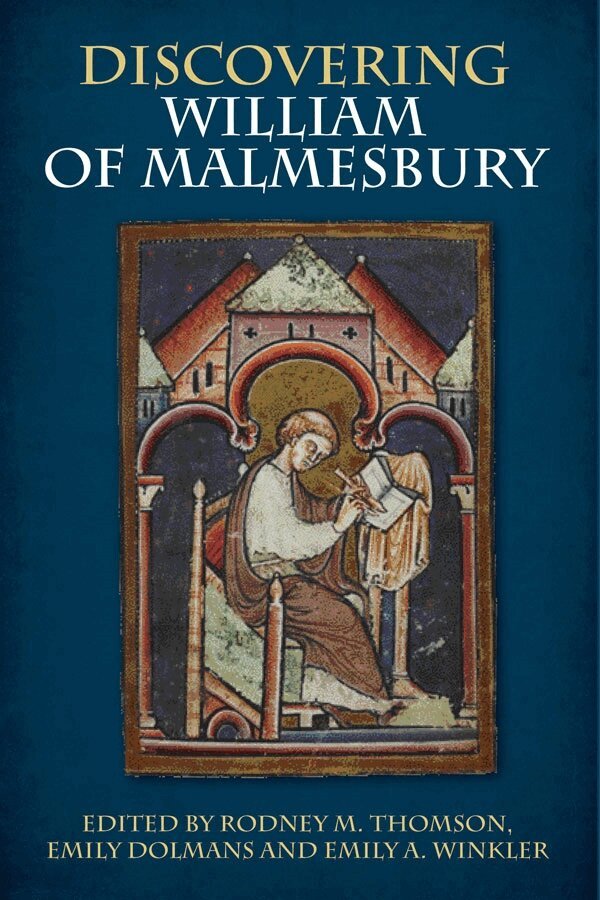
A fresh look at William of Malmesbury which not only demonstrates his real greatness as a historian and his European vision, but also the breadth of his learning across a number of other disciplines.In the past William of Malmesbury (1090-1143) has been seen as first and foremost a historian of England, and little else. This volume reveals not only William's real greatness as a historian and his European vision, but also thebreadth and depth of his learning across a number of other fields. Areas that receive particular attention are William's historical writings, his historical vision and interpretation of England's past; William and kingship; William's language; William's medical knowledge; the influence of Bede and other ancient writers on William's historiography; William and chronology; William, Anselm of Canterbury and reform of the English Church; William and the LatinClassics; William and the Jews; and William as hagiographer.Overall, the volume offers a broad coverage of William's learning, wide-ranging interests and significance as revealed in his writings.Rodney M. Thomson is Emeritus Professor of Medieval History at the University of Tasmania; Emily Dolmans is a lecturer in English Literature at Jesus College and Oriel College, University of Oxford; Emily A. Winkler is the John Cowdrey Junior Research Fellow in Medieval History at St Edmund Hall, University of Oxford, and Departmental Lecturer in Medieval History.Contributors: Anne E. Bailey, Emily Dolmans, Daniel Gerrard, John Gillingham, Kati Ihnat, Ryan Kemp, William Kynan-Wilson, Anne Lawrence-Mathers, Stanislav Mereminskiy, Samu Niskanen, Joanna Phillips, Alheydis Plassmann, Sigbjørn Sønnesyn, Rodney M. Thomson, Emily Joan Ward, Emily A. Winkler, Michael Winterbottom.
Del 18 - Boydell Studies in Medieval Art and Architecture
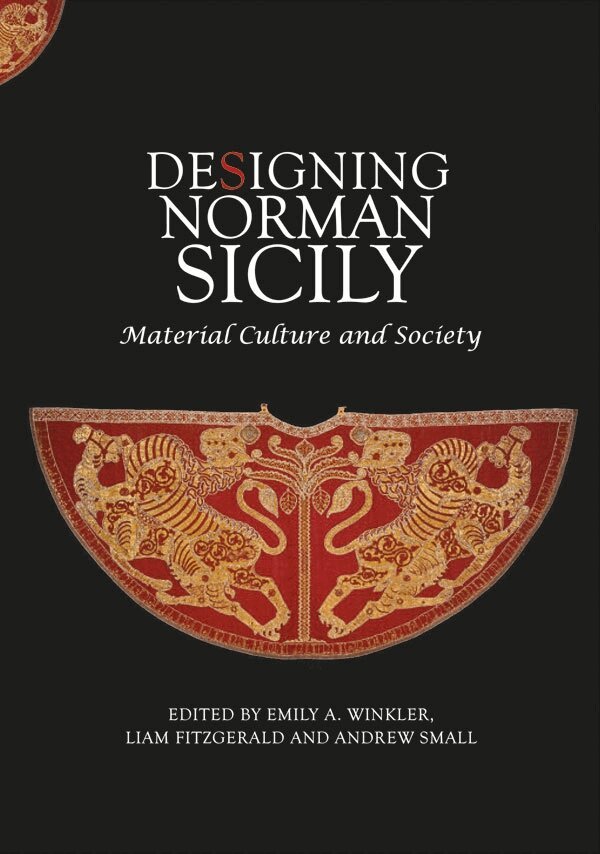
Designing Norman Sicily
Material Culture and Society
Inbunden, Engelska, 2020
1 010 kr
Skickas inom 7-10 vardagar
Essays showing how the stuff of Norman Sicily, its mosaics, frescoes, art and architecture, was used to construct its history.Material culture played a crucial role in developing the cultural narrative of Norman Sicily. The essays in this book consider how images, designs, artifacts, structures and objects were used to help create the story of the medieval kingdom, and what they reveal about the complex political and social dynamics that underpinned the so-called "multicultural" state. Arguing that a visual language developed in medieval Sicily and southern Italy in this period, the contributions journey through both familiar and unexplored aspects of Siculo-Norman art, in particular those areas which have only been made possible with recent advances in technology and international academic collaboration. Topics addressed include manuscripts and mosaics, textile diplomacy, the drama of coins and trade, new readings of old buildings, and the insights of archaeological excavations into everyday life. All of the ideas presented in this volume converge on the central theme of how material culture helped to develop story and society in the medieval kingdom of Sicily.
286 kr
Skickas inom 7-10 vardagar
A fresh look at William of Malmesbury which not only demonstrates his real greatness as a historian and his European vision, but also the breadth of his learning across a number of other disciplines.In the past William of Malmesbury (1090-1143) has been seen as first and foremost a historian of England, and little else. This volume reveals not only William's real greatness as a historian and his European vision, but also the breadth and depth of his learning across a number of other fields. Areas that receive particular attention are William's historical writings, his historical vision and interpretation of England's past; William and kingship; William's language; William's medical knowledge; the influence of Bede and other ancient writers on William's historiography; William and chronology; William, Anselm of Canterbury and reform of the English Church; William and the Latin Classics; William and the Jews; and William as hagiographer.Overall, the volume offers a broad coverage of William's learning, wide-ranging interests and significance as revealed in his writings.
163 kr
Kommande
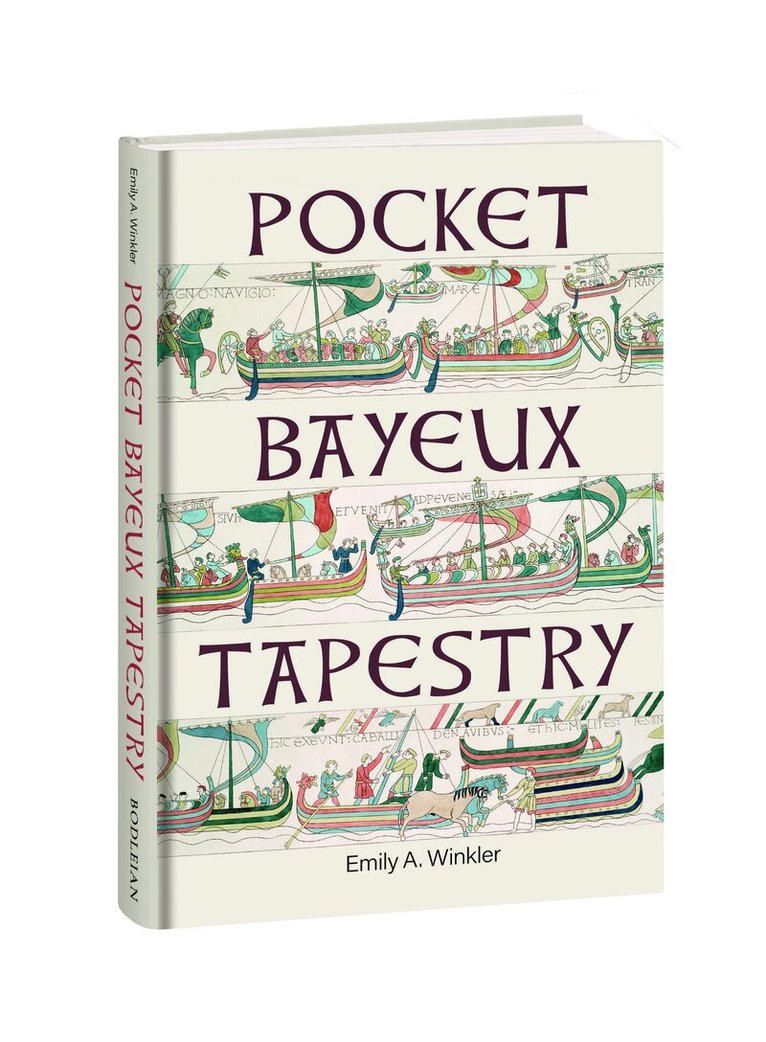
Having survived revolution, numerous wars, fire and attempted seizure over the course of 900 years, the Bayeux Tapestry has emerged with totemic status as one of the most important artefacts of European history. Spread out over seventy metres, the Tapestry unfolds the story of the Conquest of England in 1066, from the end of the reign of Edward the Confessor to an account of the Battle of Hastings and the defeat of King Harold and his army by the invasion force of William, Duke of Normandy.Long admired for its unity of vision and its exquisite workmanship, the Tapestry is an eloquent narrative, filled with urgency, drama, suspense, pathos and the brutal reality of war. It is also endlessly fascinating, with depictions of Halley’s Comet and the earliest surviving representation of Westminster Abbey, fleets of ships and cavalry, and, in the borders, everything from animal fables to obscene sketches.This handy guide reproduces the beautiful drawings of the Tapestry made by the 19th-century French artist Victor Sansonetti, together with translations of the Latin titles and a concise commentary on each plate, while the introduction sets the Tapestry in its historical context. Published to coincide with the loan of the Tapestry to Britain in 2026, it provides an excellent primer to this magnificent historical survival.
1 151 kr
Skickas inom 5-8 vardagar