Emily Dolmans - Böcker
Visar alla böcker från författaren Emily Dolmans. Handla med fri frakt och snabb leverans.
3 produkter
3 produkter
1 070 kr
Skickas inom 7-10 vardagar
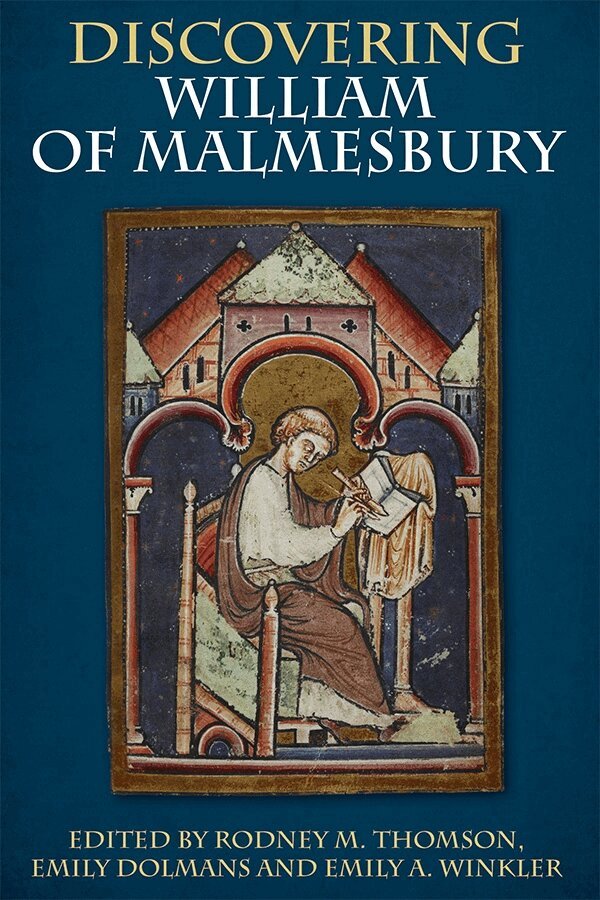
A fresh look at William of Malmesbury which not only demonstrates his real greatness as a historian and his European vision, but also the breadth of his learning across a number of other disciplines.In the past William of Malmesbury (1090-1143) has been seen as first and foremost a historian of England, and little else. This volume reveals not only William's real greatness as a historian and his European vision, but also thebreadth and depth of his learning across a number of other fields. Areas that receive particular attention are William's historical writings, his historical vision and interpretation of England's past; William and kingship; William's language; William's medical knowledge; the influence of Bede and other ancient writers on William's historiography; William and chronology; William, Anselm of Canterbury and reform of the English Church; William and the LatinClassics; William and the Jews; and William as hagiographer.Overall, the volume offers a broad coverage of William's learning, wide-ranging interests and significance as revealed in his writings.Rodney M. Thomson is Emeritus Professor of Medieval History at the University of Tasmania; Emily Dolmans is a lecturer in English Literature at Jesus College and Oriel College, University of Oxford; Emily A. Winkler is the John Cowdrey Junior Research Fellow in Medieval History at St Edmund Hall, University of Oxford, and Departmental Lecturer in Medieval History.Contributors: Anne E. Bailey, Emily Dolmans, Daniel Gerrard, John Gillingham, Kati Ihnat, Ryan Kemp, William Kynan-Wilson, Anne Lawrence-Mathers, Stanislav Mereminskiy, Samu Niskanen, Joanna Phillips, Alheydis Plassmann, Sigbjørn Sønnesyn, Rodney M. Thomson, Emily Joan Ward, Emily A. Winkler, Michael Winterbottom.
285 kr
Skickas inom 7-10 vardagar
A fresh look at William of Malmesbury which not only demonstrates his real greatness as a historian and his European vision, but also the breadth of his learning across a number of other disciplines.In the past William of Malmesbury (1090-1143) has been seen as first and foremost a historian of England, and little else. This volume reveals not only William's real greatness as a historian and his European vision, but also the breadth and depth of his learning across a number of other fields. Areas that receive particular attention are William's historical writings, his historical vision and interpretation of England's past; William and kingship; William's language; William's medical knowledge; the influence of Bede and other ancient writers on William's historiography; William and chronology; William, Anselm of Canterbury and reform of the English Church; William and the Latin Classics; William and the Jews; and William as hagiographer.Overall, the volume offers a broad coverage of William's learning, wide-ranging interests and significance as revealed in his writings.
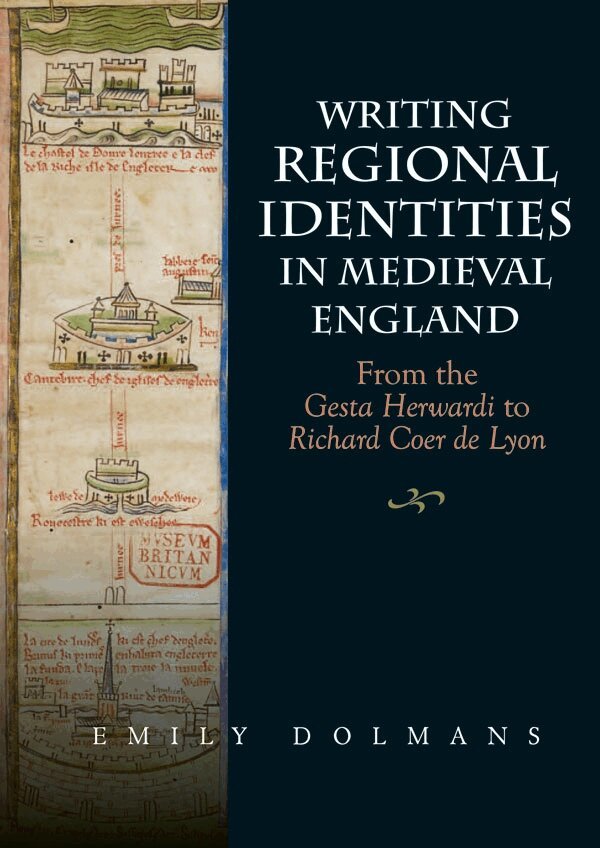
Writing Regional Identities in Medieval England
From the Gesta Herwardi to Richard Coer de Lyon
Inbunden, Engelska, 2020
1 194 kr
Skickas inom 7-10 vardagar
An examination of how regional identities are reflected in texts from medieval England.The period after the Norman Conquest saw a dramatic reassessment of what it meant to be English, owing to both the advent of Anglo-Norman rule and increased interaction with other cultures through trade, travel, migration, and war. While cultural contact is often thought to consolidate national identity, this book proposes that these encounters prompted the formation of intercultural regional identities. Because of these different cultural influences, the meaning of English identity varied from region to region, and became rooted in the land, its history, and its stories. Using romances and histories from England's multilingual literary milieu, including the Gesta Herewardi, Fouke le Fitz Waryn, and Richard Coer de Lyon, this study examines some of England's contact zones and how they influence understandings of English identities during the twelfth to fourteenth centuries. Moving from local identity in Ely, to the transcultural regions of Lincolnshire and the Welsh Marches, and finally investigating England as a border region from a global perspective, this book examines the diversity of Englishness, the effects of cultural contact on identity, and how English writers imagined their place in the world.