Emily B. Baran - Böcker
Visar alla böcker från författaren Emily B. Baran. Handla med fri frakt och snabb leverans.
4 produkter
4 produkter
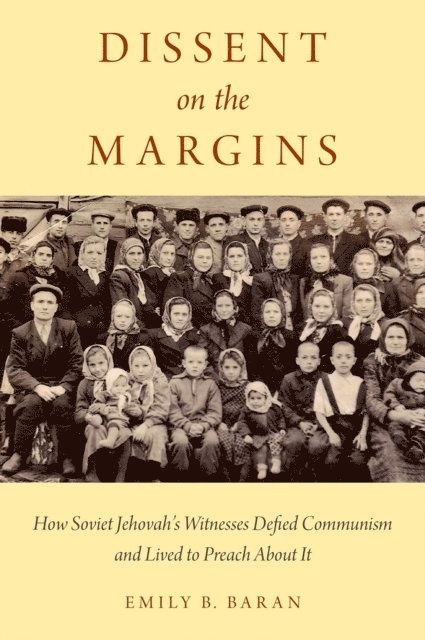
Dissent on the Margins
How Soviet Jehovah's Witnesses Defied Communism and Lived to Preach About It
Häftad, Engelska, 2016
529 kr
Skickas inom 5-8 vardagar
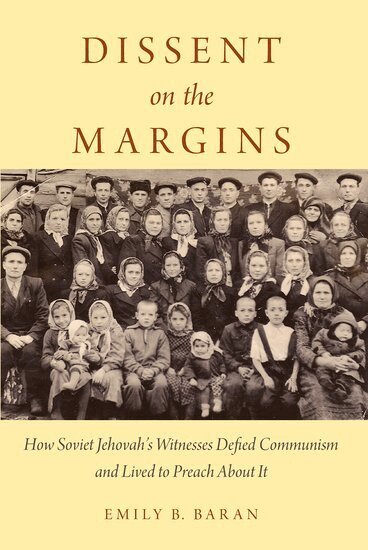
Emily B. Baran offers a gripping history of how a small, American-based religious community, the Jehovah's Witnesses, found its way into the Soviet Union after World War II, survived decades of brutal persecution, and emerged as one of the region's fastest growing religions after the Soviet Union's collapse in 1991. In telling the story of this often misunderstood faith, Baran explores the shifting boundaries of religious dissent, non-conformity, and human rights in the Soviet Union and its successor states.Soviet Jehovah's Witnesses are a fascinating case study of dissent beyond urban, intellectual nonconformists. Witnesses, who were generally rural, poorly educated, and utterly marginalized from society, resisted state pressure to conform. They instead constructed alternative communities based on adherence to religious principles established by the Witnesses' international center in Brooklyn, New York. The Soviet state considered Witnesses to be the most reactionary of all underground religious movements, and used extraordinary measures to try to eliminate this threat. Yet Witnesses survived, while the Soviet system did not. After 1991, they faced continuing challenges to their right to practice their faith in post-Soviet states, as these states struggled to reconcile the proper limits on freedom of conscience with European norms and domestic concerns.Dissent on the Margins provides a new and important perspective on one of America's most understudied religious movements.
Dissent on the Margins
How Soviet Jehovah's Witnesses Defied Communism and Lived to Preach About It
Inbunden, Engelska, 2014
1 147 kr
Skickas inom 5-8 vardagar
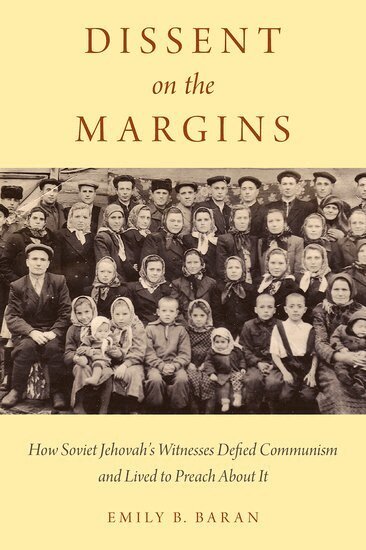
Emily B. Baran offers a gripping history of how a small, American-based religious community, the Jehovah's Witnesses, found its way into the Soviet Union after World War II, survived decades of brutal persecution, and emerged as one of the region's fastest growing religions after the Soviet Union's collapse in 1991. In telling the story of this often misunderstood faith, Baran explores the shifting boundaries of religious dissent, non-conformity, and human rights in the Soviet Union and its successor states. Soviet Jehovah's Witnesses are a fascinating case study of dissent beyond urban, intellectual nonconformists. Witnesses, who were generally rural, poorly educated, and utterly marginalized from society, resisted state pressure to conform. They instead constructed alternative communities based on adherence to religious principles established by the Witnesses' international center in Brooklyn, New York. The Soviet state considered Witnesses to be the most reactionary of all underground religious movements, and used extraordinary measures to try to eliminate this threat. Yet Witnesses survived, while the Soviet system did not. After 1991, they faced continuing challenges to their right to practice their faith in post-Soviet states, as these states struggled to reconcile the proper limits on freedom of conscience with European norms and domestic concerns.Dissent on the Margins provides a new and important perspective on one of America's most understudied religious movements.
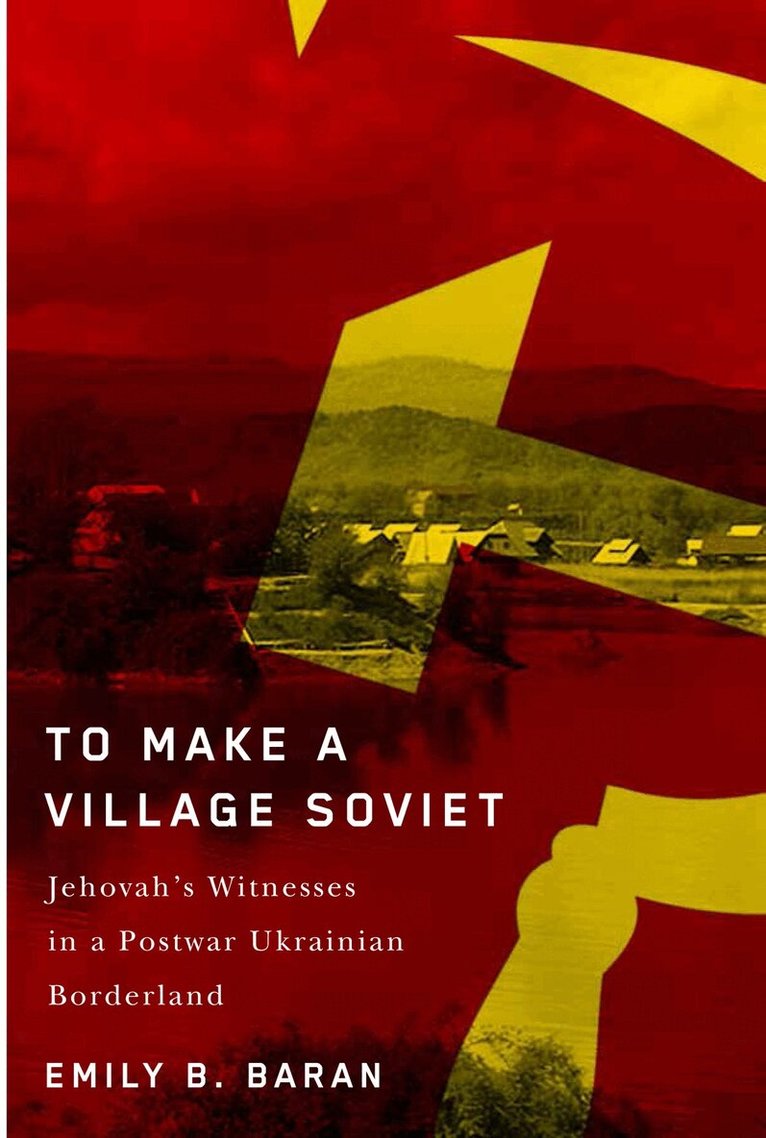
To Make a Village Soviet
Jehovah's Witnesses and the Transformation of a Postwar Ukrainian Borderland
Häftad, Engelska, 2022
418 kr
Skickas inom 10-15 vardagar
In June 1949 the Soviet state arrested seven farmers from the village of Bila Tserkva. Not wealthy or powerful, the men were unknown outside their community, and few had ever heard of their small, isolated village on the southwestern border of Soviet Ukraine. Nevertheless, the state decided they were dangerous traitors who threatened to undermine public order, and a regional court sentenced them to twenty-five years of imprisonment for treason.In To Make a Village Soviet Emily Baran explores why a powerful state singled out these individuals for removal from society. Bila Tserkva had to become a space in which Soviet laws and institutions reigned supreme, yet Sovietization was an aspiration as much it was a reality. The arrested men belonged to a small and misunderstood religious minority, the Jehovah's Witnesses, and both Witnesses and their neighbours challenged the government's attempts to fully integrate the village into socialist society. Drawing from the case file and interviews with the families of survivors, Baran argues that what happened in Bila Tserkva demonstrates the sheer ambition of the state's plans for the Sovietization of borderland communities.A compelling history, To Make a Village Soviet looks to Bila Tserkva to explore the power and the limits of state control – and the possibilities created by communities that resist assimilation.
1 142 kr
Skickas inom 10-15 vardagar
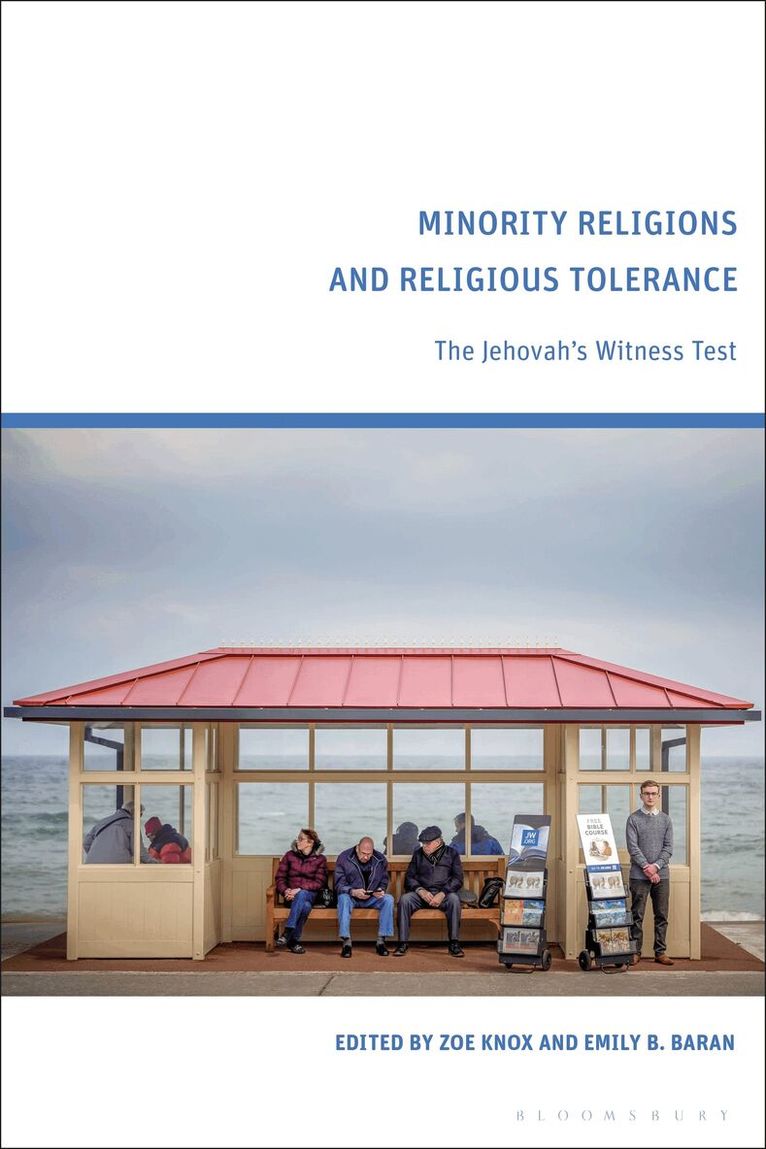
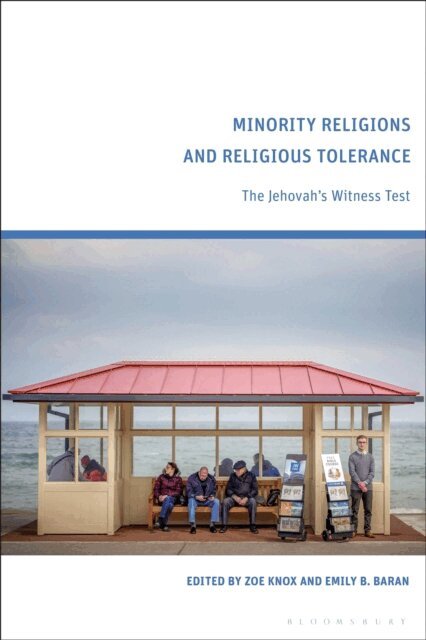
This book is founded on a simple premise: that Jehovah’s Witnesses are a crucial litmus test for tolerance.When Witnesses do not enjoy basic freedoms to practice their faith, scholars should consider what their treatment reveals about the broader state of tolerance and respect for religious pluralism and religious minority groups. They should also examine how the Witnesses’ struggle for acceptance has shaped religious freedom and the protections enshrined in law in many modern states in the twenty-first century. This is what the authors call the ‘Jehovah’s Witness test’.The contributors have run the ‘JW test’ across a range of countries, from Egypt and Mexico to Russia and South Korea, addressing religious, political and medical opposition and their outcomes for modern states and societies. They bring to their conclusions a wealth of perspectives; among them are medical experts, sociologists, political scientists, historians, anthropologists, and representatives of the Witness community. Taken together, this volume is a call for scholars to look to the treatment of Jehovah’s Witnesses as a barometer for the overall health of religious tolerance and basic civil liberties in our contemporary world.