Emily Berquist Soule - Böcker
Visar alla böcker från författaren Emily Berquist Soule. Handla med fri frakt och snabb leverans.
2 produkter
2 produkter
637 kr
Skickas inom 5-8 vardagar
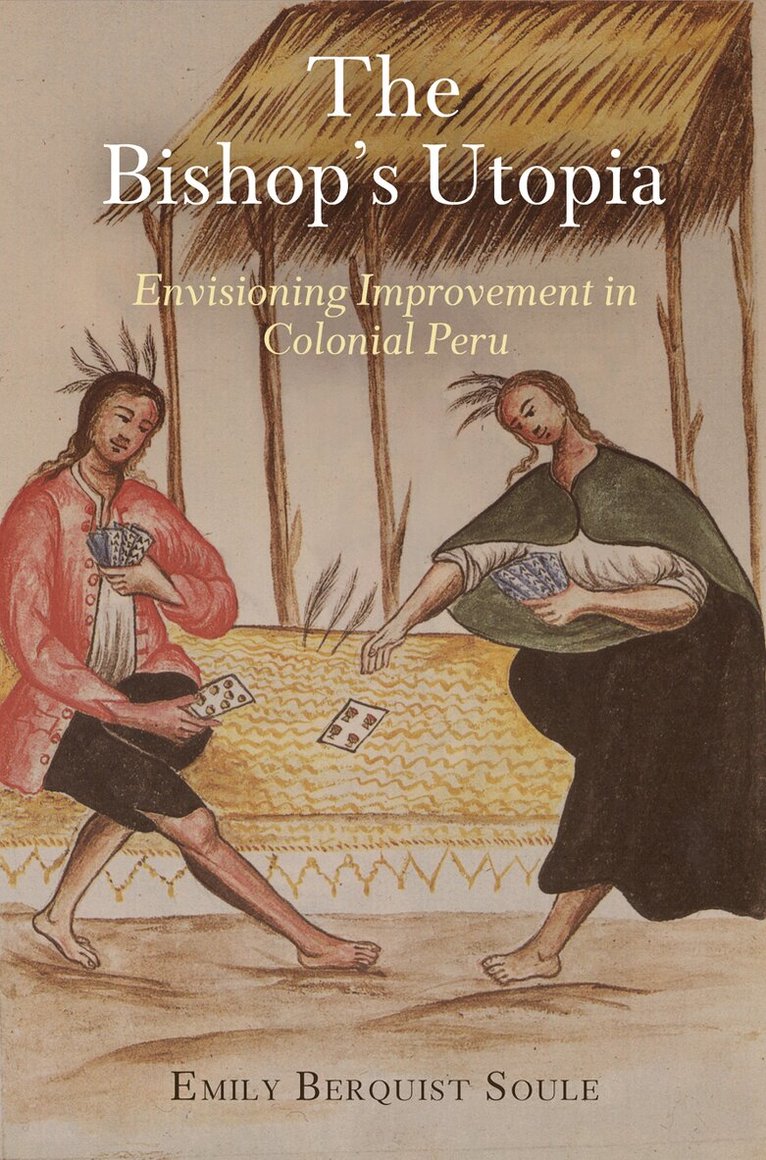
In December 1788, in the northern Peruvian city of Trujillo, fifty-one-year-old Spanish Bishop Baltasar Jaime MartÍnez CompaÑÓn stood surrounded by twenty-four large wooden crates, each numbered and marked with its final destination of Madrid. The crates contained carefully preserved zoological, botanical, and mineral specimens collected from Trujillo's steamy rainforests, agricultural valleys, rocky sierra, and coastal desert. To accompany this collection, the Bishop had also commissioned from Indian artisans nine volumes of hand-painted images portraying the people, plants, and animals of Trujillo. He imagined that the collection and the watercolors not only would contribute to his quest to study the native cultures of Northern Peru but also would supply valuable information for his plans to transform Trujillo into an orderly, profitable slice of the Spanish Empire.Based on intensive archival research in Peru, Spain, and Colombia and the unique visual data of more than a thousand extraordinary watercolors, The Bishop's Utopia recreates the intellectual, cultural, and political universe of the Spanish Atlantic world in the late eighteenth century. Emily Berquist Soule recounts the reform agenda of MartÍnez CompaÑÓn-including the construction of new towns, improvement of the mining industry, and promotion of indigenous education-and positions it within broader imperial debates; unlike many of his Enlightenment contemporaries, who elevated fellow Europeans above native peoples, MartÍnez CompaÑÓn saw Peruvian Indians as intelligent, productive subjects of the Spanish Crown. The Bishop's Utopia seamlessly weaves cultural history, natural history, colonial politics, and art into a cinematic retelling of the Bishop's life and work.
2 150 kr
Skickas inom 10-15 vardagar
This book features methodological and theoretical perspectives that embody fundamental questions concerning the historical paradigm of Atlantic Studies and beyond to explore, cultural theory, visual culture, literature, and the narratives and iconography of popular culture (among others).Embracing a transdisciplinary and forward-looking approach, the volume charts new directions for understanding the Atlantic world through contributions that examine river networks, transatlantic Indigenous travel, the circulation of letters and "exotic" animals, the French Atlantic slave trade, and museum spaces as sites of decolonizing processes. It also proposes expanded geographies—such as viewing the Atlantic from the Arctic—and reconsiders the cultural currents that continue to shape global imaginaries.This collection marks the twentieth anniversary of Atlantic Studies: Global Currents, offering a timely reflection on the journal’s legacy while pointing to the future of the field. This volume will be of interest to scholars and students in Atlantic Studies, history, literary and cultural studies, art history, postcolonial studies, and global and transoceanic studies.