Emily Sherwin – författare
Visar alla böcker från författaren Emily Sherwin. Handla med fri frakt och snabb leverans.
10 produkter
The Oxford Handbook of the New Private Law
Av Andrew S. Gold, John C.P. Goldberg m. fl.
Inbunden, 2020
2368 kr
Lägg i varukorg
The Oxford Handbook of the New Private Law reflects exciting developments in scholarship dedicated to reinvigorating the study of the broad field of private law. This field embraces the traditional common law subjects (property, contracts, and torts), as well as adjacent, more statutory areas, such …
Oxford Handbook of the New Private Law
Av Henry E. Smith, Emily Sherwin m. fl.
E-bok, 2020
1855 kr
Lägg i varukorg
The Oxford Handbook of the New Private Law reflects exciting developments in scholarship dedicated to reinvigorating the study of the broad field of private law. This field embraces the traditional common law subjects (property, contracts, and torts), as well as adjacent, more statutory areas, such …
Oxford Handbook of the New Private Law
Av Henry E. Smith, Emily Sherwin m. fl.
E-bok, 2020
1855 kr
Lägg i varukorg
The Oxford Handbook of the New Private Law reflects exciting developments in scholarship dedicated to reinvigorating the study of the broad field of private law. This field embraces the traditional common law subjects (property, contracts, and torts), as well as adjacent, more statutory areas, such …
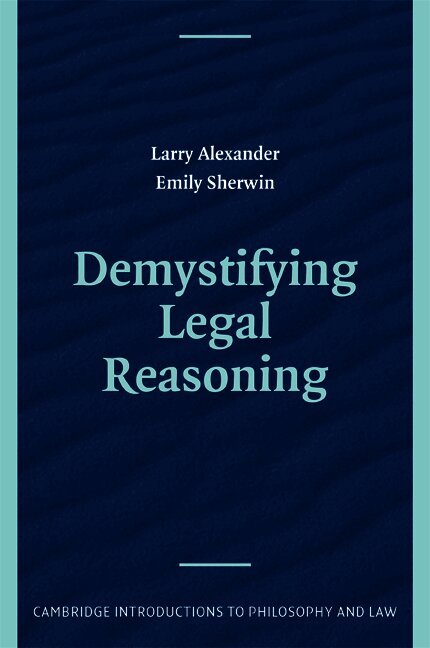
Demystifying Legal Reasoning
Av Larry Alexander, Emily Sherwin
Häftad, 2008
487 kr
Lägg i varukorg
Demystifying Legal Reasoning defends the proposition that there are no special forms of reasoning peculiar to law. Legal decision makers engage in the same modes of reasoning that all actors use in deciding what to do: open-ended moral reasoning, empirical reasoning, and deduction from …
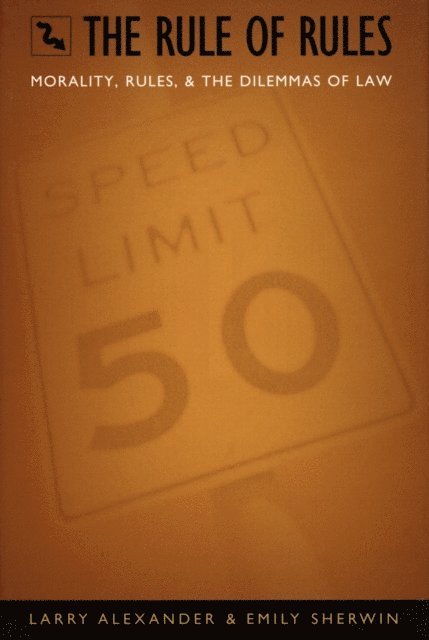
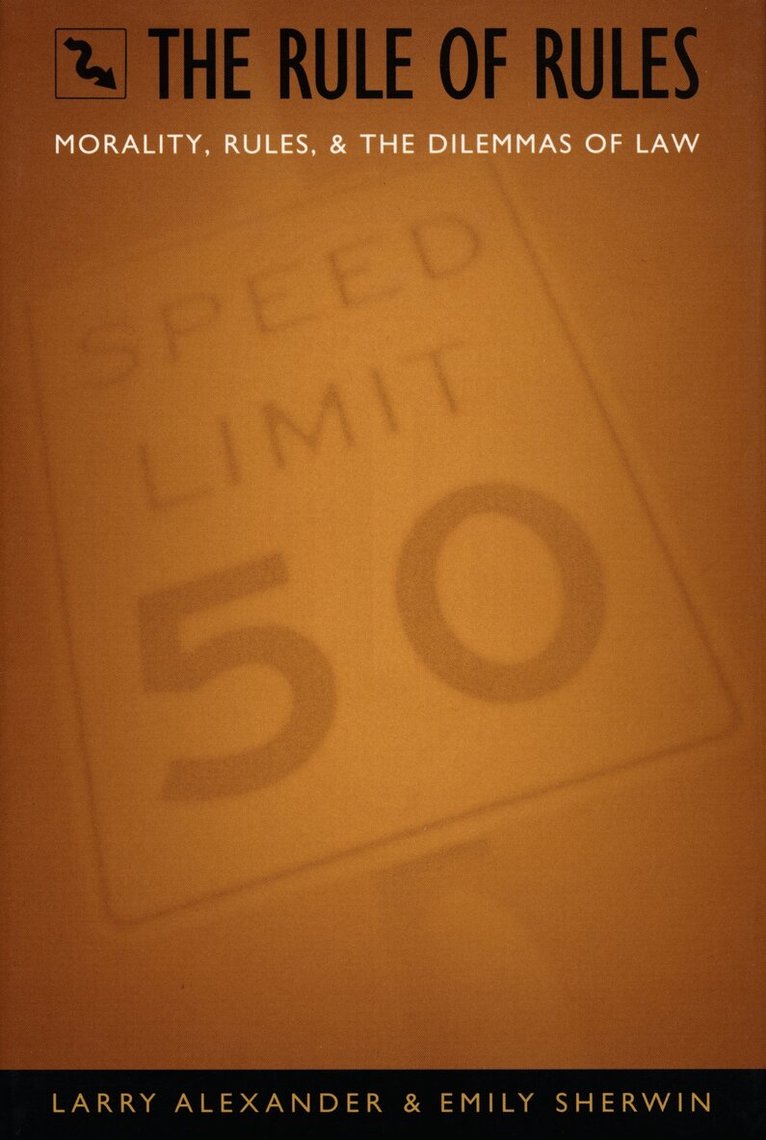
Rule of Rules
Morality, Rules, and the Dilemmas of Law
Av Emily Sherwin, Larry Alexander
E-bok, 2001
2020 kr
Lägg i varukorg
Rules perform a moral function by restating moral principles in concrete terms, so as to reduce the uncertainty, error, and controversy that result when individuals follow their own unconstrained moral judgment. Although reason dictates that we must follow rules to avoid destructive error and …
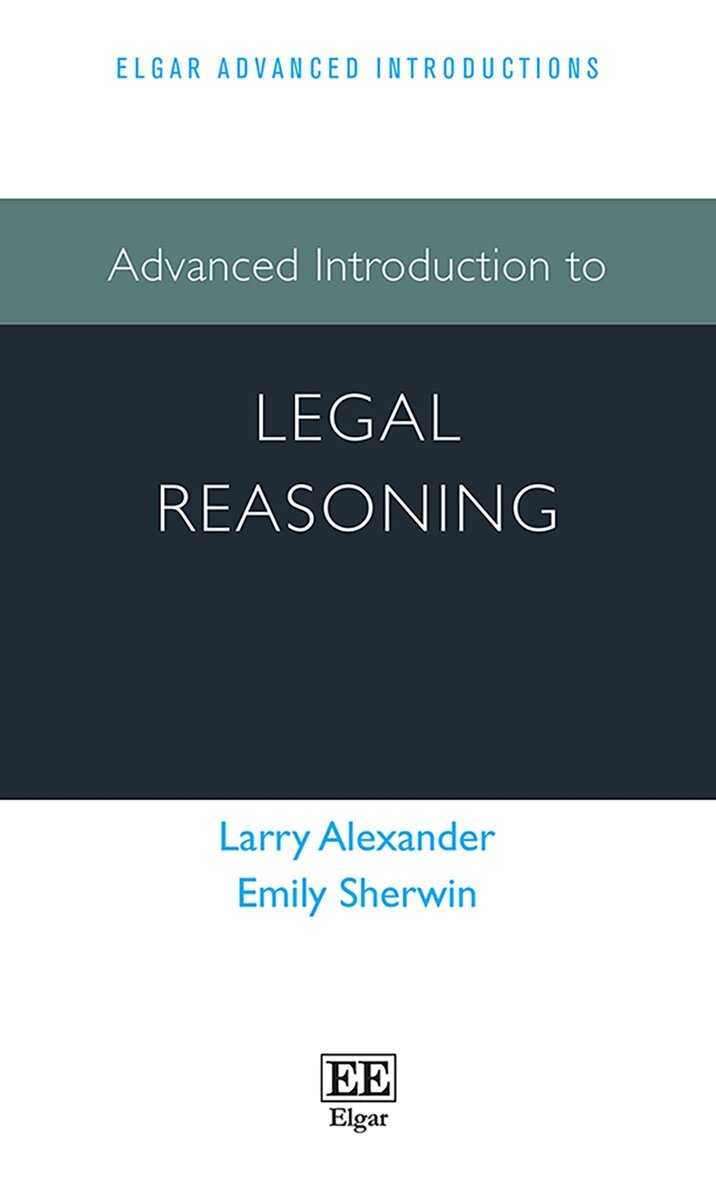
Advanced Introduction to Legal Reasoning
Av Larry Alexander, Emily Sherwin
Inbunden, 2021
1533 kr
Lägg i varukorg
Elgar Advanced Introductions are stimulating and thoughtful introductions to major fields in the social sciences, business and law, expertly written by the world’s leading scholars. Designed to be accessible yet rigorous, they offer concise and lucid surveys of the substantive and policy issues …
Advanced Introduction to Legal Reasoning
Av Emily Sherwin, Larry Alexander
E-bok, 2021
287 kr
Lägg i varukorg
Elgar Advanced Introductions are stimulating and thoughtful introductions to major fields in the social sciences, business and law, expertly written by the world’s leading scholars. Designed to be accessible yet rigorous, they offer concise and lucid surveys of the substantive and policy issues …
Advanced Introduction to Legal Reasoning
Av Larry Alexander, Emily Sherwin
Häftad, 2021
298 kr
Lägg i varukorg
Elgar Advanced Introductions are stimulating and thoughtful introductions to major fields in the social sciences, business and law, expertly written by the world’s leading scholars. Designed to be accessible yet rigorous, they offer concise and lucid surveys of the substantive and policy issues …
Demystifying Legal Reasoning
Av Larry Alexander, Emily Sherwin
Inbunden, 2008
686 kr
Tillfälligt slut
Demystifying Legal Reasoning defends the proposition that there are no special forms of reasoning peculiar to law. Legal decision makers engage in the same modes of reasoning that all actors use in deciding what to do: open-ended moral reasoning, empirical reasoning, and deduction from …
Rule of Rules
Morality, Rules, and the Dilemmas of Law
Av Larry Alexander, Emily Sherwin
Inbunden, 2001
1401 kr
Tillfälligt slut
Rules perform a moral function by restating moral principles in concrete terms, so as to reduce the uncertainty, error, and controversy that result when individuals follow their own unconstrained moral judgment. Although reason dictates that we must follow rules to avoid destructive error and …