Emma Kowal – författare
Visar alla böcker från författaren Emma Kowal. Handla med fri frakt och snabb leverans.
9 produkter
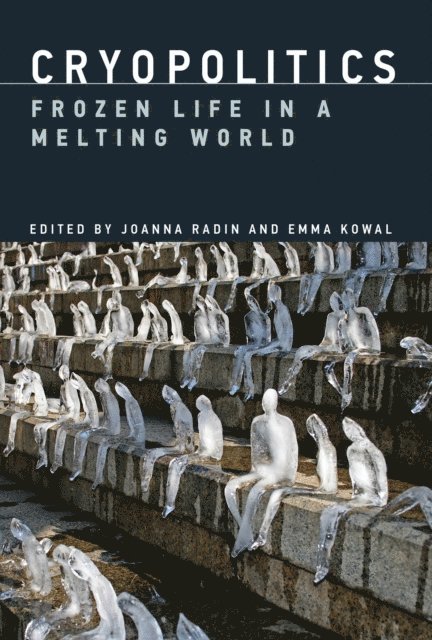
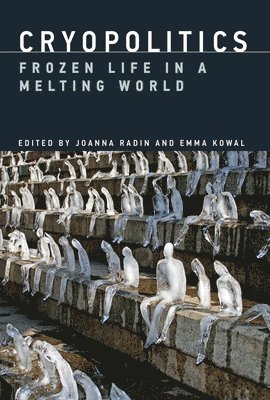
Cryopolitics
E-bok, 2017
467 kr
Lägg i varukorg
The social, political, and cultural consequences of attempts to cheat death by freezing life. As the planet warms and the polar ice caps melt, naturally occurring cold is a resource of growing scarcity. At the same time, energy-intensive cooling technologies are widely used as a means of …
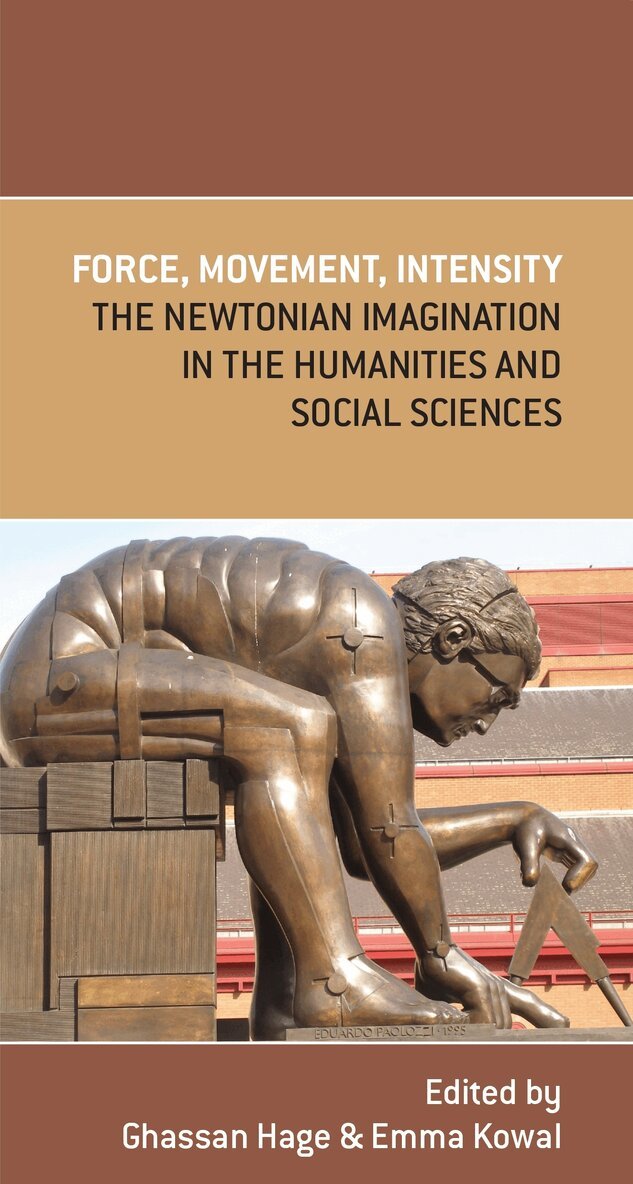
Force, Movement, Intensity
The Newtonian Imagination in the Humanities and Social Sciences
Av Ghassan Hage, Ghassan Hage m. fl.
Häftad, 2011
385 kr
Lägg i varukorg
Of all the scientific works that have influenced the social sciences and humanities, none has matched the profound effect of the work of Isaac Newton. In his 1687 masterpiece Principia Mathematica he laid the foundation of classical mechanics in his discoveries of the laws of motion and the law of …
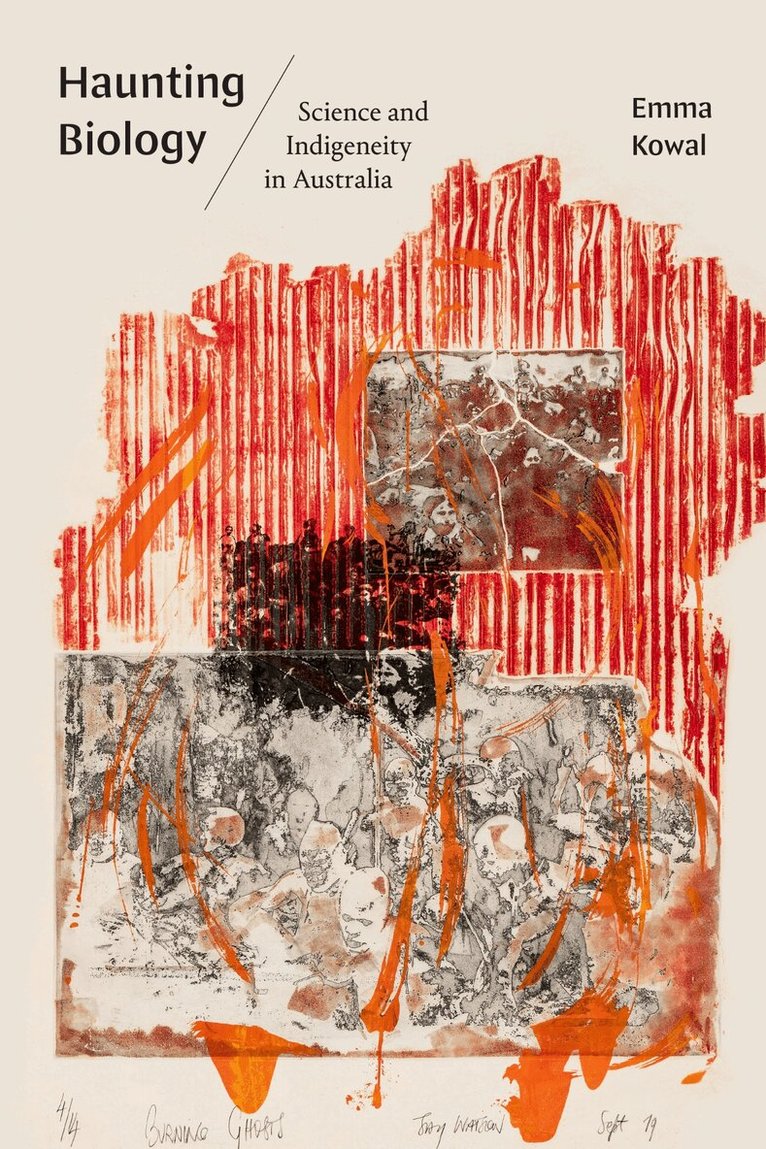
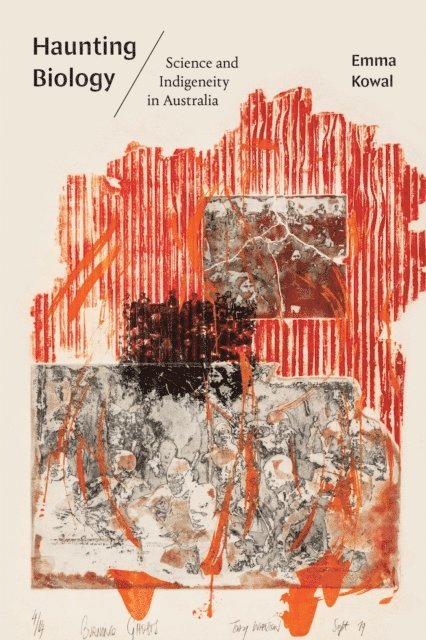
Haunting Biology
Science and Indigeneity in Australia
Av Emma Kowal
Inbunden, 2023
1179 kr
Lägg i varukorg
In Haunting Biology Emma Kowal recounts the troubled history of Western biological studies of Indigenous Australians and asks how we now might see contemporary genomics, especially that conducted by Aboriginal and Torres Strait Islander scientists. Kowal illustrates how the material persistence of …
Haunting Biology
Science and Indigeneity in Australia
Av Emma Kowal
Häftad, 2023
300 kr
Lägg i varukorg
In Haunting Biology Emma Kowal recounts the troubled history of Western biological studies of Indigenous Australians and asks how we now might see contemporary genomics, especially that conducted by Aboriginal and Torres Strait Islander scientists. Kowal illustrates how the material persistence of …
Haunting Biology
Science and Indigeneity in Australia
Av Emma Kowal
E-bok, 2023
456 kr
Lägg i varukorg
In Haunting Biology Emma Kowal recounts the troubled history of Western biological studies of Indigenous Australians and asks how we now might see contemporary genomics, especially that conducted by Aboriginal and Torres Strait Islander scientists. Kowal illustrates how the material persistence of …
Trapped in the Gap
Doing Good in Indigenous Australia
Av Emma Kowal
Inbunden, 2015
1861 kr
Lägg i varukorg
In Australia, a ‘tribe’ of white, middle-class, progressive professionals is actively working to improve the lives of Indigenous people. This book explores what happens when well-meaning people, supported by the state, attempt to help without harming. ‘White anti-racists’ find themselves trapped by …
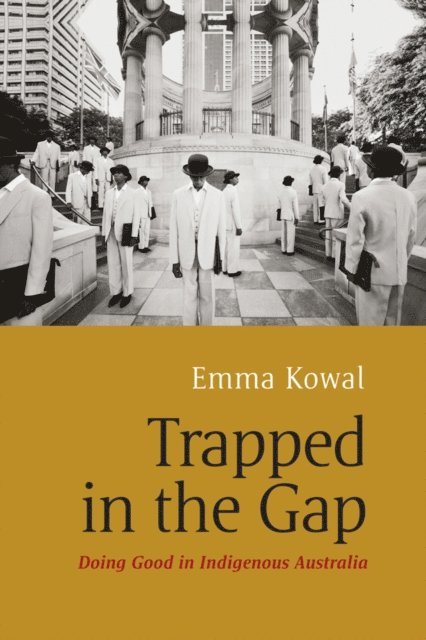
Trapped in the Gap
Doing Good in Indigenous Australia
Av Emma Kowal
E-bok, 2015
326 kr
Lägg i varukorg
In Australia, a ‘tribe’ of white, middle-class, progressive professionals is actively working to improve the lives of Indigenous people. This book explores what happens when well-meaning people, supported by the state, attempt to help without harming. ‘White anti-racists’ find themselves trapped by …
Trapped in the Gap
Doing Good in Indigenous Australia
Av Emma Kowal
Häftad, 2015
527 kr
Lägg i varukorg
In Australia, a "tribe" of white, middle-class, progressive professionals is actively working to improve the lives of Indigenous people. This book explores what happens when well-meaning people, supported by the state, attempt to help without harming. "White anti-racists" find themselves trapped by …