Enze Han - Böcker
Visar alla böcker från författaren Enze Han. Handla med fri frakt och snabb leverans.
10 produkter
10 produkter
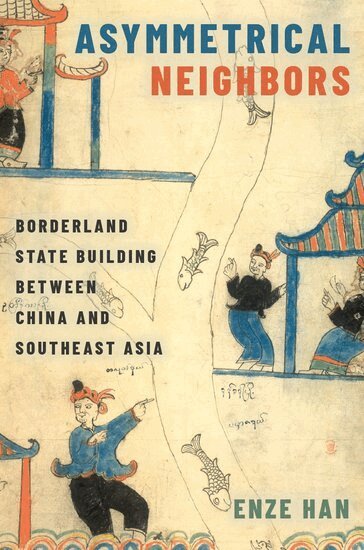
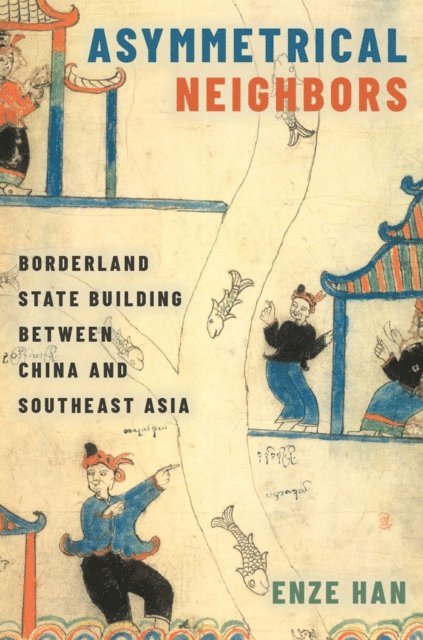
Asymmetrical Neighbors
Borderland State Building between China and Southeast Asia
Häftad, Engelska, 2019
363 kr
Skickas inom 5-8 vardagar
Is the process of state building a unilateral, national venture, or is it something more collaborative, taking place in the interstices between adjoining countries? To answer this question, Asymmetrical Neighbors takes a comparative look at the state building process along China, Myanmar, and Thailand's common borderland area. It shows that the variations in state building among these neighboring countries are the result of an interactive process that occurs across national boundaries. Departing from existing approaches that look at such processes from the angle of singular, bounded territorial states, the book argues that a more fruitful method is to examine how state and nation building in one country can influence, and be influenced by, the same processes across borders. It argues that the success or failure of one country's state building is a process that extends beyond domestic factors such as war preparation, political institutions, and geographic and demographic variables. Rather, it shows that we should conceptualize state building as an interactive process heavily influenced by a "neighborhood effect." Furthermore, the book moves beyond the academic boundaries that divide arbitrarily China studies and Southeast Asian studies by providing an analysis that ties the state and nation building processes in China with those of Southeast Asia.
537 kr
Skickas inom 5-8 vardagar
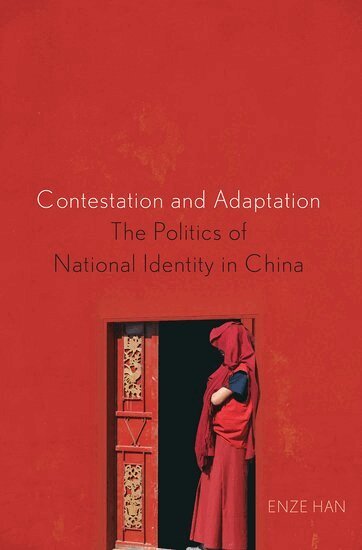
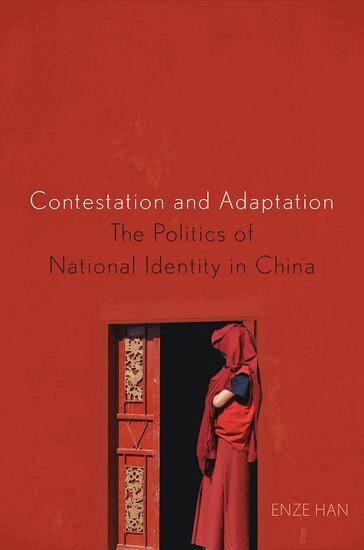
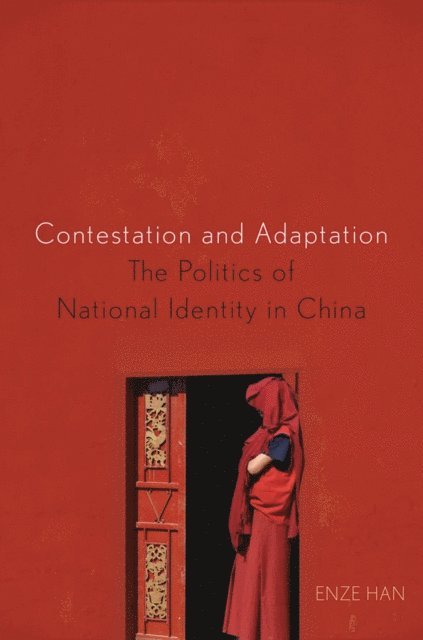
Contestation and Adaptation unravels the complexities of national-identity contestation among various ethnic minority groups in China. It focuses on the interactions between domestic and international forces that inform ethnic groups' national-identity contestation, positing a theoretical framework where international factors play a significant role in determining why and when ethnic groups will contest the national identities imposed on them by central governments as part of the nation-building process. Simmering grievances and occasional outbursts of social unrest among ethnic minority populations in China challenge not only the ruling party's legitimacy and governance, but also contemporary Chinese national identity and the territorial integrity of the Chinese state. But, as Enze Han points out, of the fifty-five ethnic minority groups in China, only the Tibetans and Uyghurs have forcefully contested the idea of a Chinese national identity. He argues that whether ethnic groups contest those national identities depends on whether they perceive a better, achievable alternative. In particular, Han argues that ethnic groups with extensive external kinship networks are most likely to perceive a capacity to achieve better circumstances and are, therefore, more likely to politically mobilize to contest national identity. In the absence of such alternatives ethnic groups are more likely to cope with their situation through emigration, political ambivalence, or assimilation. Using this theoretical framework, the book compares the way that five major ethnic minority groups in China negotiate their national identities with the Chinese nation-state: Uyghurs, Chinese Koreans, Dai, Mongols, and Tibetans. Overall, Contestation and Adaptation sheds light on the nation-building processes in China over the past six decades and the ways that different groups have resisted or acquiesced in their dealings with the Chinese state and majority Han Chinese society.
Asymmetrical Neighbors
Borderland State Building between China and Southeast Asia
Inbunden, Engelska, 2019
1 252 kr
Skickas inom 5-8 vardagar
Is the process of state building a unilateral, national venture, or is it something more collaborative, taking place in the interstices between adjoining countries? To answer this question, Asymmetrical Neighbors takes a comparative look at the state building process along China, Myanmar, and Thailand's common borderland area. It shows that the variations in state building among these neighboring countries are the result of an interactive process that occurs across national boundaries. Departing from existing approaches that look at such processes from the angle of singular, bounded territorial states, the book argues that a more fruitful method is to examine how state and nation building in one country can influence, and be influenced by, the same processes across borders. It argues that the success or failure of one country's state building is a process that extends beyond domestic factors such as war preparation, political institutions, and geographic and demographic variables. Rather, it shows that we should conceptualize state building as an interactive process heavily influenced by a "neighborhood effect." Furthermore, the book moves beyond the academic boundaries that divide arbitrarily China studies and Southeast Asian studies by providing an analysis that ties the state and nation building processes in China with those of Southeast Asia.
956 kr
Skickas inom 7-10 vardagar
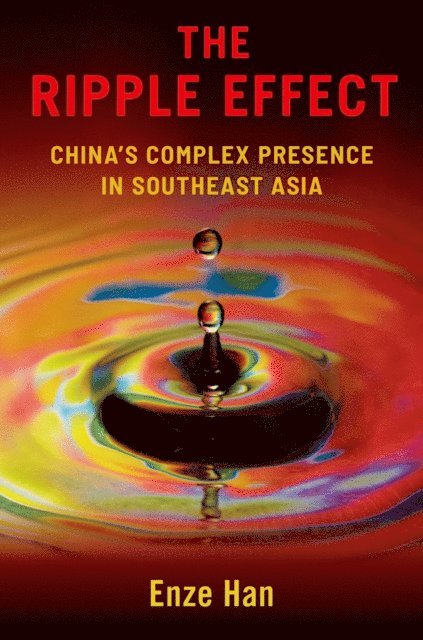
Many studies of China's relations with and influence on Southeast Asia tend to focus on how Beijing has used its power asymmetry to achieve regional influence. Yet, scholars and pundits often fail to appreciate the complexity of the contemporary Chinese state and society, and just how fragmented, decentralized, and internationalized China is today. In The Ripple Effect, Enze Han argues that a focus on the Chinese state alone is not sufficient for a comprehensive understanding of China's influence in Southeast Asia. Instead, we must look beyond the Chinese state, to non-state actors from China, such as private businesses and Chinese migrants. These actors affect people's perception of China in a variety of ways, and they often have wide-ranging as well as long-lasting effects on bilateral relations. Looking beyond the Chinese state's intentional influence reveals many situations that result in unanticipated changes in Southeast Asia. Han proposes that to understand this increasingly globalized China, we need more conceptual flexibility regarding which Chinese actors are important to China's relations, and how they wield this influence, whether intentional or not. The Ripple Effect makes the case that to understand China's relationship with Southeast Asia, it is necessary to move beyond a narrow fixation on the Chinese state by scrutinizing the ordinary manifestations of China's presence in the region and recognizing the multifaceted web of actors and their effects on the dynamics between the two regions.
306 kr
Skickas
Many studies of China's relations with and influence on Southeast Asia tend to focus on how Beijing has used its power asymmetry to achieve regional influence. Yet, scholars and pundits often fail to appreciate the complexity of the contemporary Chinese state and society, and just how fragmented, decentralized, and internationalized China is today. In The Ripple Effect, Enze Han argues that a focus on the Chinese state alone is not sufficient for a comprehensive understanding of China's influence in Southeast Asia. Instead, we must look beyond the Chinese state, to non-state actors from China, such as private businesses and Chinese migrants. These actors affect people's perception of China in a variety of ways, and they often have wide-ranging as well as long-lasting effects on bilateral relations. Looking beyond the Chinese state's intentional influence reveals many situations that result in unanticipated changes in Southeast Asia. Han proposes that to understand this increasingly globalized China, we need more conceptual flexibility regarding which Chinese actors are important to China's relations, and how they wield this influence, whether intentional or not. The Ripple Effect makes the case that to understand China's relationship with Southeast Asia, it is necessary to move beyond a narrow fixation on the Chinese state by scrutinizing the ordinary manifestations of China's presence in the region and recognizing the multifaceted web of actors and their effects on the dynamics between the two regions.
1 409 kr
Skickas inom 5-8 vardagar
Contestation and Adaptation unravels the complexities of national-identity contestation among various ethnic minority groups in China. It focuses on the interactions between domestic and international forces that inform ethnic groups' national-identity contestation, positing a theoretical framework where international factors play a significant role in determining why and when ethnic groups will contest the national identities imposed on them by central governments as part of the nation-building process. Simmering grievances and occasional outbursts of social unrest among ethnic minority populations in China challenge not only the ruling party's legitimacy and governance, but also contemporary Chinese national identity and the territorial integrity of the Chinese state. But, as Enze Han points out, of the fifty-five ethnic minority groups in China, only the Tibetans and Uyghurs have forcefully contested the idea of a Chinese national identity. He argues that whether ethnic groups contest those national identities depends on whether they perceive a better, achievable alternative. In particular, Han argues that ethnic groups with extensive external kinship networks are most likely to perceive a capacity to achieve better circumstances and are, therefore, more likely to politically mobilize to contest national identity. In the absence of such alternatives ethnic groups are more likely to cope with their situation through emigration, political ambivalence, or assimilation. Using this theoretical framework, the book compares the way that five major ethnic minority groups in China negotiate their national identities with the Chinese nation-state: Uyghurs, Chinese Koreans, Dai, Mongols, and Tibetans. Overall, Contestation and Adaptation sheds light on the nation-building processes in China over the past six decades and the ways that different groups have resisted or acquiesced in their dealings with the Chinese state and majority Han Chinese society.
British Colonialism and the Criminalization of Homosexuality
Queens, Crime and Empire
Häftad, Engelska, 2019
355 kr
Skickas inom 10-15 vardagar
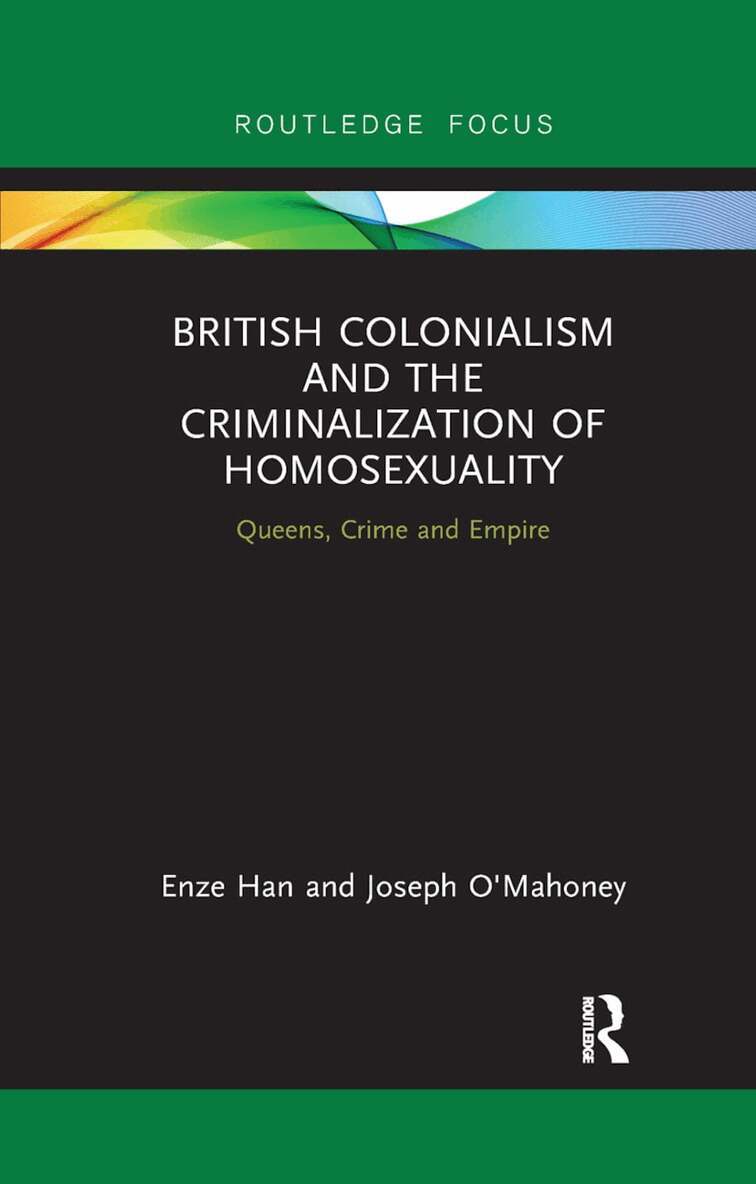
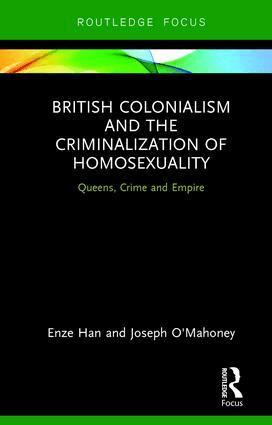
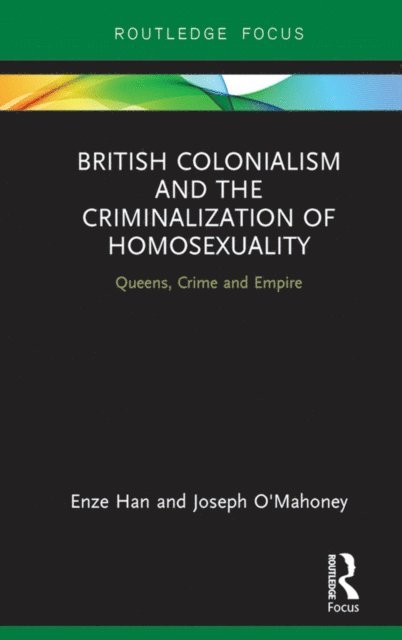
British Colonialism and the Criminalization of Homosexuality examines whether colonial rule is responsible for the historical, and continuing, criminalization of same-sex sexual relations in many parts of the world. Enze Han and Joseph O’Mahoney gather and assess historical evidence to demonstrate the different ways in which the British empire spread laws criminalizing homosexual conduct amongst its colonies. Evidence includes case studies of former British colonies and the common law and criminal codes like the Indian Penal Code of 1860 and the Queensland Criminal Code of 1899. Surveying a wide range of countries, the authors scrutinise whether ex-British colonies are more likely to have laws that criminalize homosexual conduct than other ex-colonies or other states in general They interrogate the claim that British imperialism uniquely ‘poisoned’ societies against homosexuality, and look at the legacies of colonialism and the politics and legal status of homosexuality across the globe.
British Colonialism and the Criminalization of Homosexuality
Queens, Crime and Empire
Inbunden, Engelska, 2018
843 kr
Skickas inom 10-15 vardagar
British Colonialism and the Criminalization of Homosexuality examines whether colonial rule is responsible for the historical, and continuing, criminalization of same-sex sexual relations in many parts of the world. Enze Han and Joseph O’Mahoney gather and assess historical evidence to demonstrate the different ways in which the British empire spread laws criminalizing homosexual conduct amongst its colonies. Evidence includes case studies of former British colonies and the common law and criminal codes like the Indian Penal Code of 1860 and the Queensland Criminal Code of 1899. Surveying a wide range of countries, the authors scrutinise whether ex-British colonies are more likely to have laws that criminalize homosexual conduct than other ex-colonies or other states in general They interrogate the claim that British imperialism uniquely ‘poisoned’ societies against homosexuality, and look at the legacies of colonialism and the politics and legal status of homosexuality across the globe.
Conditioning China’s Influence
Intentionality, Intermediaries, and Institutions
Inbunden, Engelska, 2026
2 113 kr
Kommande
This edited volume contributes to debates about China’s influence, and explores three specific themes in the context of global China: the effects of (un)intentional influence and influence externalities; the role of intermediaries, the sub-state and non-state actors that are conduits for influence; and the conditioning effects of host country institutions.The work advances conversation of public and academic interest by problematizing existing conceptualizations of China’s influence and offering a fresh approach. Existing research has paid surprisingly little systematic attention to how local, national, and global factors outside of China–and beyond its control–condition whether and how China’s investments in global influence bear fruit. A central claim of the book is that scholars need to pay more careful attention to how these external factors create unexpected consequences for influence-seeking states. This book explores three specific themes in the context of global China: the effects of (un)intentional influence and influence externalities; the role of intermediaries, the sub-state, and non-state actors that are conduits for influence; and the conditioning effects of host country institutions.This book will be of interest to students and scholars of Asian Studies, Politics, Regional Studies, and International Relations.
Non-State Chinese Actors and Their Impact on Relations Between China and Mainland Southeast Asia
Häftad, Engelska, 2021
112 kr
Skickas inom 7-10 vardagar
International relations scholarship and the popular media tend to portray China as a great power with hegemonic designs for Southeast Asia. Moreover, studies on Chinese influence in Southeast Asia predominantly focus on the Chinese state. This paper argues that Chinese non-state actors and their daily encounters with local communities in Southeast Asia deserve equal attention as these interactions evidently produce friction at both the society-to-state and state-to-state levels. The influence of Chinese non-state actors in Southeast Asia can be illustrated with three examples, namely, Chinese tourism operations in Thailand, Chinese market demand and agricultural transformations in Myanmar, and Chinese gangs within the casino economy in Cambodia. Thailand has recently become a top tourist destination for Chinese nationals. This has cultural implications as those involved in the tourism industry need to have Chinese language skills. The economic implications include increased competition and decreased accountability as Chinese tour companies have set up in Thailand using Thai locals as nominees. Bilateral relations also soured after a boat carrying Chinese tourists capsized in Thailand. As global prices of corn rose in 2011 and 2012, areas in Myanmar close to the Chinese border have increased corn cultivation to meet Chinese demands for that crop. This has led to deforestation in these areas. Chinese gangsters fleeing their government’s crackdown in China have settled down to operate in the casino economy in Cambodia. Consequentially, there has been a rise in crime rate involving online scams and deteriorating public security. Despite the Chinese government encouraging the Cambodian government to enforce a ban on online gambling, the actions of non-state actors from China continue to be associated with the Chinese state as a whole and there is rising resentment towards the Chinese in Cambodia. The COVID-19 pandemic has temporarily halted cross-border trade between China and mainland Southeast Asia. This has negatively affected local farmers who are dependent on the Chinese market.