Epifanio San Juan – författare
Visar alla böcker från författaren Epifanio San Juan. Handla med fri frakt och snabb leverans.
2 produkter
2 produkter
1 017 kr
Skickas inom 10-15 vardagar
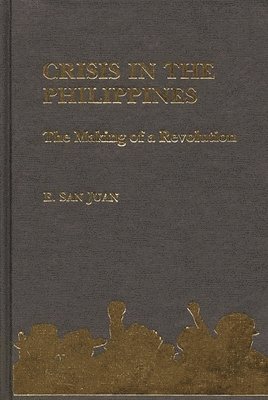
San Juan, a noted Philippine Marxist now living in the United States, gives a detailed account of the Philippine situation from many perspectives. The essays deal with new-imperialism, the Muslim community, literature, the New People's Army, women, and Filipinos in the United States. While Marcos is gone, many of the issues San Juan raises still need attention and the Marxist perspective he uses gives a very different insight than has been heard previously. Thus the work merits serious consideration for academic libraries. Library JournalCrisis in the Philippines is an unparalleled view of the making of a revolution. E. San Juan offers an insider's examination of the unrelenting avalanche of political events, culminated by the summary killing of opposition leader Benigno Aquino. He dramarically illuminates the Filipino people's struggle for self-determination, the actual activities and growth of the New People's Army, and an analysis of the global forces influencing the current crisis. Unprecedented focus is given to the ways in which certain groups within Phillippine society--particularly the feminist movement and the Church--are coalescing with the Left. Poignantly illustrated with photographs of village life, the New People's Army, protest rallies, press and media clippings, this is the first unrestricted story of the Philippine revolution.
Del 418 - Philosophy, Literature, and Politics
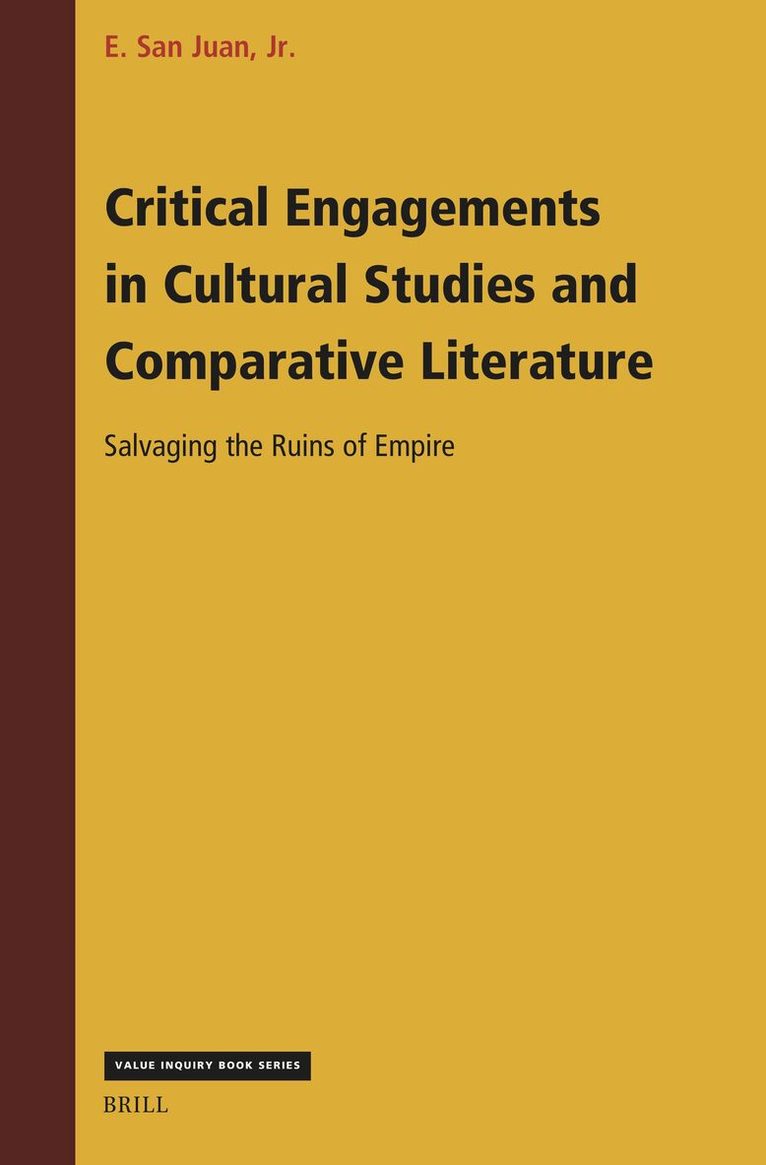
Critical Engagements in Cultural Studies and Comparative Literature
Salvaging the Ruins of Empire
Inbunden, Engelska, 2026
2 142 kr
Skickas inom 3-6 vardagar
Few readers know how the U.S.-Marcos dictatorship in the Philippines inflicted torture and death with impunity on millions. Citizens became desaparesidos, to use the Latin-American term. In the Philippines, the victims were “salvaged,” kidnapped and killed. This semantic change epitomizes the experience of colonized/neocolonized subjects since the bloody pacification of the islands in the 1899–1913 Filipino-American War. The usual meaning of “salvage,” as rescue of selected relics from history’s slaughterhouse, is restored here.In this book E. San Juan, Jr. reviews the dialectical process in postmodern art and symbolic expressions of the Cold War and analyzes the contradictions of re-neoliberal globalization and the retooled “salvaging” in the Duterte-Marcos regime today.Neocolonialism and decolonization mutually inform the discussion of Filipino indigenization with the emergence of sikolohiyang Filipino—an original construction.