Eric A. Nordlinger - Böcker
Visar alla böcker från författaren Eric A. Nordlinger. Handla med fri frakt och snabb leverans.
4 produkter
4 produkter
665 kr
Skickas inom 3-6 vardagar
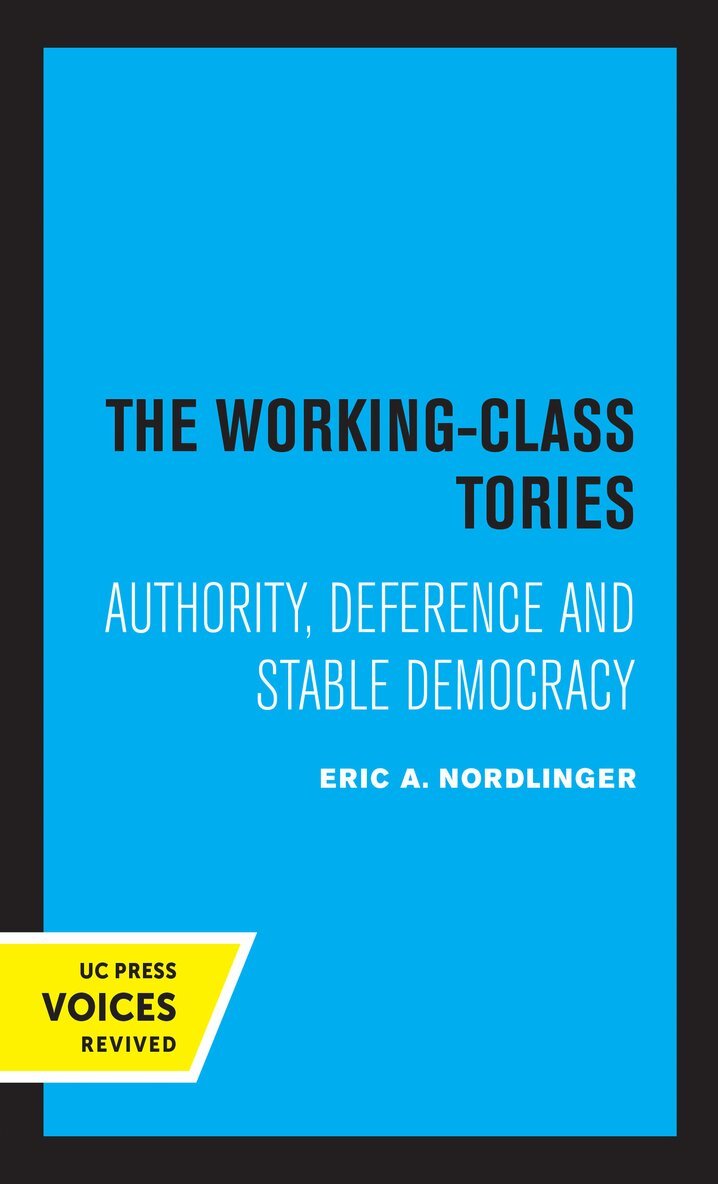
The Working-Class Tories: Authority, Deference and Stable Democracy by Eric A. Nordlinger explores the paradox of a majority working-class society that consistently produces a stable and effective democracy, and in which a substantial segment of the working class votes Conservative. At the heart of Nordlinger’s argument is the fusion of democratic consent with hierarchical authority in English political culture. Leaders are expected to lead, often with wide autonomy, while the electorate largely consents after the fact—what L. S. Amery called “democracy by consent and not by delegation.” This acceptance of strong, independent leadership is historically rooted in the early and enduring legitimation of centralized authority after the Norman Conquest, which ensured that critiques targeted mismanagement rather than authority itself.Nordlinger situates this dynamic by contrasting Tory and Labour models of authority. Tory thought emphasizes hierarchy, elite leadership, and authoritative decision-making bounded by conventions, while Labour ideology is more egalitarian, viewing the people as the source of sovereignty and resisting aristocratic leadership norms. Yet survey data and political practice show the Tory model dominates: both Conservative and Labour voters prize strong leaders willing to make unwelcome decisions above honesty or technical competence. This cultural preference underpins the dominance of Prime Ministers, who act first and seek assent later, as with Attlee’s decision to build the atomic bomb or Eden’s Suez intervention—actions seen as constitutional and legitimate. Party hierarchies mirror this structure, with leaders exercising “enormous” autonomous authority. By examining these patterns, Nordlinger demonstrates how deference to hierarchical authority, even among manual workers, explains the stability of British democracy and the electoral strength of the Conservative Party in a predominantly working-class nation.This title is part of UC Press's Voices Revived program, which commemorates University of California Press’s mission to seek out and cultivate the brightest minds and give them voice, reach, and impact. Drawing on a backlist dating to 1893, Voices Revived makes high-quality, peer-reviewed scholarship accessible once again using print-on-demand technology. This title was originally published in 1967.
983 kr
Skickas
The Working-Class Tories: Authority, Deference and Stable Democracy by Eric A. Nordlinger explores the paradox of a majority working-class society that consistently produces a stable and effective democracy, and in which a substantial segment of the working class votes Conservative. At the heart of Nordlinger’s argument is the fusion of democratic consent with hierarchical authority in English political culture. Leaders are expected to lead, often with wide autonomy, while the electorate largely consents after the fact—what L. S. Amery called “democracy by consent and not by delegation.” This acceptance of strong, independent leadership is historically rooted in the early and enduring legitimation of centralized authority after the Norman Conquest, which ensured that critiques targeted mismanagement rather than authority itself.Nordlinger situates this dynamic by contrasting Tory and Labour models of authority. Tory thought emphasizes hierarchy, elite leadership, and authoritative decision-making bounded by conventions, while Labour ideology is more egalitarian, viewing the people as the source of sovereignty and resisting aristocratic leadership norms. Yet survey data and political practice show the Tory model dominates: both Conservative and Labour voters prize strong leaders willing to make unwelcome decisions above honesty or technical competence. This cultural preference underpins the dominance of Prime Ministers, who act first and seek assent later, as with Attlee’s decision to build the atomic bomb or Eden’s Suez intervention—actions seen as constitutional and legitimate. Party hierarchies mirror this structure, with leaders exercising “enormous” autonomous authority. By examining these patterns, Nordlinger demonstrates how deference to hierarchical authority, even among manual workers, explains the stability of British democracy and the electoral strength of the Conservative Party in a predominantly working-class nation.This title is part of UC Press's Voices Revived program, which commemorates University of California Press’s mission to seek out and cultivate the brightest minds and give them voice, reach, and impact. Drawing on a backlist dating to 1893, Voices Revived makes high-quality, peer-reviewed scholarship accessible once again using print-on-demand technology. This title was originally published in 1967.
341 kr
Skickas inom 10-15 vardagar
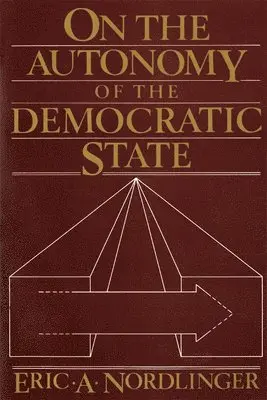
In this major revisionist study, Eric A. Nordlinger poses two critical questions about democratic politics. How are the public policy decisions of the democratic state in America and Europe to be explained? To what extent is the democratic state an autonomous entity, that is, a state that translates its own policy preferences into public policies?On the Autonomy of the Democratic State challenges the central assumption of liberal and Marxist scholars, journalists, and citizens alike—that elected and appointed public officials are consistently constrained by society in the making of public policy. Nordlinger demonstrates that public officials are not only frequently autonomous insofar as they regularly act upon their own policy preferences, but also markedly autonomous in doing so even in the face of opposition from the most politically powerful groups in society: voters, well-organized and financed interest groups, national associations of farmers, workers, employers, and large corporations.Here is a book in which wide-ranging generalizations are tightly bound up with empirical examples and data. Nordlinger systematically identifies the state's many capacities and opportunities for enhancing its autonomy. These are used by public officials to shape, alter, neutralize, deflect, and resist the policy preferences and pressures of societal groups. Even the highly fragmented national state in America is shown to be far more independent of societal demands than claimed by the conventional wisdom.
545 kr
Skickas inom 7-10 vardagar
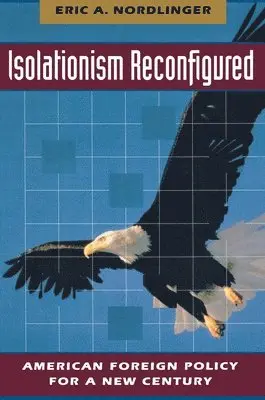
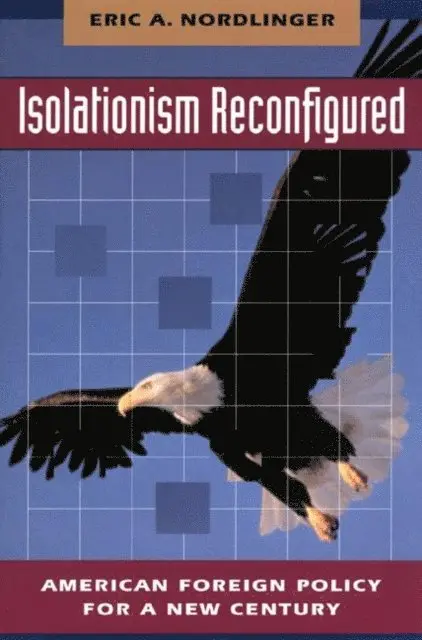
This iconoclastic and fundamental work, Eric Nordlinger's last, advocates a new variant of isolationism, a "national strategy" confining U.S. military actions largely to North America and to neighboring sea-and air- lanes but encouraging international activism and engagement in nonsecurity realms. In Nordlinger's view, disengaging from security commitments on distant shores would liberate the United States to use its resources and decision-making powers to act more effectively abroad in matters of economic policy and human rights. A national strategy would then become a powerful new method of encouraging international ideals of democracy, and isolationism would be freed of its previous associations with appeasement, weakness, economic protectionism, and self-serving nationalism. Nordlinger draws on the recent historical record to show that a national strategy would have lessened the perils of earlier decades, including those of the Cold War. While real dangers did exist during this period, engaged strategies, such as containment, too often exacerbated them.The United States could have effectively and far less expensively helped to deter Communist aggression in Europe and Asia by encouraging other nations to make larger investments in their own protection. Marshaling impressive empirical evidence in defense of a controversial position, this final work by a leading scholar of international affairs is essential reading for scholars, practitioners, and lay readers alike.