Eric Beerbohm - Böcker
Visar alla böcker från författaren Eric Beerbohm. Handla med fri frakt och snabb leverans.
4 produkter
4 produkter
533 kr
Skickas inom 7-10 vardagar
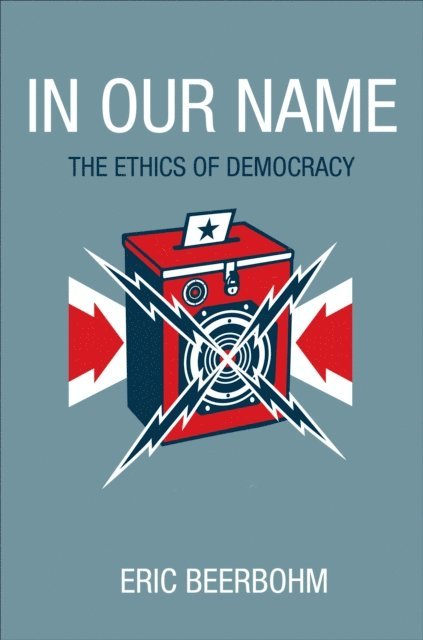
When a government in a democracy acts in our name, are we, as citizens, responsible for those acts? What if the government commits a moral crime? The protestor's slogan--"Not in our name!"--testifies to the need to separate ourselves from the wrongs of our leaders. Yet the idea that individual citizens might bear a special responsibility for political wrongdoing is deeply puzzling for ordinary morality and leading theories of democracy. In Our Name explains how citizens may be morally exposed to the failures of their representatives and state institutions, and how complicity is the professional hazard of democratic citizenship. Confronting the ethical challenges that citizens are faced with in a self-governing democracy, Eric Beerbohm proposes institutional remedies for dealing with them. Beerbohm questions prevailing theories of democracy for failing to account for our dual position as both citizens and subjects.Showing that the obligation to participate in the democratic process is even greater when we risk serving as accomplices to wrongdoing, Beerbohm argues for a distinctive division of labor between citizens and their representatives that charges lawmakers with the responsibility of incorporating their constituents' moral principles into their reasoning about policy. Grappling with the practical issues of democratic decision making, In Our Name engages with political science, law, and psychology to envision mechanisms for citizens seeking to avoid democratic complicity.
298 kr
Skickas inom 7-10 vardagar
When a government in a democracy acts in our name, are we, as citizens, responsible for those acts? What if the government commits a moral crime? The protestor's slogan--"Not in our name!"--testifies to the need to separate ourselves from the wrongs of our leaders. Yet the idea that individual citizens might bear a special responsibility for political wrongdoing is deeply puzzling for ordinary morality and leading theories of democracy. In Our Name explains how citizens may be morally exposed to the failures of their representatives and state institutions, and how complicity is the professional hazard of democratic citizenship. Confronting the ethical challenges that citizens are faced with in a self-governing democracy, Eric Beerbohm proposes institutional remedies for dealing with them. Beerbohm questions prevailing theories of democracy for failing to account for our dual position as both citizens and subjects.Showing that the obligation to participate in the democratic process is even greater when we risk serving as accomplices to wrongdoing, Beerbohm argues for a distinctive division of labor between citizens and their representatives that charges lawmakers with the responsibility of incorporating their constituents' moral principles into their reasoning about policy. Grappling with the practical issues of democratic decision making, In Our Name engages with political science, law, and psychology to envision mechanisms for citizens seeking to avoid democratic complicity.
678 kr
Skickas inom 7-10 vardagar
Features contributions that respond to deep challenges to social cohesion from racial injusticeIn the latest installment of the NOMOS series, a distinguished group of interdisciplinary scholars explore the erosion—and potential rebuilding—of civic bonds in response to injustice, wrongdoing, and betrayal. Contributors address the possibility of reconciliation and repair, drawing on cutting-edge insights from the fields of political science, philosophy, and law. Nine timely essays explore our pivotal moment in history, from the question of reparations for slavery to the from the art—and impact—of the public apology.The editors of this volume encourage us to not only examine the roots of mistrust, but also to imagine a collective way forward, particularly as we face the continuing threat of the COVID-19 pandemic. Reconciliation and Repair provides thought-provoking perspectives in an age where they are desperately needed.
645 kr
Skickas inom 10-15 vardagar
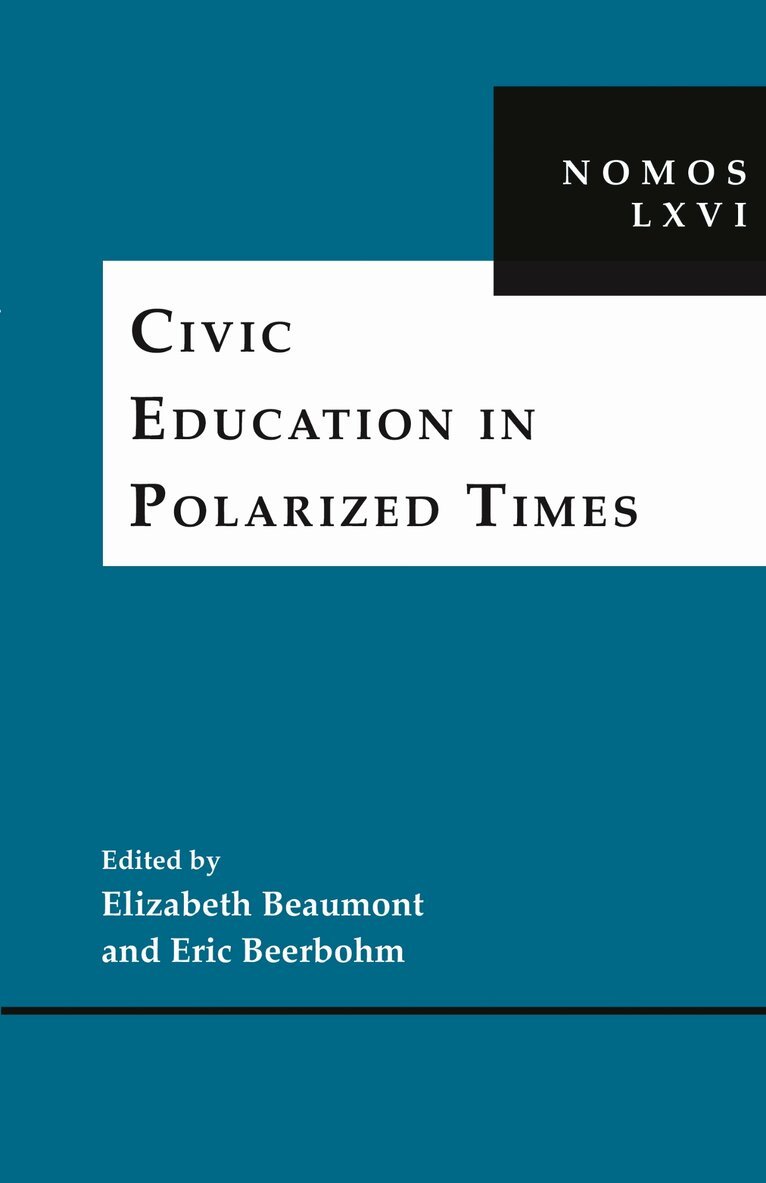
Reveals the possibilities and challenges of civic education in circumstances of extreme polarization, and how civic learning and political divisiveness can interact and influence each otherAs fears about polarization—and its contribution to democratic crisis and corrosion—rise, many people have posited civic education as a possible remedy. In a time of increasing political polarization, what should the goals of civic education be, and how should they be implemented? In the latest installment of the NOMOS series, Eric Beerbohm and Elizabeth Beaumont bring together a distinguished group of interdisciplinary scholars across philosophy, politics, and law, inviting us to think deeply about the complex promises and pitfalls of civic education.Contributors raise a variety of crucial considerations not only about how to educate citizens in a polarized era but also for a polarized era. What types of civic learning hold promise for preparing students to navigate their way through a political landscape of escalating hostile factions, distrust, truth decay, and disagreement about basic facts? Could or should civic education attempt to reduce or counteract polarization, or should it focus on other aims?Beaumont and Beerbohm show us that the dynamics and circumstances of polarization do not stop at the schoolhouse gates, but bring new urgency together with added pressures and constraints to all civic education. As political polarization continues to intensify across the globe, this riveting volume illuminates the significance, the possibilities, and the challenges of civic education in the contemporary era.