Eric J. Cassell - Böcker
Visar alla böcker från författaren Eric J. Cassell. Handla med fri frakt och snabb leverans.
6 produkter
6 produkter
534 kr
Skickas inom 5-8 vardagar
American medicine attracts some of the brightest and most motivated people the country has to offer, and it boasts the most advanced medical technology in the world, a wondrous parade of machines and techniques such as PET scans, MRI, angioplasty, endoscopy, bypasses, organ transplants, and much more besides. And yet, writes Dr. Eric Cassell, what started out early in the century as the exciting conquest of disease, has evolved into an overly expensive, over technologized, uncaring medicine, poorly suited to the health care needs of a society marked by an aging population and a predominance of chronic diseases. In Doctoring: The Nature of Primary Care Medicine, Dr. Cassell shows convincingly how much better fitted advanced concepts of primary care medicine are to America's health care needs. He offers valuable insights into how primary care physicians can be better trained to meet the needs of their patients, both well and sick, and to keep these patients as the focus of their practice.Modern medical training arose at a time when medical science was in ascendancy, Cassell notes. Thus the ideals of science--objectivity, rationality--became the ideals of medicine, and disease--the target of most medical research--became the logical focus of medical practice. When clinicians treat a patient with pneumonia, they are apt to be thinking about pneumonia in general--which is how they learn about the disease--rather than this person's pneumonia. This objective, rational approach has its value, but when it dominates a physician's approach to medicine, it can create problems. For instance, treating chronic disease--such as rheumatoid arthritis, diabetes, stroke, emphysema, and congestive heart failure--is not simply a matter of medical knowledge, for it demands a great deal of effort by the patients themselves: they have to keep their doctor appointments, take their medication, do their exercises, stop smoking. The patient thus has a profound effect on the course of the disease, and so for a physician to succeed, he or she must also be familiar with the patient's motivations, values, concerns, and relationship with the doctor. Many doctors eventually figure out how to put the patient at the centre of their practice, but they should learn to do this at the training level, not haphazardly over time. To that end, the training of primary care physicians must recognize a distinction between doctoring itself and the medical science on which it is based, and should try to produce doctors who rely on both their scientific and subjective assessments of their patients' overall needs. There must be a return to careful observational and physical examination skills and finely tuned history taking and communication skills. Cassell also advocates the need to teach the behavior of both sick and well persons, evaluation of data from clinical epidemiology, decision making skills, and preventive medicine, as well as actively teaching how to make technology the servant rather than the master, and offers practical tips for instruction both in the classroom and in practice. Most important, Doctoring argues convincingly that primary care medicine should become a central focus of America's health care system, not merely a cost-saving measure as envisioned by managed care organizations. Indeed, Cassell shows that the primary care physician can fulfill a unique role in the medical community, and a vital role in society in general. He shows that primary care medicine is not a retreat from scientific medicine, but the natural next step for medicine to take in the coming century.
454 kr
Skickas inom 5-8 vardagar
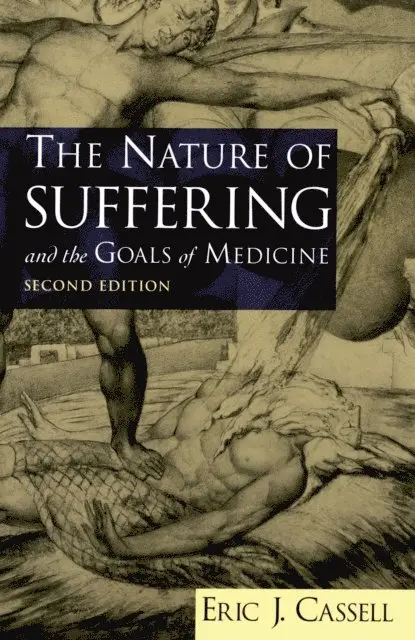
This is a revised and expanded edition of a classic in palliative medicine, originally pulished in 1991. With three new chapters and a new preface summarizing the progress in the area of pain management, this is a must-have for those in palliative medicine and hospice care.The obligation of physicians to relieve human suffering stretches back into antiquity. But what exactly is suffering? One patient with metastatic cancer of the stomach, from which he knew he would shortly die, said he was not suffering. Another, someone who had been operated on for a minor problem - in little pain and not seemingly distressed, said that even coming into the hospital had been a source of pain and suffering. With such varied responses to the problem of suffering, inevitable questions arise. Is it the doctor's responsbility to treat the disease or the patient? What is the relationship between suffering and the goals of medicine?According to Dr Eric Cassell these are cruical questions, but unfortunately have remained only queries void of adequate solutions. It is time for the sick person, Cassell believes, to be not merely an important concern for physicians but the central focus of medicine. With this in mind, Cassell argues for an understanding of what changes should be made in order to successfully treat the sick while alleviating suffering, and how to actually go about making these changes with the methods and training techniques firmly rooted in the doctor's relationship with the patient.Dr Cassell offers an incisive critique of the approach of modern medicine. Drawing on a number of evocative patient narratives, he writes that the goal of medicine must be to treat an individual's suffering, and not just the disease. In addition, Cassell's thoughtful and incisive argument will appeal to psychologists and psychiatrists interested in the nature of pain and suffering.
342 kr
Skickas inom 5-8 vardagar
American medicine attracts some of the brightest and most motivated people the country has to offer, and it boasts the most advanced medical technology in the world, a wondrous parade of machines and techniques such as PET scans, MRI, angioplasty, endoscopy, bypasses, organ transplants, and much more besides. And yet, writes Eric Cassell, what started out early in the century as the exciting conquest of disease, has evolved into an overly expensive, over technologized, uncaring medicine, poorly suited to the health care needs of a society marked by an aging population and a predominance of chronic diseases. In Doctoring: The Nature of Primary Care Medicine, the author shows convincingly how much better fitted advanced concepts of primary care medicine are to America's health care needs. He offers valuable insights into how primary care physicians can be better trained to meet the needs of their patients, both well and sick, and to keep these patients as the focus of their practice.Modern medical training arose at a time when medical science was in ascendancy, Cassell notes. Thus the ideals of science, objectivity and rationality became the ideals of medicine, and disease, the target of most medical research, became the logical focus of medical practice. When clinicians treat a patient with pneumonia, they are apt to be thinking about pneumonia in general, which is how they learn about the disease, rather than this person's pneumonia. This objective, rational approach has its value, but when it dominates a physician's approach to medicine, it can create problems. For instance, treating chronic disease, such as rheumatoid arthritis, diabetes, stroke, emphysema, and congestive heart failure, is not simply a matter of medical knowledge, for it demands a great deal of effort by the patients themselves: they have to keep their doctor appointments, take their medication, do their exercises, stop smoking. The patient thus has a profound effect on the course of the disease, and so for a physician to succeed, he or she must also be familiar with the patient's motivations, values, concerns, and relationship with the doctor. Many doctors eventually figure out how to put the patient at the center of their practice, but they should learn to do this at the training level, not haphazardly over time. To that end, the training of primary care physicians must recognize a distinction between doctoring itself and the medical science on which it is based, and should try to produce doctors who rely on both their scientific and subjective assessments of their patients' overall needs. There must be a return to careful observational and physical examination skills and finely tuned history taking and communication skills. Cassell also advocates the need to teach the behavior of both sick and well persons, evaluation of data from clinical epidemiology, decision making skills, and preventive medicine, as well as actively teaching how to make technology the servant rather than the master, and offers practical tips for instruction both in the classroom and in practice. Most important, Doctoring argues convincingly that primary care medicine should become a central focus of America's health care system, not merely a cost-saving measure as envisioned by managed care organizations. Indeed, Cassell shows that the primary care physician can fulfill a unique role in the medical community, and a vital role in society in general. He shows that primary care medicine is not a retreat from scientific medicine, but the natural next step for medicine to take in the coming century.
885 kr
Skickas inom 5-8 vardagar
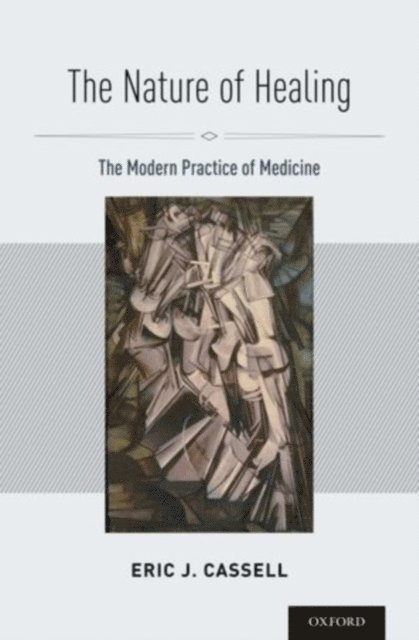
Currently and for centuries past, sickness has been understood to be primarily the physical result of bodily disease. Yet this definition of illness is out-of-date and untrue to life at a time when chronic illness and the problems of disability and aging are increasingly common. When persons are sick, it pervades their whole being. The Nature of Healing is based on a different definition of sickness, one that recognizes persons as sick when they cannot achieve their goals and purposes because of impairments of function, ranging from the molecular to the spiritual, which they believe to fall under the scope of medicine. Such impairments may result from disease, but certainly not all.As the sick person has increasingly become the focus of medicine, there have been repeated but mostly failed attempts to achieve both technological and humanistic goals in caring for patients. This approach is flawed because there is only one ultimate goal -- the well-being of the patient. Whether it involves the personal action of the clinician or the use of technology, everything done toward the goal of well-being is part of the healing enterprise. In this book, Eric Cassell explores what sickness is, what persons are, and how to understand function and its impairments. He explains healing skills and actions, as well as the nature of healing for sick and suffering patients. This book concludes with a discussion of the moral basis of the relationship between patient and healer, as well as the goals of healing.
580 kr
Skickas inom 5-8 vardagar
580 kr
Skickas inom 5-8 vardagar