Eric Mark Kramer - Böcker
Visar alla böcker från författaren Eric Mark Kramer. Handla med fri frakt och snabb leverans.
4 produkter
4 produkter
1 009 kr
Skickas inom 10-15 vardagar
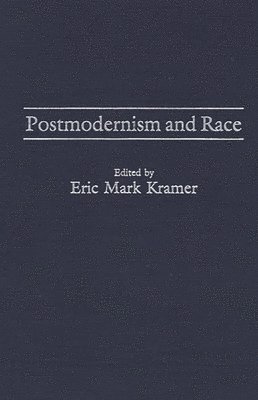
This collection brings together a dozen academics from diverse racial, ethnic, and gender perspectives to explore race in a postmodern way. Postmodernism and Race articulates the differences between modern and postmodern discourses. It then offers a third alternative based on comparative civilizational studies, which suggest a multidimensional approach to power, identity, and social order. Also drawing on Western and non-Western interpretations, the discursive nature of race as a cultural product and semiotic marker is explored.The collection seeks to achieve three tasks: To present a uniquely kynical approach to truth-saying presented by modernists and sophisticated so-called postmodernists (with their faith in lingualism); to explore what modernism is in the context of race; and to investigate the concept of race in an aperspectival way, including the language-gaming of racism. The obsession with racial measurement and its correlation with measures of intelligence is explored, as is the mythology of racial homogeneity in Japan. Also examined are the discursive nature of racial reality and power, and racial identity in Africa.All those concerned with issues of race and/or postmodern civilization, as well as those interested in operational definition, scalar phenomena, relativism, and postmodern views of truth, justice, and power, will find this a provocative collection.
1 142 kr
Skickas inom 10-15 vardagar
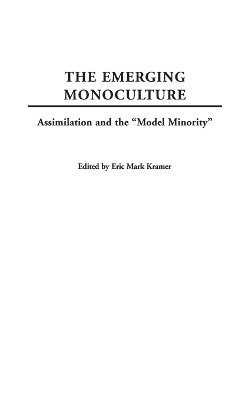
Kramer brings together experts from a variety of minority backgrounds and from around the world to give their perspectives on the most pervasive ideology today, globalism. The basic premise is that a developed country is different from a developed community. They need not be mutually exclusive, but neither is it assumed that they are necessarily consonant.The various essays offer answers to such vital questions as What does it mean to become a 'global citizen'? and What does it mean to be a 'model minority' in a global economy? The process of becoming a mainstream person involves being first marginalized with the implication that something is inadequate about one's self. The process of assimilationism is manifested as various forms of enforced and/or rewarded acculturation. With the vast human migration currently underway, the notion of assimilation has become a global phenomenon. What is occurring, Kramer and his colleagues demonstrate, is a worldwide shift from the village milieu to the city lifestyle. This migration is seen as a polycentric and global phenomenon whereby the promised land is nowhere in particular, but, instead, a way of life and mindset, an urban lifestyle. This process is far more than a simple change in geography. Moving from the village to the cityscape involves a mutation in worldview and self-identity. Additional questions asked throughout the collection are What set of persuasive assumptions are leading the world in this direction? and What might be lost in the process? A provocative collection for scholars, students, and other researchers involved with development studies, multiculturalism, and urbanization.
1 209 kr
Skickas inom 10-15 vardagar
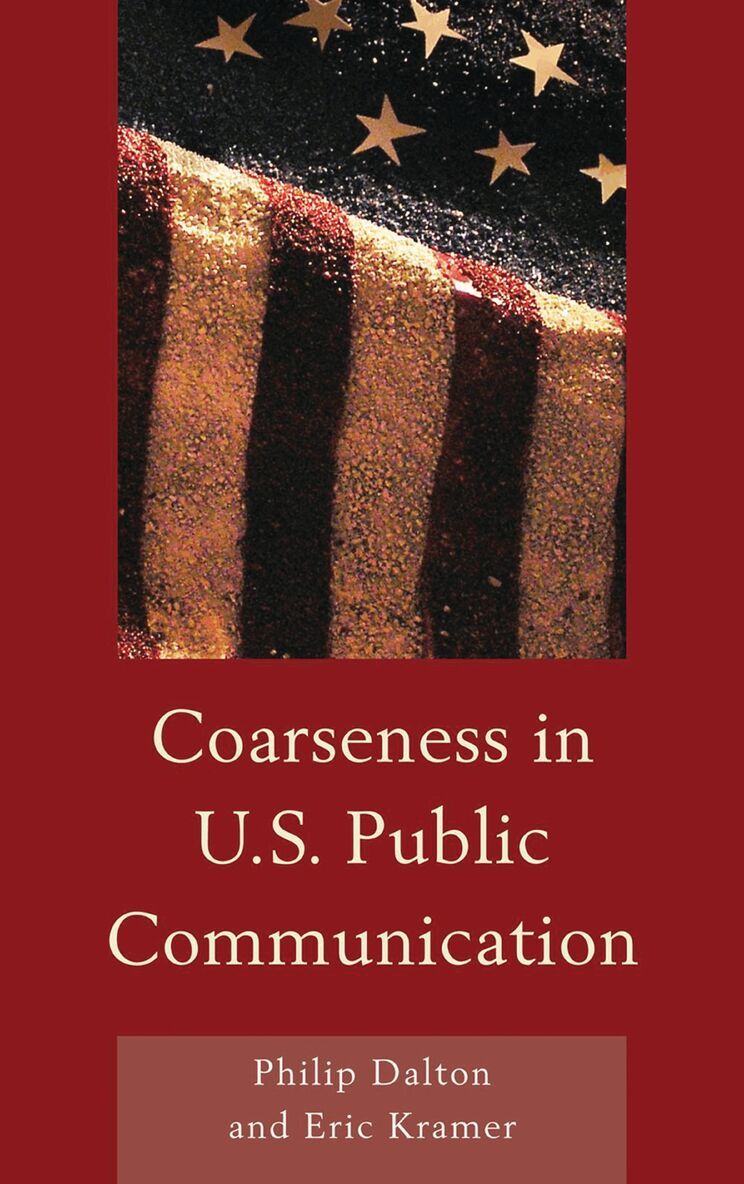
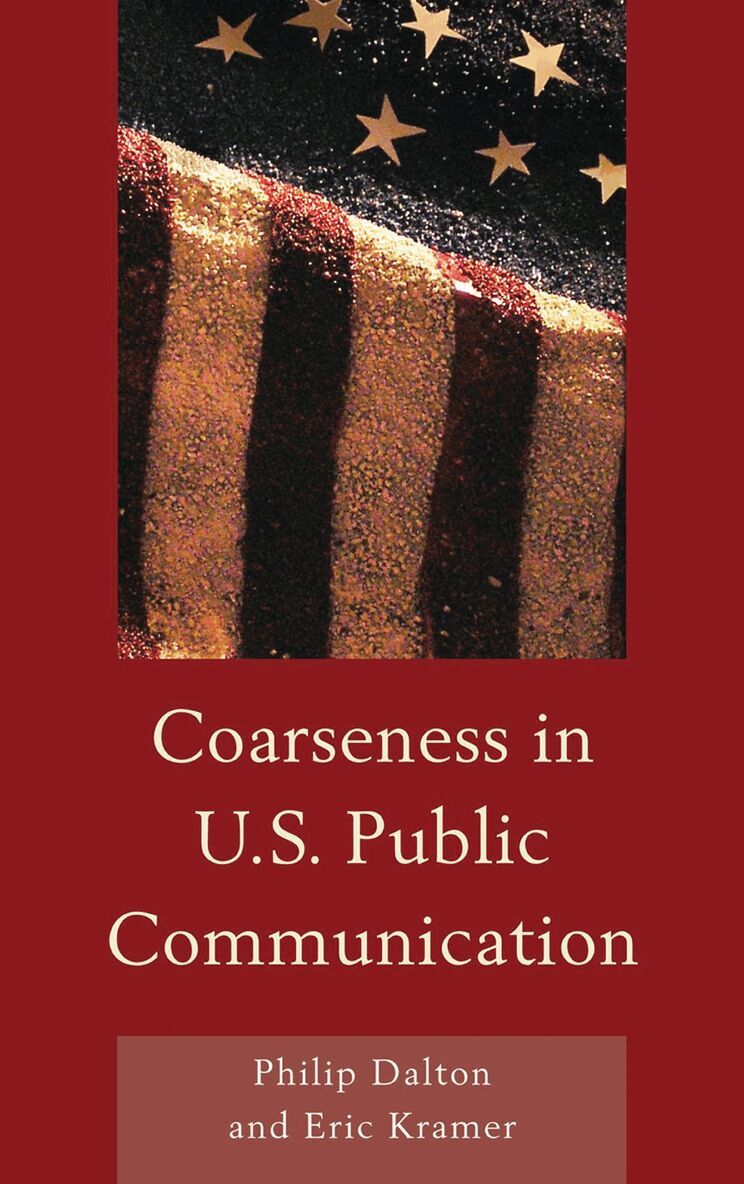
Public expression in the United States has become increasingly coarse. Whether it’s stupid, rude, base, or anti-intellectual talk, it surrounds us. Popular television, film, music, art, and even some elements of religion have become as coarse, we argue, as our often-disparaged political dialogue. This book’s contention is that the U.S. semantic environment is governed by tactics, not tact. We craft messages that work—that perform their desired function. We are instrumental, strategic communicators. As such, entertainment and journalism that draw an audience, for instance, are “good.” This follows the logic that the marketplace, an aggregate of hedonically motivated individuals, decides what’s good. Market logic, when unencumbered by what some characterize as quaint human sentimentalities, liberates us to cynically communicate whatever and however we want. Whatever improves ratings, web traffic, ticket sales, concession sales, repeat purchases, and earnings is good. Embracing this communicative paradigm more fully necessitates the culture’s abandonment of collective notions of both taste and veracity, thus weakening the forces that keep individual desires in check. Our present communication environment is one that invites the hypertrophic expression of the ego, enabling elites to erode public communication standards and repeal laws and regulations resulting in immeasurable individual fortunes. Meanwhile, perpetual plutocratic rule is made even more certain by the cacophonous public noise the rest of us are busy making, leaving us incapable, disinterested, and unwilling to listen to one another.
528 kr
Skickas inom 10-15 vardagar
Public expression in the United States has become increasingly coarse. Whether it’s stupid, rude, base, or anti-intellectual talk, it surrounds us. Popular television, film, music, art, and even some elements of religion have become as coarse, we argue, as our often-disparaged political dialogue. This book’s contention is that the U.S. semantic environment is governed by tactics, not tact. We craft messages that work—that perform their desired function. We are instrumental, strategic communicators. As such, entertainment and journalism that draw an audience, for instance, are “good.” This follows the logic that the marketplace, an aggregate of hedonically motivated individuals, decides what’s good. Market logic, when unencumbered by what some characterize as quaint human sentimentalities, liberates us to cynically communicate whatever and however we want. Whatever improves ratings, web traffic, ticket sales, concession sales, repeat purchases, and earnings is good. Embracing this communicative paradigm more fully necessitates the culture’s abandonment of collective notions of both taste and veracity, thus weakening the forces that keep individual desires in check. Our present communication environment is one that invites the hypertrophic expression of the ego, enabling elites to erode public communication standards and repeal laws and regulations resulting in immeasurable individual fortunes. Meanwhile, perpetual plutocratic rule is made even more certain by the cacophonous public noise the rest of us are busy making, leaving us incapable, disinterested, and unwilling to listen to one another.