Eric N. Lindquist - Böcker
Visar alla böcker från författaren Eric N. Lindquist. Handla med fri frakt och snabb leverans.
3 produkter
3 produkter
641 kr
Skickas inom 3-6 vardagar
A case study in American philanthropy, this book describes the beginnings of the Center for Hellenic Studies, a research institute established in 1961 in Washington, D.C. as an outpost of Harvard University. Each year eight post-doctoral fellows come from all over the world to live at the center and do research in ancient Greek literature, philosophy, or history. The idea behind this arrangement began with the preeminent philanthropist Paul Mellon's interest in finding a project to advance the humanities. Eric Lindquist traces the ten-year evolution of the center from Mellon's first general notion. In the process he portrays some of the hopes and fears for the humanities, especially the classics, in America during the period following World War II and the climate of opinion that led to the establishment of the center. The study concludes with a short account of the subsequent development of the center. This is the first published account of the origins of the center. Originally published in 1990.The Princeton Legacy Library uses the latest print-on-demand technology to again make available previously out-of-print books from the distinguished backlist of Princeton University Press. These editions preserve the original texts of these important books while presenting them in durable paperback and hardcover editions. The goal of the Princeton Legacy Library is to vastly increase access to the rich scholarly heritage found in the thousands of books published by Princeton University Press since its founding in 1905.
1 456 kr
Skickas inom 3-6 vardagar
A case study in American philanthropy, this book describes the beginnings of the Center for Hellenic Studies, a research institute established in 1961 in Washington, D.C. as an outpost of Harvard University. Each year eight post-doctoral fellows come from all over the world to live at the center and do research in ancient Greek literature, philosophy, or history. The idea behind this arrangement began with the preeminent philanthropist Paul Mellon's interest in finding a project to advance the humanities. Eric Lindquist traces the ten-year evolution of the center from Mellon's first general notion. In the process he portrays some of the hopes and fears for the humanities, especially the classics, in America during the period following World War II and the climate of opinion that led to the establishment of the center. The study concludes with a short account of the subsequent development of the center. This is the first published account of the origins of the center. Originally published in 1990.The Princeton Legacy Library uses the latest print-on-demand technology to again make available previously out-of-print books from the distinguished backlist of Princeton University Press. These editions preserve the original texts of these important books while presenting them in durable paperback and hardcover editions. The goal of the Princeton Legacy Library is to vastly increase access to the rich scholarly heritage found in the thousands of books published by Princeton University Press since its founding in 1905.
639 kr
Skickas inom 3-6 vardagar
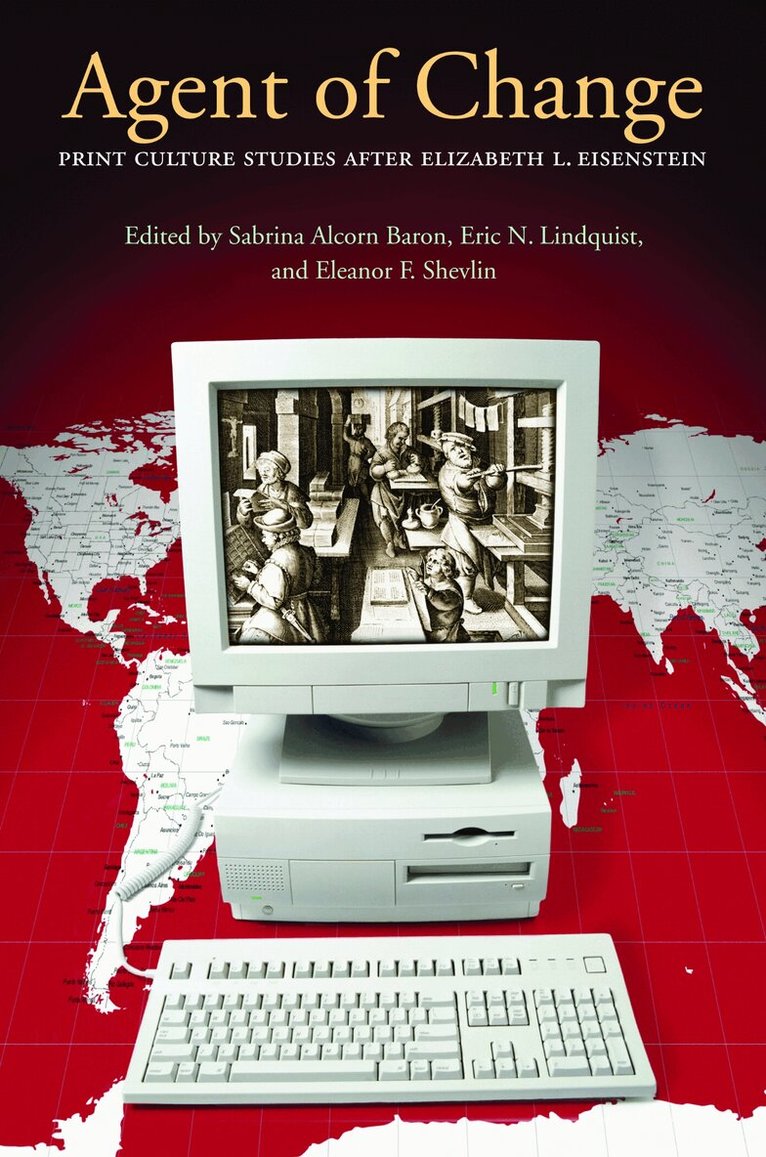
Inspiring debate since the early days of its publication, Elizabeth L. Eisenstein's ""The Printing Press as an Agent of Change: Communications and Cultural Transformations in Early-Modern Europe"" (1979) has exercised its own force as an agent of change in the world of scholarship. Its path-breaking agenda has played a central role in shaping the study of print culture and ""book history"" - fields of inquiry that rank among the most exciting and vital areas of scholarly endeavor in recent years. Joining together leading voices in the field of print scholarship, this collection of twenty essays affirms the catalytic properties of Eisenstein's study as a stimulus to further inquiry across geographic, temporal, and disciplinary boundaries. From early modern marginalia to the use of architectural title pages in Renaissance books, from the press in Spanish colonial America to print in the Islamic world, from the role of the printed word in nation-building to changing histories of reading in the electronic age, this book addresses the legacy of Eisenstein's work in print culture studies today as it suggests future directions for the field. In addition to a conversation with Elizabeth L. Eisenstein, the book includes contributions by Peng Hwa Ang, Margaret Aston, Tony Ballantyne, Vivek Bhandari, Ann Blair, Barbara A. Brannon, Roger Chartier, Kai-wing Chow, James A. Dewar, Robert A. Gross, David Scott Kastan, Harold Love, Paula McDowell, Jane McRae, Jean-Dominique Mellot, Antonio Rodriguez-Buckingham, Geoffrey Roper, William H. Sherman, Peter Stallybrass, H. Arthur Williamson, and Calhoun Winton.