Eric R. Lybeck - Böcker
Visar alla böcker från författaren Eric R. Lybeck. Handla med fri frakt och snabb leverans.
3 produkter
3 produkter
Del 35 - Current Perspectives in Social Theory
Reconstructing Social Theory, History and Practice
Inbunden, Engelska, 2016
1 348 kr
Skickas inom 7-10 vardagar
With regard to developments in social theory, the past 30 years can be characterized as an Age of Deconstruction. Inspired by post-structuralism, postmodernism, critical theory, and science studies, as well as combinations of related approaches, theorists have endeavored to shatter historical meta-narratives and struggled to include previously excluded standpoints in social thought. This important trend has informed our understanding of the role of discourse, difference and expertise in determining relations of power and inequality. This volume focusses on “Reconstruction”, dedicated to taking account of and interrogating the possibility of picking up the pieces. The papers were presented at the 2015 International Social Theory Consortium (ISTC). It considers questions such as, are there limits to the deconstruction project, and have these limits been reached? What are the possibilities for the reconstruction of narratives of long-term historical change? Is it possible to include and integrate the insights and contribution of various critiques of knowledge, while at the same time developing new forms of knowledge?
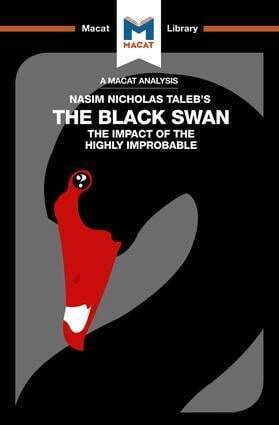
Analysis of Nassim Nicholas Taleb's The Black Swan
The Impact of the Highly Improbable
Häftad, Engelska, 2017
95 kr
Skickas
One of the primary qualities of good creative thinking is an intellectual freedom to think outside of the box. Good creative thinkers resist orthodox ideas, take new lines of enquiry, and generally come at problems from the kinds of angles almost no one else could. And, what is more, when the ideas of creative thinkers are convincing, they can reshape an entire topic, and change the orthodoxy for good. Nassim Nicholas Taleb’s 2007 bestseller The Black Swan: The Impact of the Highly Improbable is precisely such a book: an entertaining, polemical, creative attack on how people in general, and economic experts in particular view the possibility of catastrophic events. Taleb writes with rare creative verve for someone who is also an expert in mathematics, finance, and epistemology (the philosophy of knowledge), and he martials all his skills to turn standard reasoning inside out. His central point is that far from being unimportant, extremely rare events are frequently the most important ones of all: it is highly improbable, but highly consequential occurrences – what he calls Black Swans – that have shaped history most. As a result, Taleb concludes, improbability is not a reason to act as if a possible event does not matter. Rather, it should inspire the opposite reaction.
278 kr
Skickas inom 10-15 vardagar
One of the primary qualities of good creative thinking is an intellectual freedom to think outside of the box. Good creative thinkers resist orthodox ideas, take new lines of enquiry, and generally come at problems from the kinds of angles almost no one else could. And, what is more, when the ideas of creative thinkers are convincing, they can reshape an entire topic, and change the orthodoxy for good. Nassim Nicholas Taleb’s 2007 bestseller The Black Swan: The Impact of the Highly Improbable is precisely such a book: an entertaining, polemical, creative attack on how people in general, and economic experts in particular view the possibility of catastrophic events. Taleb writes with rare creative verve for someone who is also an expert in mathematics, finance, and epistemology (the philosophy of knowledge), and he martials all his skills to turn standard reasoning inside out. His central point is that far from being unimportant, extremely rare events are frequently the most important ones of all: it is highly improbable, but highly consequential occurrences – what he calls Black Swans – that have shaped history most. As a result, Taleb concludes, improbability is not a reason to act as if a possible event does not matter. Rather, it should inspire the opposite reaction.