Eric Schmaltz – författare
Visar alla böcker från författaren Eric Schmaltz. Handla med fri frakt och snabb leverans.
5 produkter
5 produkter
277 kr
Skickas inom 3-6 vardagar
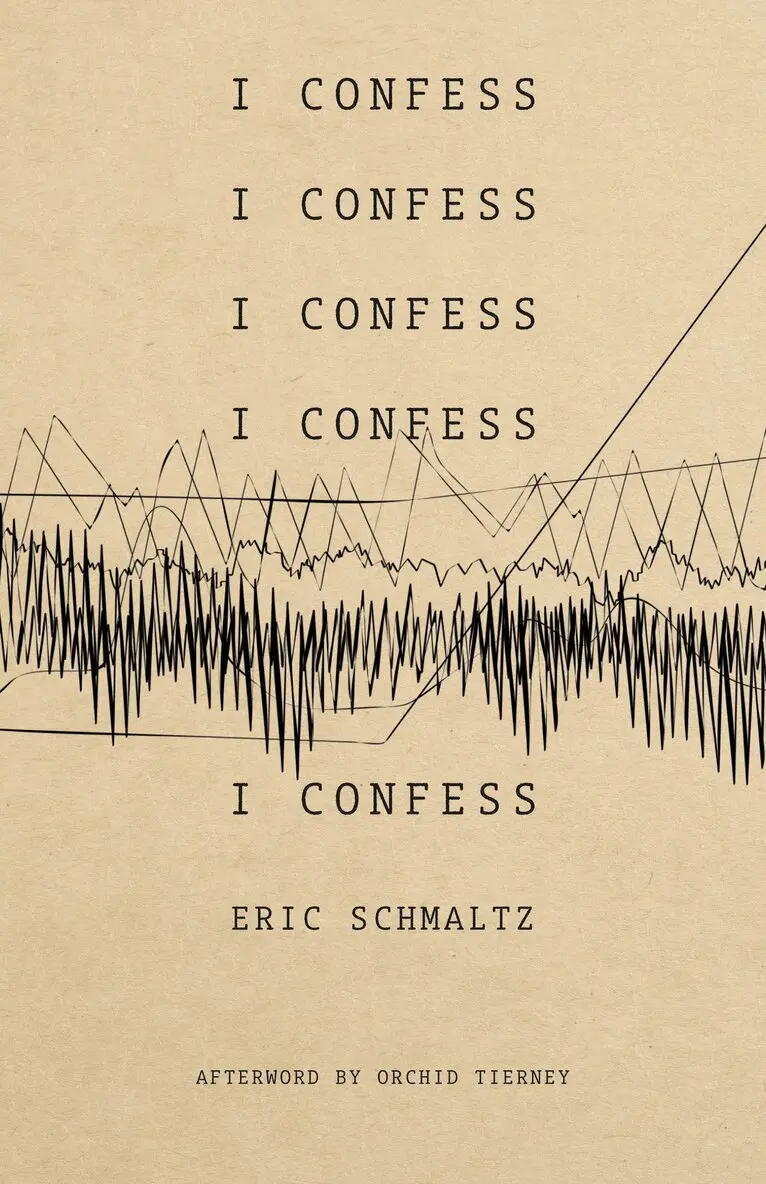
How is a lyric poem like a polygraph machine? A personal, poetic examination of the technology of truth-telling.Eric Schmaltz’s I Confess delves into the complexities of truth-telling in poetry, and the history of technologies designed to produce truth from willing and unwilling subjects, considering what it means to use a device – poetry or polygraph – to draw out one’s most profound feelings and emotions.Exploring the intersection of power, technology, and language, I Confess meditates on lie detection and its history, including trials by ordeal and pseudoscientific technologies. The poet then turns to his own personal experiences working with a lie detector and polygraph analyst. Taking himself as the central subject of the book, Schmaltz puts his subjectivity and positionality under scrutiny.The answers to questions such as What does family mean to you? and Can you describe a time when you felt your best? inspire a range of forms from conventional lyrical verse to list poems to palindromes to visual poems. With an afterword by Orchid Tierney, I Confess is a personal, poetic document of truth’s performance under duress.
286 kr
Skickas inom 5-8 vardagar
362 kr
Skickas inom 10-15 vardagar
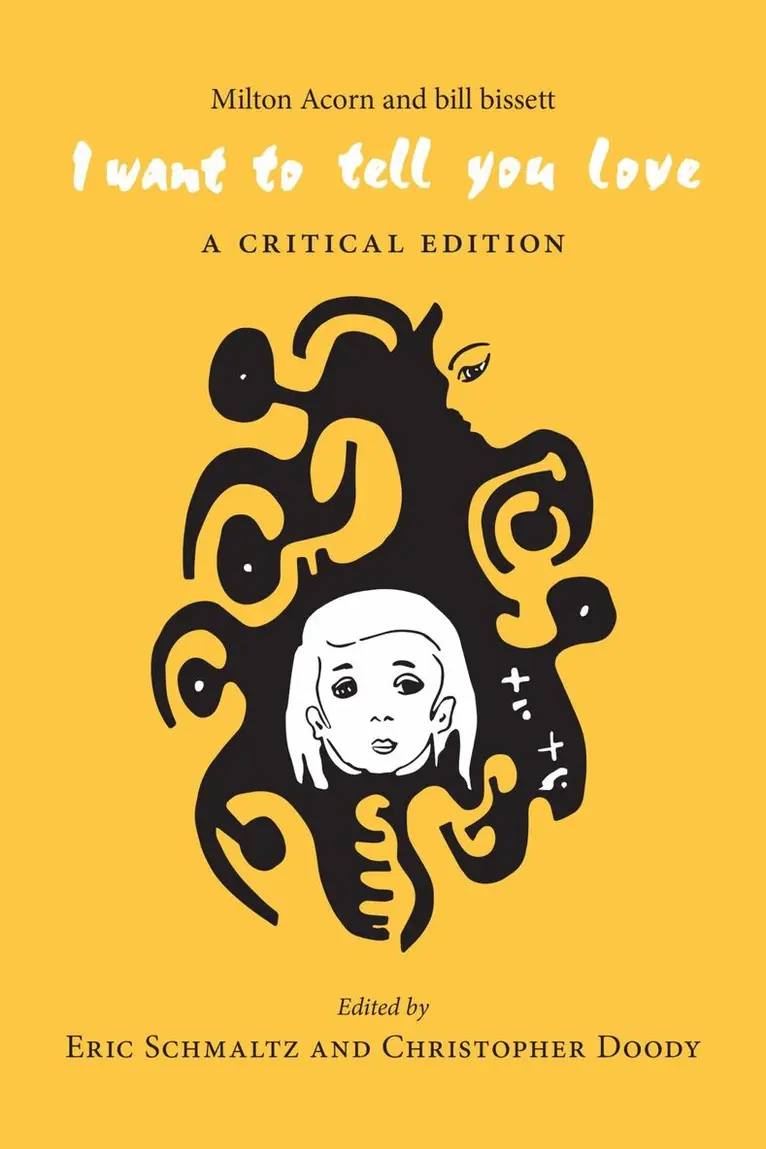
Bill bissett and Milton Acorn are two of Canada's most significant, and most controversial, literary figures. In the 1960s, bissett's renown as an experimental poet was growing as his social and political concerns were stirred by the voice of the counterculture. Acorn, inspired by socialist theory and imagism, was building his reputation as a poet on the margin who ran against the grain of the literary establishment. Both were rising towards cultural prominence—one, a true beatnik and the other, a certifiably rugged lyric poet. In 1965 they came together in a remarkable collaboration, a challenge to the established literary tradition and a call for a better world.Published for the very first time, I Want to Tell You Love is the combination of bissett and Acorn's seemingly incongruous poetics to confront the turbulent and swiftly changing world of the 1960s. A collection of poems and illustrations, it is a window into the lives and motivations of two soon-to-be-canonized cultural figures. I Want to Tell You Love is a work of friendship, a shared vision of resistance, and a mutual longing for a better world.This critical edition offers the manuscript in its intended form alongside contextualizing scholarship in a significant contribution to literary history. I Want to Tell You Love offers an opportunity to reevaluate the nature and scope of Canadian poetry during a critical time of national cultural awakening.
918 kr
Skickas inom 7-10 vardagar
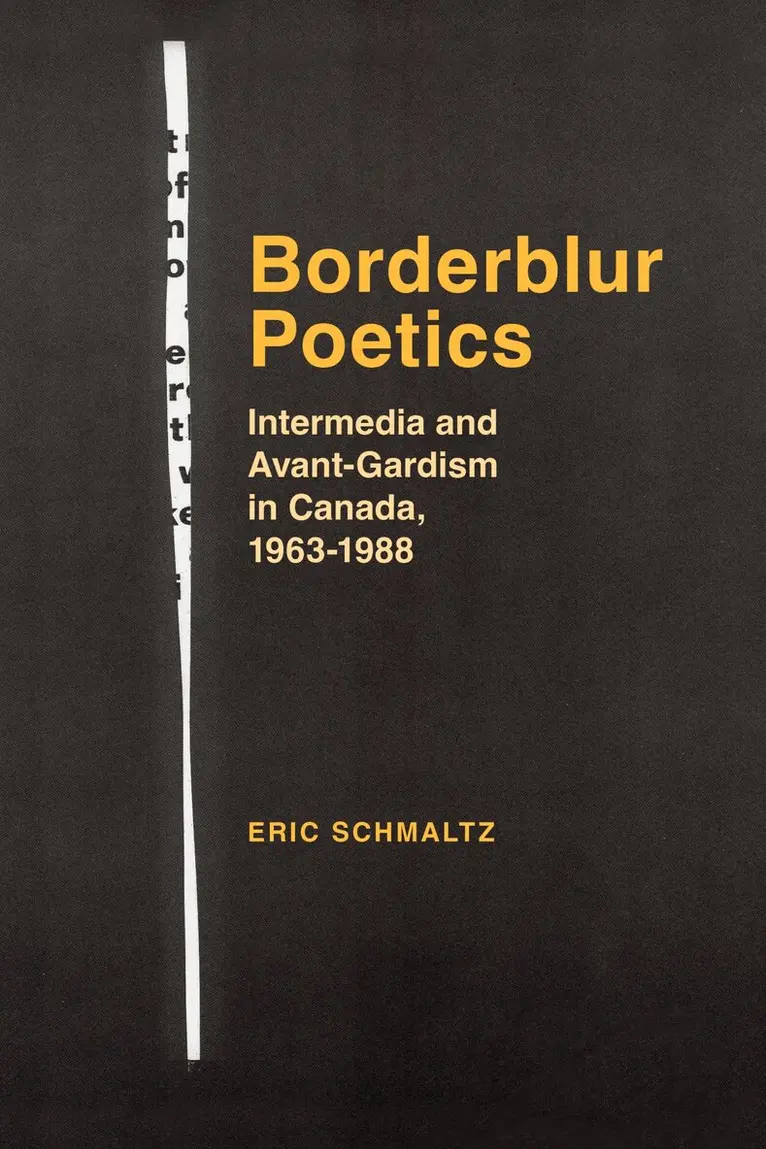
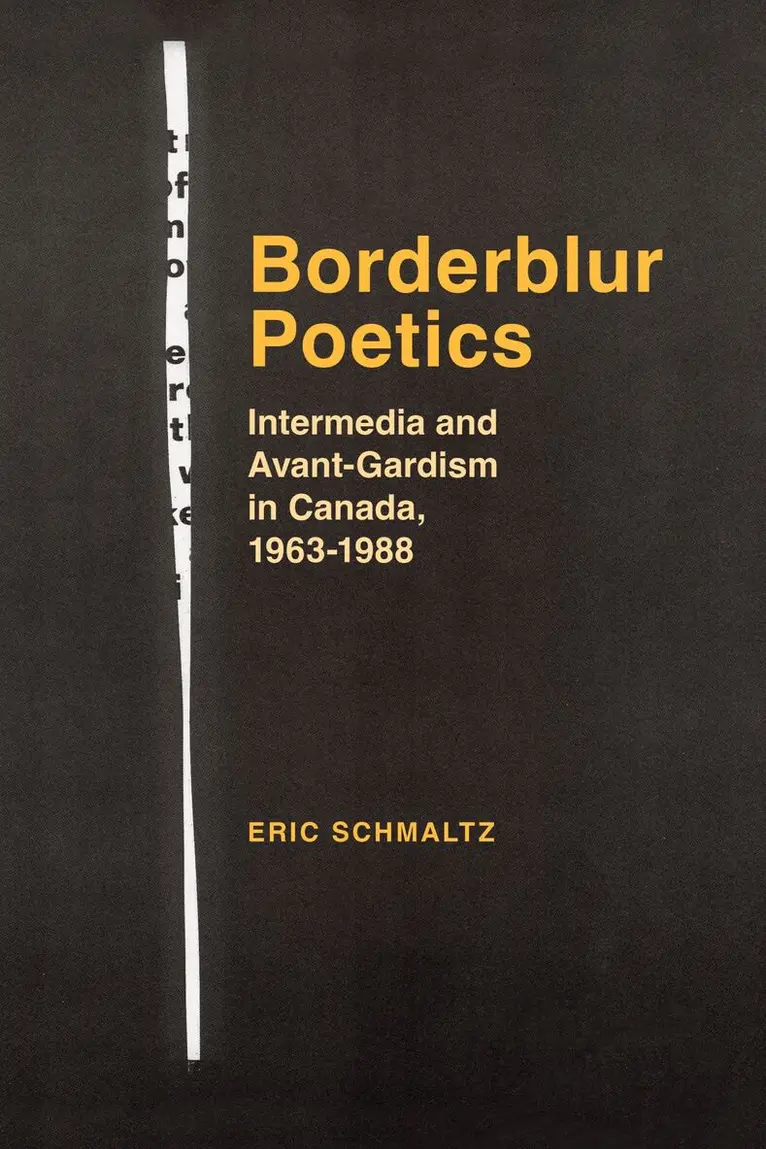
Beginning in 1963 and continuing through the late 1980s, a loose coterie of like-minded Canadian poets challenged the conventions of writing and poetic meaning by fusing their practice with strategies from visual art, sound art, sculpture, instillation, and performance. They called it “borderblur”Borderblur Poetics traces the emergence and proliferation of this node of poetic activity, an avant-garde movement comprising concrete poetry, sound poetry, and kinetic poetry, practiced by poets and artists like bpNichol, bill bissett, Judith Copithorne, Steve McCaffery, Penn Kemp, Ann Rosenberg, Gerry Shikatani, Shaunt Basmajian, among others.Author Eric Schmaltz demonstrates how these poets formed an alternative tradition, one that embraced intermediality to challenge the hegemony of Canadian literature established during the heydays of cultural nationalism. He shows the importance of intermediality as a driving cultural force and how its proliferation significantly altered Canadian cultural expression. Drawing on a combination of archival research, historical analysis, and literary criticism, Borderblur Poetics adds significant nuance to theories and criticisms of Canadian literature.
478 kr
Skickas inom 7-10 vardagar
Beginning in 1963 and continuing through the late 1980s, a loose coterie of like-minded Canadian poets challenged the conventions of writing and poetic meaning by fusing their practice with strategies from visual art, sound art, sculpture, instillation, and performance. They called it "borderblur"Borderblur Poetics traces the emergence and proliferation of this node of poetic activity, an avant-garde movement comprising concrete poetry, sound poetry, and kinetic poetry, practiced by poets and artists like bpNichol, bill bissett, Judith Copithorne, Steve McCaffery, Penn Kemp, Ann Rosenberg, Gerry Shikatani, Shaunt Basmajian, among others.Author Eric Schmaltz demonstrates how these poets formed an alternative tradition, one that embraced intermediality to challenge the hegemony of Canadian literature established during the heydays of cultural nationalism. He shows the importance of intermediality as a driving cultural force and how its proliferation significantly altered Canadian cultural expression. Drawing on a combination of archival research, historical analysis, and literary criticism, Borderblur Poetics adds significant nuance to theories and criticisms of Canadian literature.