Eric T. Olson - Böcker
Visar alla böcker från författaren Eric T. Olson. Handla med fri frakt och snabb leverans.
4 produkter
4 produkter
727 kr
Skickas inom 5-8 vardagar
Most philosophers writing about personal identity in recent years claim that what it takes for us to persist through time is a matter of psychology. In this groundbreaking new book, Eric Olson argues that such approaches face daunting problems, and he defends in their place a radically non-psychological account of personal identity. He defines human beings as biological organisms, and claims that no psychological relation is either sufficient or necessary for an organism to persist. Rejecting several famous thought experiments dealing with personal identity, he instead argues that one could survive the destruction of all of one's psychological contents and capabilities as long as the human organism remains alive.
790 kr
Skickas inom 5-8 vardagar
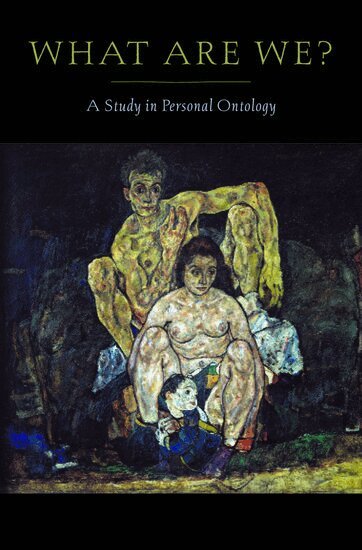
From the time of Locke, discussions of personal identity have often ignored the question of our basic metaphysical nature: whether we human people are biological organisms, spatial or temporal parts of organisms, bundles of perceptions, or what have you. The result of this neglect has been centuries of wild proposals and clashing intuitions.What Are We? is the first general study of this important question. It beings by explaining what the question means and how it differs from others, such as questions of personal identity and the mind-body problem. It then examines in some depth the main possible accounts of our metaphysical nature, detailing both their theoretical virtues and the often grave difficulties they face.The book does not endorse any particular account of what we are, but argues that the matter turns on more general issues in the ontology of material things. If composition is universal--if any material things whatever make up something bigger--then we are temporal parts of organisms. If things never compose anything bigger, so that there are only mereological simples, then we too are simples--perhaps the immaterial substances of Descartes--or else we do not exist at all (a view Olson takes very seriously). The intermediate view that some things compose bigger things and others do not leads almost inevitably to the conclusion that we are organisms. So we can discover what we are by working out when composition occurs.
430 kr
Skickas inom 10-15 vardagar
Are we made entirely of matter, like sticks and stones? Or do we have a soul—a nonphysical entity—where our mental lives take place?The authors Eric T. Olson and Aaron Segal begin this accessible and wide-ranging debate by looking at the often-overlooked question of whether we appear in ordinary experience to be material things. Olson then argues that the dependence of our mental lives on the condition of our brains—the fact that general anesthesia causes complete unconsciousness, for instance—is best explained by saying that our mental lives are physical activities in our brains rather than nonphysical activities in the soul. Segal objects that this view is incompatible with two obvious and important facts about ourselves: that there is only one of you rather than trillions of almost identical beings now thinking your thoughts, and that we exist and remain conscious for more than an instant. These facts, he claims, are presupposed in our practical and moral judgments—but they require us to be immaterial things. Olson is forced to concede that there is no easy and uncontroversial answer to these objections but doubts whether taking us to be immaterial would be any help. The debate takes in large philosophical questions extending well beyond dualism and materialism.The book features clear statements of each argument, responses to counter-arguments, in-text definitions, a glossary of key terms, and section summaries. Scholars and students alike will find it easy to follow the debate and learn the key concepts from metaphysics, philosophy of mind, and other areas necessary to understand each position.Key Features Is the only introductory book devoted to the debate between substance dualism and materialism Discusses both traditional and novel arguments for each position Debates important but infrequently discussed questions, including: do we appear, in ordinary experience, to be material? should materialism be the default view? is there a good probabilistic argument for materialism? Written in a lively and accessible style Uses only a limited number of technical terms and defines all of them in the glossary
1 832 kr
Skickas inom 10-15 vardagar
Are we made entirely of matter, like sticks and stones? Or do we have a soul—a nonphysical entity—where our mental lives take place?The authors Eric T. Olson and Aaron Segal begin this accessible and wide-ranging debate by looking at the often-overlooked question of whether we appear in ordinary experience to be material things. Olson then argues that the dependence of our mental lives on the condition of our brains—the fact that general anesthesia causes complete unconsciousness, for instance—is best explained by saying that our mental lives are physical activities in our brains rather than nonphysical activities in the soul. Segal objects that this view is incompatible with two obvious and important facts about ourselves: that there is only one of you rather than trillions of almost identical beings now thinking your thoughts, and that we exist and remain conscious for more than an instant. These facts, he claims, are presupposed in our practical and moral judgments—but they require us to be immaterial things. Olson is forced to concede that there is no easy and uncontroversial answer to these objections but doubts whether taking us to be immaterial would be any help. The debate takes in large philosophical questions extending well beyond dualism and materialism.The book features clear statements of each argument, responses to counter-arguments, in-text definitions, a glossary of key terms, and section summaries. Scholars and students alike will find it easy to follow the debate and learn the key concepts from metaphysics, philosophy of mind, and other areas necessary to understand each position.Key Features Is the only introductory book devoted to the debate between substance dualism and materialism Discusses both traditional and novel arguments for each position Debates important but infrequently discussed questions, including: do we appear, in ordinary experience, to be material? should materialism be the default view? is there a good probabilistic argument for materialism? Written in a lively and accessible style Uses only a limited number of technical terms and defines all of them in the glossary