Eric Vandendriessche - Böcker
Visar alla böcker från författaren Eric Vandendriessche. Handla med fri frakt och snabb leverans.
5 produkter
5 produkter
1 578 kr
Skickas inom 10-15 vardagar
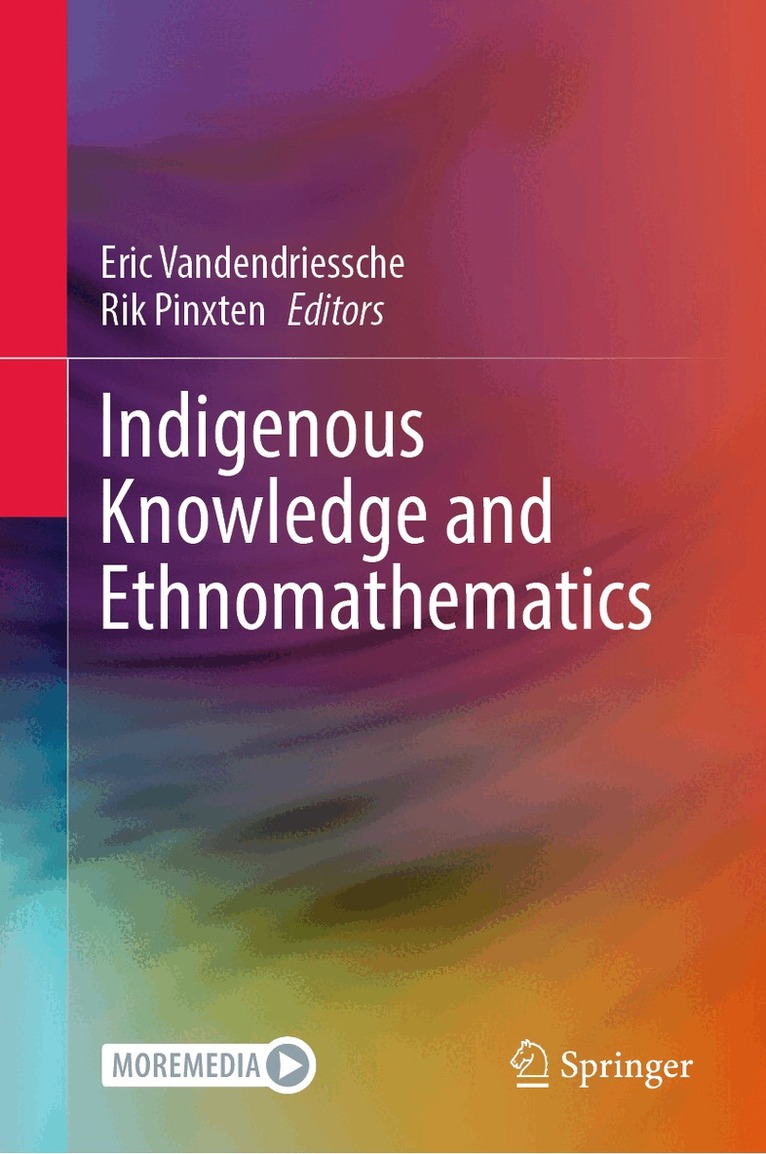
The book presents a series of ethnographic studies, which illustrate issues of wider importance, such as the role of cultural traditions, concepts and learning procedures in the development of formal (or mathematical) thinking outside of the western tradition. It focuses on research at the crossroads of anthropology and ethnomathematics to document indigenous mathematical knowledge and its inclusion in specific cultural patterns. More generally, the book demonstrates the heuristic value of crossing ethnographical, anthropological and ethnomathematical approaches to highlight and analyze—or "formalize" with a pedagogical outlook—indigenous mathematical knowledge.The book is divided into three parts. The first part extensively analyzes theoretical claims using particular ethnographic data, while revealing the structural mathematical features of different ludic, graphic, or technical/procedural practices in their links to other cultural phenomena. In the second part, new empirical studies that add data and perspectives from the body of studies on indigenous knowledge systems to the ongoing discussions in mathematics education in and for diverse cultural traditions are presented. This part considers, on the one hand, the Brazilian work in this field; on the other hand, it brings ethnographic innovation from other parts of the world. The third part comprises a broad philosophical discussion of the impact of intuitive or "ontological" premises on mathematical thinking and education in the light of recent developments within so-called indigenously inspired thinking. Finally, the editors’ conclusions aim to invite the broad and diversified field of scholars in this domain of research to seek alternative approaches for understanding mathematical reasoning and the adjacent adequate educational goals and means.This book is of interest to scholars and students in anthropology, ethnomathematics, history and philosophy of science, mathematics, and mathematics education, as well as other individuals interested in these topics.
616 kr
Skickas inom 5-8 vardagar
1 578 kr
Skickas inom 10-15 vardagar
The book presents a series of ethnographic studies, which illustrate issues of wider importance, such as the role of cultural traditions, concepts and learning procedures in the development of formal (or mathematical) thinking outside of the western tradition. It focuses on research at the crossroads of anthropology and ethnomathematics to document indigenous mathematical knowledge and its inclusion in specific cultural patterns. More generally, the book demonstrates the heuristic value of crossing ethnographical, anthropological and ethnomathematical approaches to highlight and analyze—or "formalize" with a pedagogical outlook—indigenous mathematical knowledge.The book is divided into three parts. The first part extensively analyzes theoretical claims using particular ethnographic data, while revealing the structural mathematical features of different ludic, graphic, or technical/procedural practices in their links to other cultural phenomena. In the second part, new empirical studies that add data and perspectives from the body of studies on indigenous knowledge systems to the ongoing discussions in mathematics education in and for diverse cultural traditions are presented. This part considers, on the one hand, the Brazilian work in this field; on the other hand, it brings ethnographic innovation from other parts of the world. The third part comprises a broad philosophical discussion of the impact of intuitive or "ontological" premises on mathematical thinking and education in the light of recent developments within so-called indigenously inspired thinking. Finally, the editors’ conclusions aim to invite the broad and diversified field of scholars in this domain of research to seek alternative approaches for understanding mathematical reasoning and the adjacent adequate educational goals and means.This book is of interest to scholars and students in anthropology, ethnomathematics, history and philosophy of science, mathematics, and mathematics education, as well as other individuals interested in these topics.
Del 36 - Studies in History and Philosophy of Science
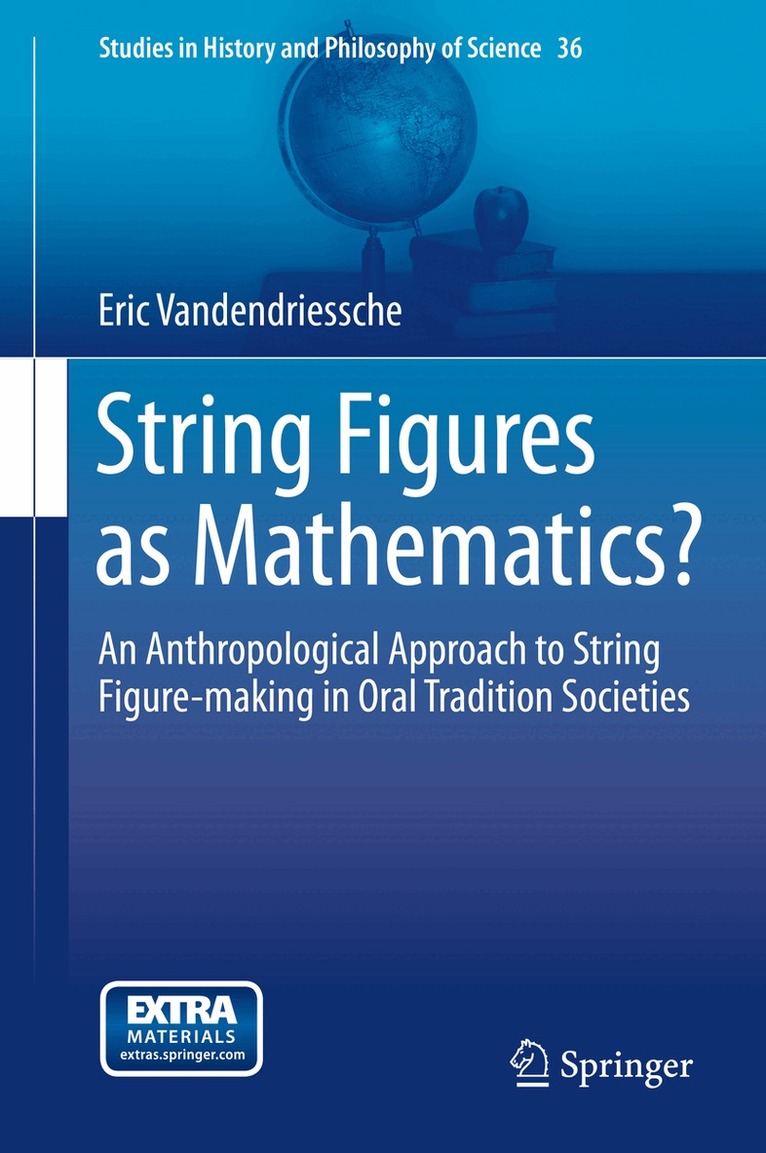
String Figures as Mathematics?
An Anthropological Approach to String Figure-making in Oral Tradition Societies
Inbunden, Engelska, 2015
1 064 kr
Skickas inom 10-15 vardagar
This book addresses the mathematical rationality contained in the making of string figures.
Del 36 - Studies in History and Philosophy of Science
String Figures as Mathematics?
An Anthropological Approach to String Figure-making in Oral Tradition Societies
Häftad, Engelska, 2016
1 064 kr
Skickas inom 10-15 vardagar
This book addresses the mathematical rationality contained in the making of string figures. It does so by using interdisciplinary methods borrowed from anthropology, mathematics, history and philosophy of mathematics. The practice of string figure-making has long been carried out in many societies, and particularly in those of oral tradition. It consists in applying a succession of operations to a string (knotted into a loop), mostly using the fingers and sometimes the feet, the wrists or the mouth. This succession of operations is intended to generate a final figure. The book explores different modes of conceptualization of the practice of string figure-making and analyses various source material through these conceptual tools: it looks at research by mathematicians, as well as ethnographical publications, and personal fieldwork findings in the Chaco, Paraguay, and in the Trobriand Islands, Papua New Guinea, which all give evidence of the rationality that underlies this activity. It concludes that the creation of string figures may be seen as the result of intellectual processes, involving the elaboration of algorithms, and concepts such as operation, sub-procedure, iteration, and transformation.