Erick Cantú-Paz - Böcker
Visar alla böcker från författaren Erick Cantú-Paz. Handla med fri frakt och snabb leverans.
8 produkter
8 produkter
1 105 kr
Skickas inom 10-15 vardagar
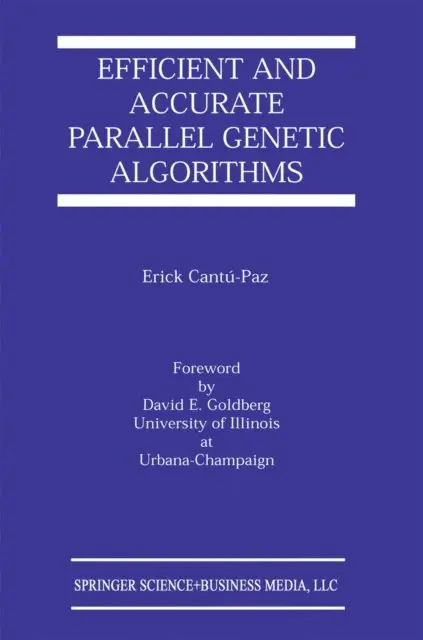
As genetic algorithms (GAs) become increasingly popular, they are applied to difficult problems that may require considerable computations. In such cases, parallel implementations of GAs become necessary to reach high-quality solutions in reasonable times. But, even though their mechanics are simple, parallel GAs are complex non-linear algorithms that are controlled by many parameters, which are not well understood. This text is about the design of parallel GAs. It presents theoretical developments that improve our understanding of the effect of the algorithm's parameters on its search for quality and efficiency. These developments are used to formulate guidelines on how to choose the parameter values that minimize the execution time while consistently reaching solutions of high quality. The book can be read in several ways, depending on the readers' interests and their previous knowledge about these algorithms. Newcomers to the field should find the background material in each chapter useful to become acquainted with previous work, and to understand the problems that must be faced to design efficient and reliable algorithms.Potential users of parallel GAs that may have doubts about their practicality or reliability may be more confident after reading this book and understanding the algorithms better. Those who are ready to try a parallel GA on their applications may choose to skim through the background material, and use the results directly without following the derivations in detail. These readers will find that using the results can help them to choose the type of parallel GA that best suits their needs, without having to invest the time to implement and test various options. Once that is settled, even the most experienced users dread the long and frustrating experience of configuring their algorithms by trial and error. The guidelines contained herein should shorten dramatically the time spent tweaking the algorithm, although some experimentation may still be needed for fine-tuning. The text should be suitable as a secondary text for a graduate level
1 095 kr
Skickas inom 10-15 vardagar
As genetic algorithms (GAs) become increasingly popular, they are applied to difficult problems that may require considerable computations. In such cases, parallel implementations of GAs become necessary to reach high-quality solutions in reasonable times. But, even though their mechanics are simple, parallel GAs are complex non-linear algorithms that are controlled by many parameters, which are not well understood. Efficient and Accurate Parallel Genetic Algorithms is about the design of parallel GAs. It presents theoretical developments that improve our understanding of the effect of the algorithm's parameters on its search for quality and efficiency. These developments are used to formulate guidelines on how to choose the parameter values that minimize the execution time while consistently reaching solutions of high quality. Efficient and Accurate Parallel Genetic Algorithms can be read in several ways, depending on the readers' interests and their previous knowledge about these algorithms. Newcomers to the field will find the background material in each chapter useful to become acquainted with previous work, and to understand the problems that must be faced to design efficient and reliable algorithms. Potential users of parallel GAs that may have doubts about their practicality or reliability may be more confident after reading this book and understanding the algorithms better. Those who are ready to try a parallel GA on their applications may choose to skim through the background material, and use the results directly without following the derivations in detail. These readers will find that using the results can help them to choose the type of parallel GA that best suits their needs, without having to invest the time to implement and test various options. Once that is settled, even the most experienced users dread the long and frustrating experience of configuring their algorithms by trial and error. The guidelines contained herein will shorten dramatically the time spent tweaking the algorithm, although some experimentation may still be needed for fine-tuning. Efficient and Accurate Parallel Genetic Algorithms is suitable as a secondary text for a graduate level course, and as a reference for researchers and practitioners in industry.
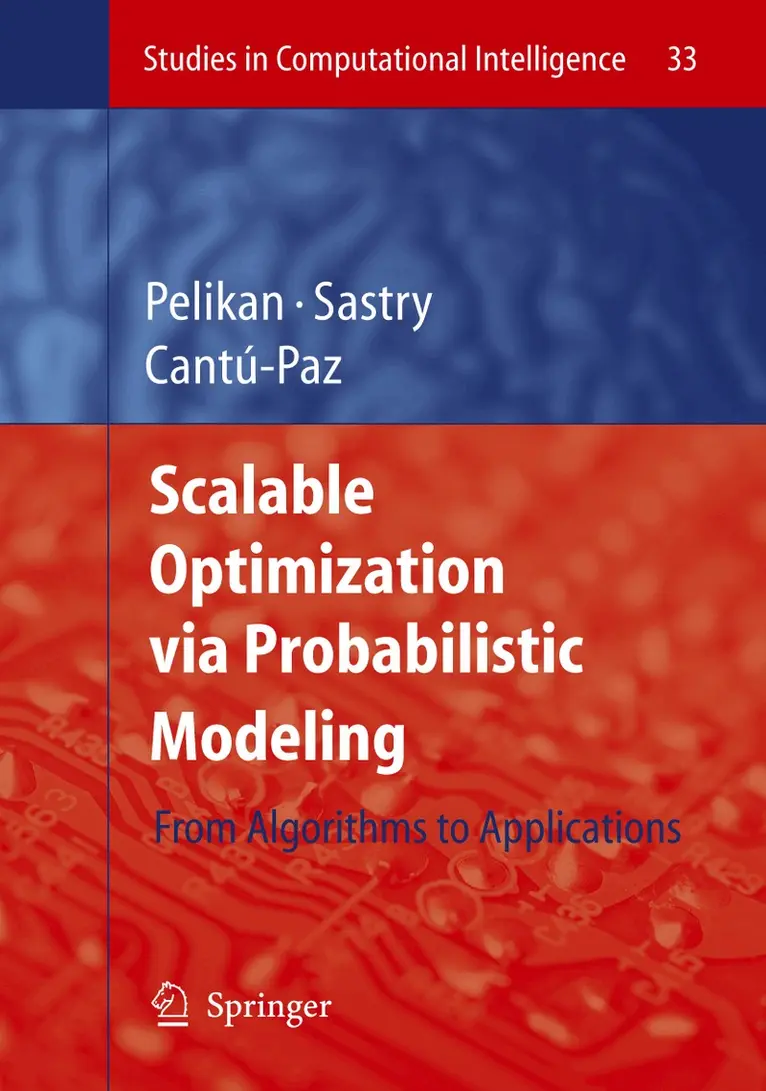
Scalable Optimization via Probabilistic Modeling
From Algorithms to Applications
Inbunden, Engelska, 2006
1 624 kr
Skickas inom 10-15 vardagar
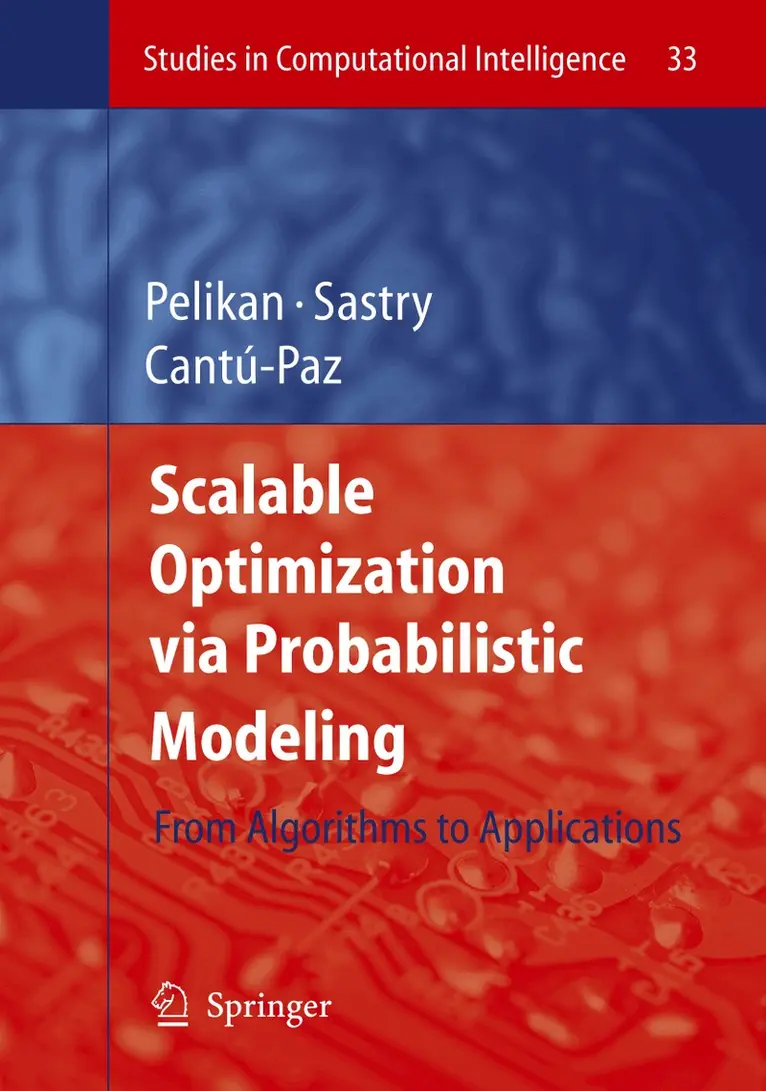
I’m not usually a fan of edited volumes. Too often they are an incoherent hodgepodge of remnants, renegades, or rejects foisted upon an unsuspecting reading public under a misleading or fraudulent title. The volume Scalable Optimization via Probabilistic Modeling: From Algorithms to Applications is a worthy addition to your library because it succeeds on exactly those dimensions where so many edited volumes fail. For example, take the title, Scalable Optimization via Probabilistic M- eling: From Algorithms to Applications. You need not worry that you’re going to pick up this book and ?nd stray articles about anything else. This book focuseslikealaserbeamononeofthehottesttopicsinevolutionary compu- tion over the last decade or so: estimation of distribution algorithms (EDAs). EDAs borrow evolutionary computation’s population orientation and sel- tionism and throw out the genetics to give us a hybrid of substantial power, elegance, and extensibility. The article sequencing in most edited volumes is hard to understand, but from the get go the editors of this volume have assembled a set of articles sequenced in a logical fashion. The book moves from design to e?ciency enhancement and then concludes with relevant applications. The emphasis on e?ciency enhancement is particularly important, because the data-mining perspectiveimplicitinEDAsopensuptheworldofoptimizationtonewme- ods of data-guided adaptation that can further speed solutions through the construction and utilization of e?ective surrogates, hybrids, and parallel and temporal decompositions.
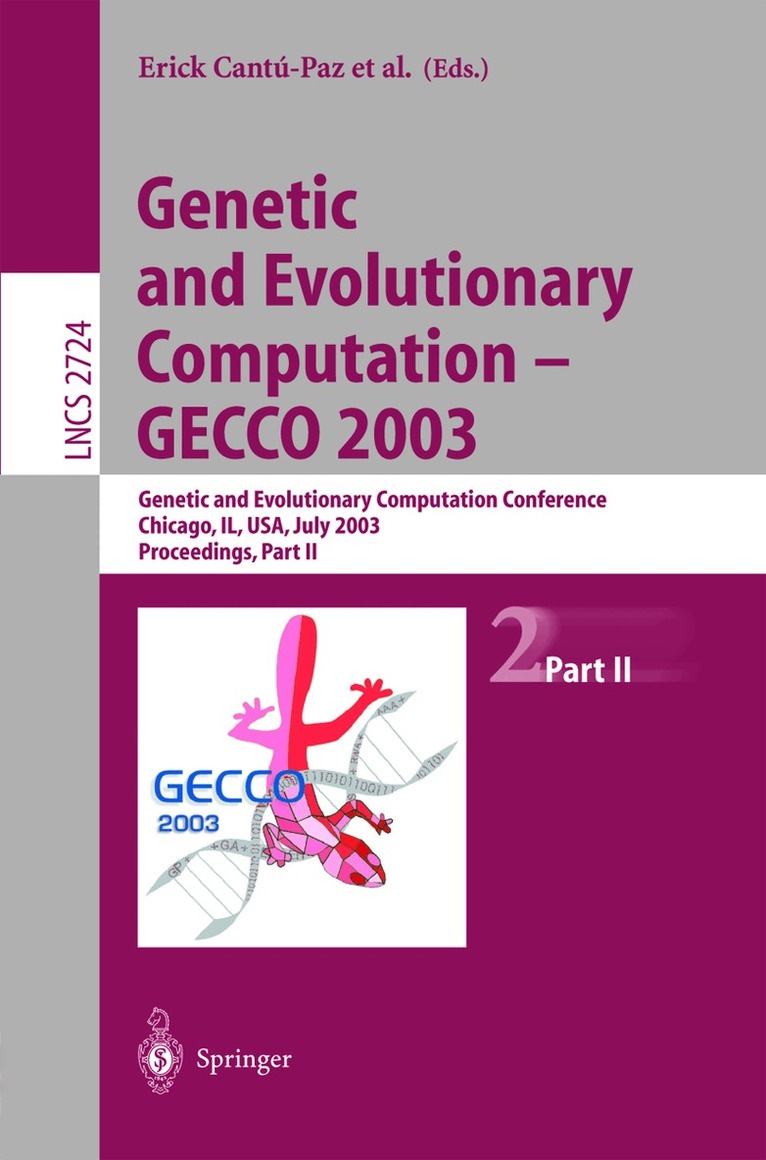
Genetic and Evolutionary Computation - GECCO 2003
Genetic and Evolutionary Computation Conference, Chicago, IL, USA, July 12-16, 2003, Proceedings, Part I
Häftad, Engelska, 2003
878 kr
Skickas inom 10-15 vardagar
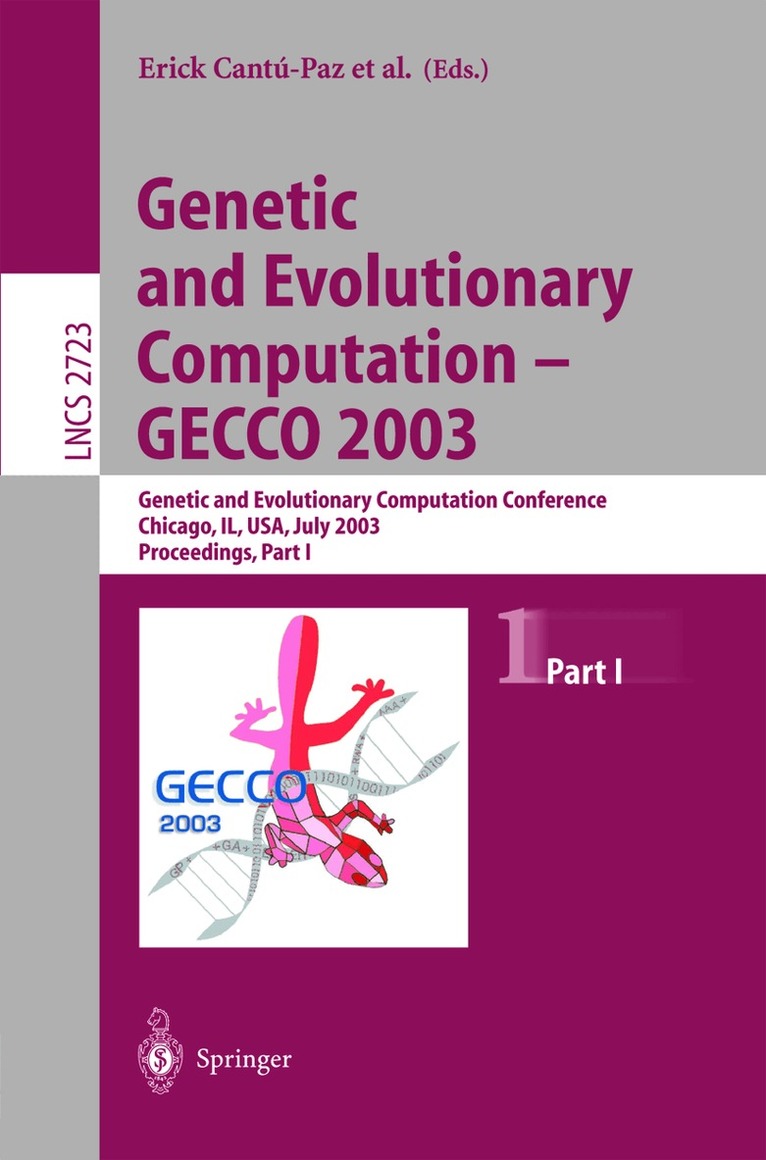
The set LNCS 2723 and LNCS 2724 constitutes the refereed proceedings of the Genetic and Evolutionaty Computation Conference, GECCO 2003, held in Chicago, IL, USA in July 2003.The 193 revised full papers and 93 poster papers presented were carefully reviewed and selected from a total of 417 submissions. The papers are organized in topical sections on a-life adaptive behavior, agents, and ant colony optimization; artificial immune systems; coevolution; DNA, molecular, and quantum computing; evolvable hardware; evolutionary robotics; evolution strategies and evolutionary programming; evolutionary sheduling routing; genetic algorithms; genetic programming; learning classifier systems; real-world applications; and search based softare engineering.
631 kr
Skickas inom 10-15 vardagar
These proceedings contain the papers presented at the 5th Annual Genetic and EvolutionaryComputationConference(GECCO2003).Theconferencewasheld in Chicago, USA, July 12-16, 2003. A total of 417 papers were submitted to GECCO 2003. After a rigorous doubleblind reviewing process, 194 papers were accepted for full publication and oral presentation at the conference, resulting in an acceptance rate of 46.5%. An additional 92 submissions were accepted as posters with two-page extended abstracts included in these proceedings. This edition of GECCO was the union of the 8th Annual Genetic Progr- mingConference(whichhasmetannuallysince1996)andthe12thInternational Conference on Genetic Algorithms (which, with its ?rst meeting in 1985, is the longest running conference in the ?eld). Since 1999, these conferences have m- ged to produce a single large meeting that welcomes an increasingly wide array of topics related to genetic and evolutionary computation. Possibly the most visible innovation in GECCO 2003 was the publication of theproceedingswithSpringer-VerlagaspartoftheirLectureNotesinComputer Science series.This will make the proceedings available in many libraries as well asonline,wideningthedisseminationoftheresearchpresentedattheconference. OtherinnovationsincludedanewtrackonCoevolutionandArti?cialImmune Systems and the expansion of the DNA and Molecular Computing track to include quantum computation. In addition to the presentation of the papers contained in these proceedings, the conference included 13 workshops, 32 tutorials by leading specialists, and presentation of late-breaking papers. GECCO is sponsored by the International Society for Genetic and Evolut- nary Computation (ISGEC). The ISGEC by-laws contain explicit guidance on the organization of the conference, including the following principles: (i)GECCOshouldbeabroad-basedconferenceencompassingthewhole?eld of genetic and evolutionary computation.
Del 33 - Studies in Computational Intelligence
Scalable Optimization via Probabilistic Modeling
From Algorithms to Applications
Häftad, Engelska, 2010
1 590 kr
Skickas inom 10-15 vardagar
This book focuses like a laser beam on one of the hottest topics in evolutionary computation over the last decade or so: estimation of distribution algorithms (EDAs). EDAs are an important current technique that is leading to breakthroughs in genetic and evolutionary computation and in optimization more generally. I'm putting Scalable Optimization via Probabilistic Modeling in a prominent place in my library, and I urge you to do so as well. This volume summarizes the state of the art at the same time it points to where that art is going. Buy it, read it, and take its lessons to heart. David E Goldberg, University of Illinois at Urbana-Champaign This book is an excellent compilation of carefully selected topics in estimation of distribution algorithms---search algorithms that combine ideas from evolutionary algorithms and machine learning. The book covers a broad spectrum of important subjects ranging from design of robust and scalable optimization algorithms to efficiency enhancements and applications of these algorithms.The book should be of interest to theoreticians and practitioners alike, and is a must-have resource for those interested in stochastic optimization in general, and genetic and evolutionary algorithms in particular. John R. Koza, Stanford University This edited book portrays population-based optimization algorithms and applications, covering the entire gamut of optimization problems having single and multiple objectives, discrete and continuous variables, serial and parallel computations, and simple and complex function models. Anyone interested in population-based optimization methods, either knowingly or unknowingly, use some form of an estimation of distribution algorithm (EDA). This book is an eye-opener and a must-read text, covering easy-to-read yet erudite articles on established and emerging EDA methodologies from real experts in the field. Kalyanmoy Deb, Indian Institute of Technology Kanpur This book is an excellent comprehensive resource on estimation of distribution algorithms. It can serve as the primary EDA resource for practitioner or researcher.The book includes chapters from all major contributors to EDA state-of-the-art and covers the spectrum from EDA design to applications. These algorithms strategically combine the advantages of genetic and evolutionary computation with the advantages of statistical, model building machine learning techniques. EDAs are useful to solve classes of difficult real-world problems in a robust and scalable manner. Una-May O'Reilly, Massachusetts Institute of Technology Machine-learning methods continue to stir the public's imagination due to its futuristic implications. But, probability-based optimization methods can have great impact now on many scientific multiscale and engineering design problems, especially true with use of efficient and competent genetic algorithms (GA) which are the basis of the present volume. Even though efficient and competent GAs outperform standard techniques and prevent negative issues, such as solution stagnation, inherent in the older but more well-known GAs, they remain less known or embraced in the scientific and engineering communities.To that end, the editors have brought together a selection of experts that (1) introduce the current methodology and lexicography of the field with illustrative discussions and highly useful references, (2) exemplify these new techniques that dramatic improve performance in provable hard problems, and (3) provide real-world applications of these techniques, such as antenna design. As one who has strayed into the use of genetic algorithms and genetic programming for multiscale modeling in materials science, I can say it would have been personally more useful if this would have come out five years ago, but, for my students, it will be a boon. Duane D. Johnson, University of Illinois at Urbana-Champaign
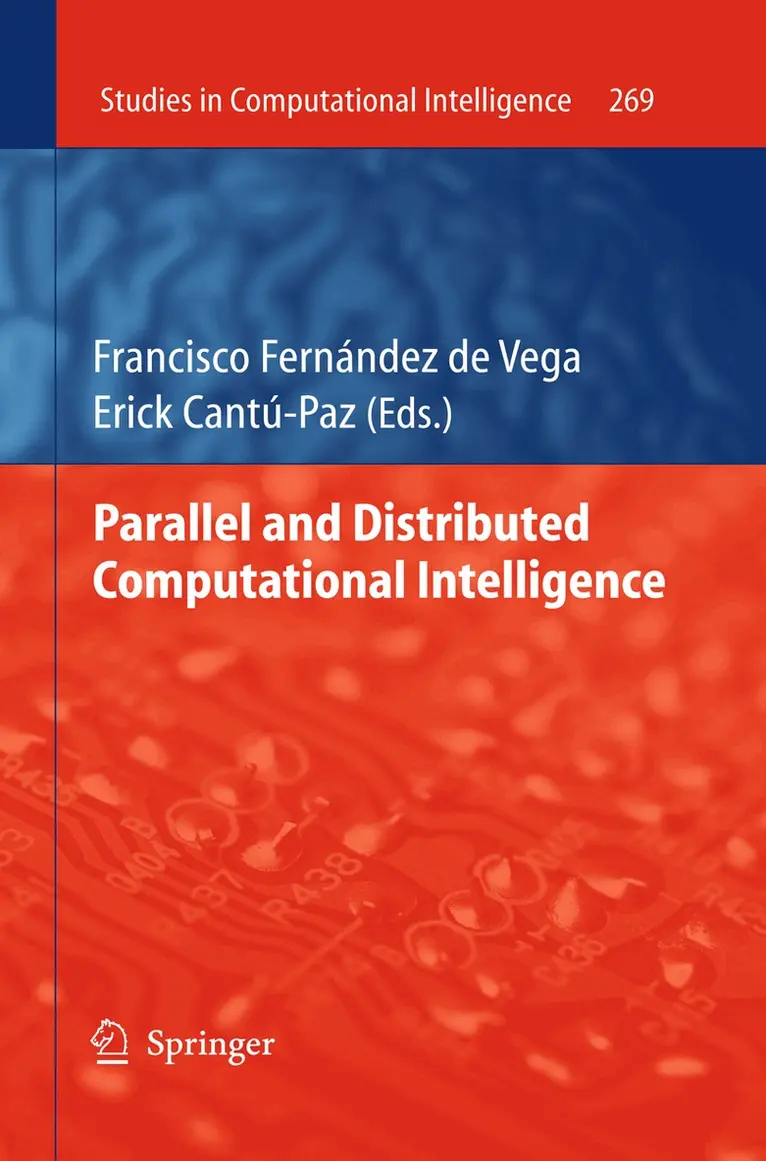
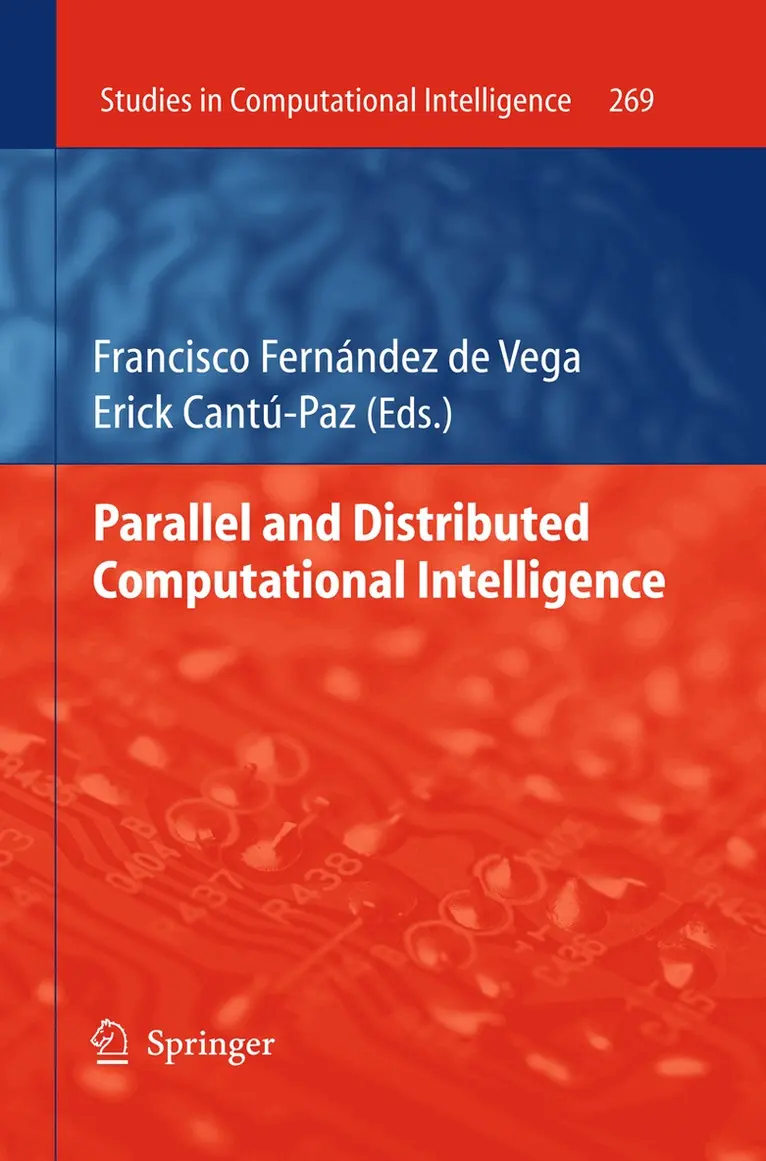
Del 269 - Studies in Computational Intelligence
Parallel and Distributed Computational Intelligence
Inbunden, Engelska, 2010
1 638 kr
Skickas inom 10-15 vardagar
Francisco Fern' andez de Vega and Erick Cantu- ' Paz The growing success of biologically inspired algorithms in solving large and complex problems has spawned many interesting areas of research. Over the years, one of the mainstays in bio-inspired research has been the exploi- tion of parallel and distributed environments to speedup computations and to enrich the algorithms. From the early days of research on bio-inspired algorithms, their inherently parallel nature was recognized and di?erent p- allelization approaches have been explored. Parallel algorithms promise - ductions in execution time and open the door to solve increasingly larger problems. But parallel platforms also inspire new bio-inspired parallel al- rithms that, while similar to their sequential counterparts, explore search spaces di?erently and o?er improvements in solution quality. Our objective in editing this book was to assemble a sample of the best work in parallel and distributed biologically inspired algorithms. We invited researchers in di?erent domains to submit their work. We aimed to include diverse topics to appeal to a wide audience.Some of the chapters sum- rize work that has been ongoing for several years, while others describe more recent exploratory work. Collectively, these works o?er a global snapshot of the most recent e?orts of bioinspired algorithms' researchers aiming at pr- iting from parallel and distributed computer architectures-including GPUs, Clusters, Grids, volunteer computing and p2p networks as well as multi-core processors.
1 638 kr
Skickas inom 10-15 vardagar
Francisco Fern' andez de Vega and Erick Cantu- ' Paz The growing success of biologically inspired algorithms in solving large and complex problems has spawned many interesting areas of research. Over the years, one of the mainstays in bio-inspired research has been the exploi- tion of parallel and distributed environments to speedup computations and to enrich the algorithms. From the early days of research on bio-inspired algorithms, their inherently parallel nature was recognized and di?erent p- allelization approaches have been explored. Parallel algorithms promise - ductions in execution time and open the door to solve increasingly larger problems. But parallel platforms also inspire new bio-inspired parallel al- rithms that, while similar to their sequential counterparts, explore search spaces di?erently and o?er improvements in solution quality. Our objective in editing this book was to assemble a sample of the best work in parallel and distributed biologically inspired algorithms. We invited researchers in di?erent domains to submit their work. We aimed to include diverse topics to appeal to a wide audience.Some of the chapters sum- rize work that has been ongoing for several years, while others describe more recent exploratory work. Collectively, these works o?er a global snapshot of the most recent e?orts of bioinspired algorithms' researchers aiming at pr- iting from parallel and distributed computer architectures-including GPUs, Clusters, Grids, volunteer computing and p2p networks as well as multi-core processors.