
Erik Westra – författare
Visar alla böcker från författaren Erik Westra. Handla med fri frakt och snabb leverans.
5 produkter
5 produkter
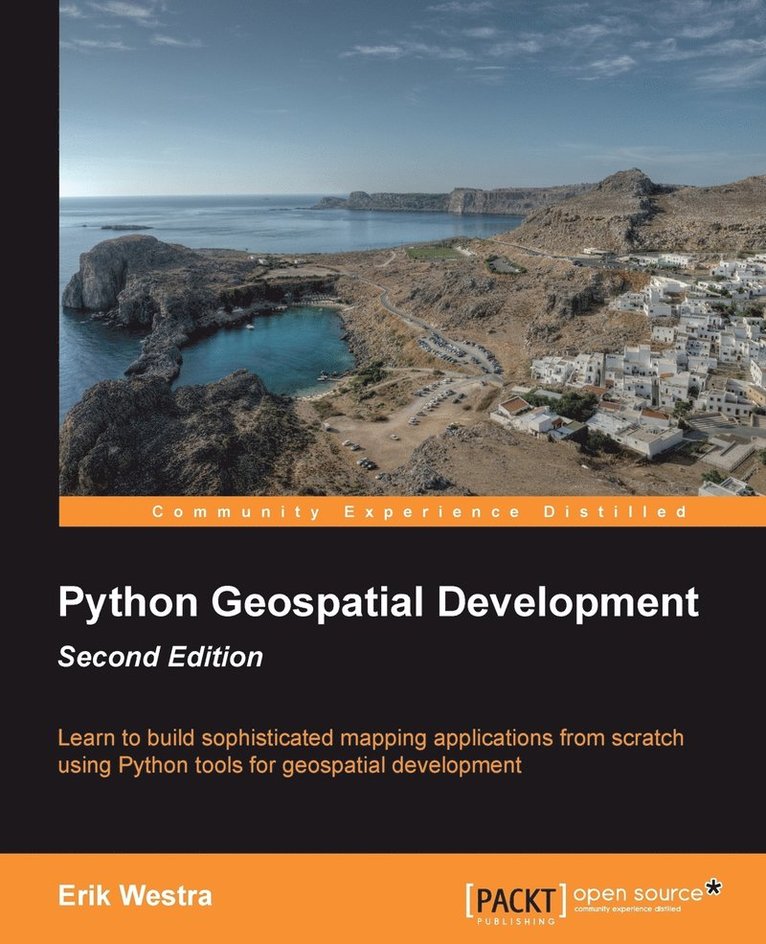
Häftad, Engelska, 2013
707 kr
Skickas inom 5-8 vardagar
Häftad, Engelska, 2015
503 kr
Skickas inom 5-8 vardagar
628 kr
Skickas inom 5-8 vardagar
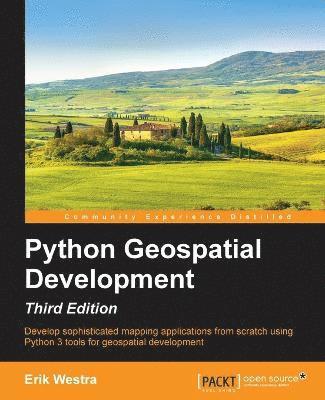
Häftad, Engelska, 2016
707 kr
Skickas inom 5-8 vardagar
Develop sophisticated mapping applications from scratch using Python 3 tools for geospatial developmentKey FeaturesBuild web applications based around maps and geospatial data using Python 3.xInstall and use various toolkits and obtain geospatial data for use in your programsThis practical, hands-on book will teach you all about geospatial development in PythonBook DescriptionGeospatial development links your data to locations on the surface of the Earth. Writing geospatial programs involves tasks such as grouping data by location, storing and analyzing large amounts of spatial information, performing complex geospatial calculations, and drawing colorful interactive maps. In order to do this well, you’ll need appropriate tools and techniques, as well as a thorough understanding of geospatial concepts such as map projections, datums, and coordinate systems.This book provides an overview of the major geospatial concepts, data sources, and toolkits. It starts by showing you how to store and access spatial data using Python, how to perform a range of spatial calculations, and how to store spatial data in a database. Further on, the book teaches you how to build your own slippy map interface within a web application, and finishes with the detailed construction of a geospatial data editor using the GeoDjango framework. By the end of this book, you will be able to confidently use Python to write your own geospatial applications ranging from quick, one-off utilities to sophisticated web-based applications using maps and other geospatial data.What you will learn[*] Access, manipulate, and display geospatial data from within your Python programs[*] Master the core geospatial concepts of location, distance, units, projections, and datums[*] Read and write geospatial data in both vector and raster format[*] Perform complex, real-world geospatial calculations using Python[*] Store and access geospatial information in a database[*] Use points, lines, and polygons within your Python programs[*] Convert geospatial data into attractive maps using Python-based tools[*] Build complete web-based mapping applications using PythonWho this book is forThis book is for experienced Python developers who want to learn about geospatial concepts, obtain and work with geospatial data, solve spatial problems, and build sophisticated map-based applications using Python.
Häftad, Engelska, 2016
565 kr
Skickas inom 5-8 vardagar
Introducing modular techniques for building sophisticated programs using PythonKey Features[*]The book would help you develop succinct, expressive programs using modular deign[*]The book would explain best practices and common idioms through carefully explained and structured examples[*]It will have broad appeal as far as target audience is concerned and there would be take away for all beginners to PythonBook DescriptionPython has evolved over the years and has become the primary choice of developers in various fields. The purpose of this book is to help readers develop readable, reliable, and maintainable programs in Python. Starting with an introduction to the concept of modules and packages, this book shows how you can use these building blocks to organize a complex program into logical parts and make sure those parts are working correctly together. Using clearly written, real-world examples, this book demonstrates how you can use modular techniques to build better programs. A number of common modular programming patterns are covered, including divide-and-conquer, abstraction, encapsulation, wrappers and extensibility. You will also learn how to test your modules and packages, how to prepare your code for sharing with other people, and how to publish your modules and packages on GitHub and the Python Package Index so that other people can use them. Finally, you will learn how to use modular design techniques to be a more effective programmer.What you will learn[*] Learn how to use modules and packages to organize your Python code[*] Understand how to use the import statement to load modules and packages into your program[*] Use common module patterns such as abstraction and encapsulation to write better programs[*] Discover how to create self-testing Python packages[*] Create reusable modules that other programmers can use[*]Learn how to use GitHub and the Python Package Index to share your code with other people[*] Make use of modules and packages that others have written[*] Use modular techniques to build robust systems that can handle complexity and changing requirements over timeWho this book is forThis book is intended for beginner to intermediate level Python programmers who wish to learn how to use modules and packages within their programs. While readers must understand the basics of Python programming, no knowledge of modular programming techniques is required.