Erika De Wet – författare
Visar alla böcker från författaren . Handla med fri frakt och snabb leverans.
9 produkter
9 produkter
E-bok
PDF, Engelska, 20201 376 kr
Läs direkt efter köp
In countries such as Syria, Iraq, South Sudan, and Yemen, internationally recognized governments embroiled in protracted armed conflicts, and with very little control over their territory, have requested direct military assistance from other states. These requests are often accepted by the other states, despite the circumvention of the United Nations Security Council and extensive violation of international humanitarian law and human rights. In this book, Erika De Wet examines the authority entitled to extend a request for (or consent to) direct military assistance, as well as the type of situations during which such assistance may be requested, notably whether it may be requested during a civil war. Ultimately, De Wet addresses the question of if and to what extent the proliferation of military assistance on the request of a recognized government is changing the rules in international law applying to the use of force.
E-bok
Engelska, 20201 376 kr
Läs direkt efter köp
In countries such as Syria, Iraq, South Sudan, and Yemen, internationally recognized governments embroiled in protracted armed conflicts, and with very little control over their territory, have requested direct military assistance from other states. These requests are often accepted by the other states, despite the circumvention of the United Nations Security Council and extensive violation of international humanitarian law and human rights. In this book, Erika De Wet examines the authority entitled to extend a request for (or consent to) direct military assistance, as well as the type of situations during which such assistance may be requested, notably whether it may be requested during a civil war. Ultimately, De Wet addresses the question of if and to what extent the proliferation of military assistance on the request of a recognized government is changing the rules in international law applying to the use of force.
E-bok
PDF, Engelska, 20121 121 kr
Läs direkt efter köp
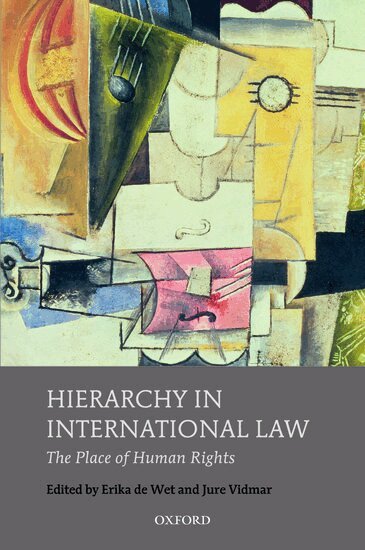
This book takes an inductive approach to the question of whether there is a hierarchy in international law, with human rights obligations trumping other duties. It assesses the extent to which such a hierarchy can be said to exist through an analysis of the case law of national courts. Each chapter of the book examines domestic case law on an issue where human rights obligations conflict with another international law requirement, to see whether national courts gave precedence to human rights. If this is shown to be the case, it would lend support to the argument that the international legal order is moving toward a vertical legal system, with human rights at its apex. In resolving conflicts between human rights obligations and other areas of international law, the practice of judicial bodies, both domestic and international, is crucial. Judicial practice indicates that norm conflicts typically manifest themselves in situations where human rights obligations are at odds with other international obligations, such as immunities; extradition and refoulement; trade and investment law; and environmental protection. This book sets out and analyses the relevant case law in all of these areas.
Inbunden, Engelska, 2020
1 594 kr
Skickas inom 5-8 vardagar
In countries such as Syria, Iraq, South Sudan, and Yemen, internationally recognized governments embroiled in protracted armed conflicts, and with very little control over their territory, have requested direct military assistance from other states. These requests are often accepted by the other states, despite the circumvention of the United Nations Security Council and extensive violation of international humanitarian law and human rights. In this book, Erika De Wet examines the authority entitled to extend a request for (or consent to) direct military assistance, as well as the type of situations during which such assistance may be requested, notably whether it may be requested during a civil war. Ultimately, De Wet addresses the question of if and to what extent the proliferation of military assistance on the request of a recognized government is changing the rules in international law applying to the use of force.
Inbunden, Engelska, 2012
1 810 kr
Skickas inom 5-8 vardagar
This book takes an inductive approach to the question of whether there is a hierarchy in international law, with human rights obligations trumping other duties. It assesses the extent to which such a hierarchy can be said to exist through an analysis of the case law of national courts. Each chapter of the book examines domestic case law on an issue where human rights obligations conflict with another international law requirement, to see whether national courts gave precedence to human rights. If this is shown to be the case, it would lend support to the argument that the international legal order is moving toward a vertical legal system, with human rights at its apex.In resolving conflicts between human rights obligations and other areas of international law, the practice of judicial bodies, both domestic and international, is crucial. Judicial practice indicates that norm conflicts typically manifest themselves in situations where human rights obligations are at odds with other international obligations, such as immunities; extradition and refoulement; trade and investment law; and environmental protection. This book sets out and analyses the relevant case law in all of these areas.
Inbunden, Engelska, 2004
1 775 kr
Skickas inom 10-15 vardagar
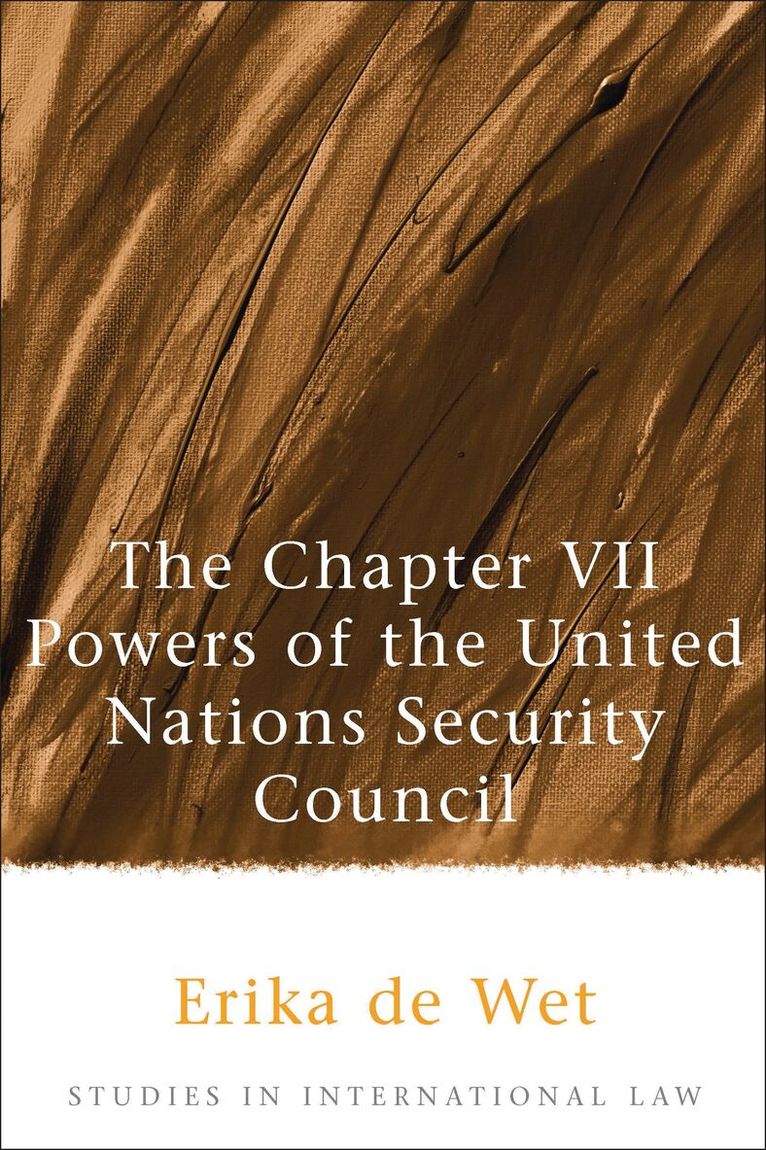
This study provides a comprehensive analysis of the questions pertaining to the powers of the Security Council under Chapter VII of the Charter of the United Nations. In doing so it departs from the premise that an analysis of the limitations to the powers of the Security Council and an analysis of judicial review of such limitations by the ICJ, respectively, are inter-dependent. On the one hand, judicial review would only become relevant if and to the extent that the powers granted to the Security Council under Chapter VII of the Charter are subject to justiciable limitations. On the other hand, the relevance of any limitation to the powers of the Security Council would remain limited if it could not be enforced by judicial review. This inter-dependence is reflected by the fact that Chapters 2 and 3 focus on judicial review in advisory and contentious proceedings, respectively, whereas Chapters 4 to 9 examine the limits to the powers of the Security Council. The concluding chapter subsequently illuminates how the respective limits to the Security Council's enforcement powers could be enforced by judicial review.It also explores an alternative mode of review of binding Security Council decisions that could complement judicial review by the ICJ, notably the right of states to reject illegal Security Council decisions as a 'right of last resort'. The space and attention devoted to the limits to the Security Council's enforcement powers reflects the second aim of this study, namely to provide new direction to this aspect of the debate on the Security Council's powers under Chapter VII of the Charter. It does so by paying particular attention to the role of human rights norms in limiting the type of enforcement measures that the Security Council can resort to in order to maintain or restore international peace and security.
E-bok
PDF, Engelska, 20041 949 kr
Läs direkt efter köp
This study provides a comprehensive analysis of the questions pertaining to the powers of the Security Council under Chapter VII of the Charter of the United Nations. In doing so it departs from the premise that an analysis of the limitations to the powers of the Security Council and an analysis of judicial review of such limitations by the ICJ, respectively, are inter-dependent. On the one hand, judicial review would only become relevant if and to the extent that the powers granted to the Security Council under Chapter VII of the Charter are subject to justiciable limitations. On the other hand, the relevance of any limitation to the powers of the Security Council would remain limited if it could not be enforced by judicial review.This inter-dependence is reflected by the fact that Chapters 2 and 3 focus on judicial review in advisory and contentious proceedings, respectively, whereas Chapters 4 to 9 examine the limits to the powers of the Security Council. The concluding chapter subsequently illuminates how the respective limits to the Security Council''s enforcement powers could be enforced by judicial review. It also explores an alternative mode of review of binding Security Council decisions that could complement judicial review by the ICJ, notably the right of states to reject illegal Security Council decisions as a ''right of last resort''.The space and attention devoted to the limits to the Security Council''s enforcement powers reflects the second aim of this study, namely to provide new direction to this aspect of the debate on the Security Council''s powers under Chapter VII of the Charter. It does so by paying particular attention to the role of human rights norms in limiting the type of enforcement measures that the Security Council can resort to in order to maintain or restore international peace and security.
Del 28 - Max Planck Yearbook of United Nations Law, Volume 28 (2024)
Max Planck Yearbook of United Nations Law, Volume 28 (2024)
Inbunden, Engelska, 2026
4 898 kr
Skickas inom 3-6 vardagar
Inbunden, Engelska, 2008
498 kr
Skickas inom 10-15 vardagar
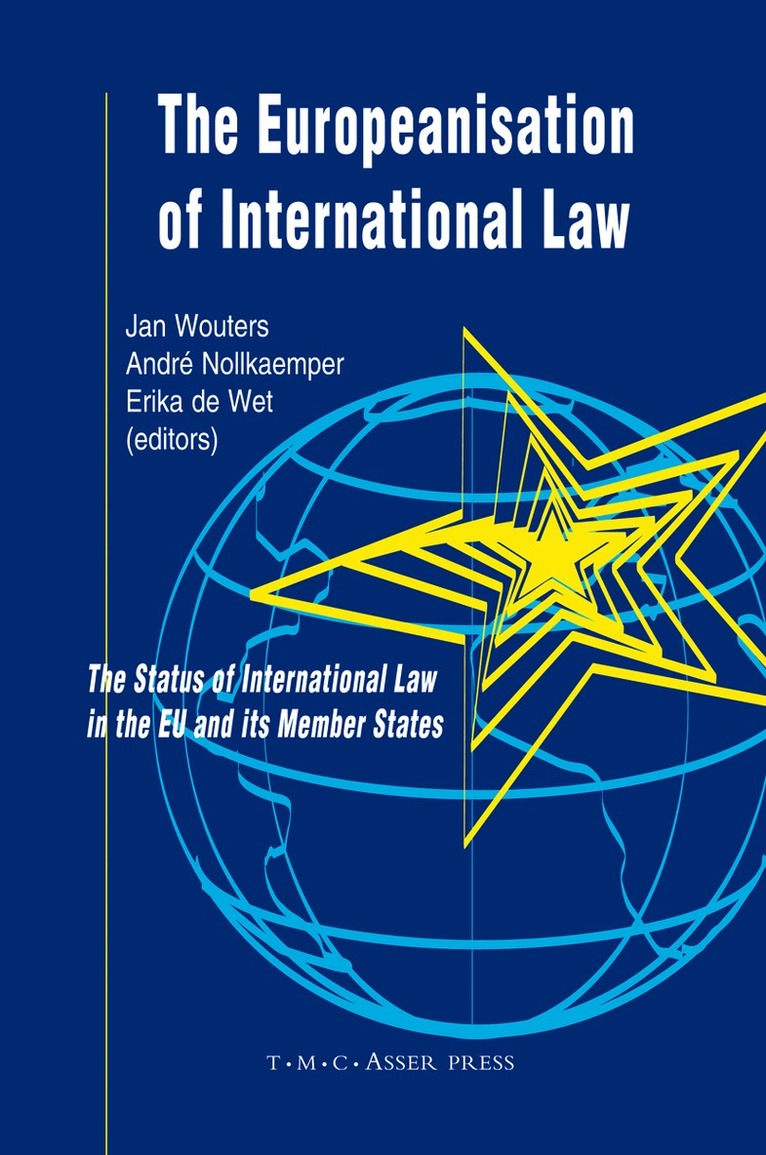
International law has increasingly become a part of the EU legal order, and has thereby become 'Europeanised'. Consequently, its application and interpretation by EU Member States is no longer solely a matter for their own constitutional order, but is also governed by EU law. This book addresses the effects of European integration on the position of public international law in the European Union and its Member States, illuminating critical questions pertaining to this triangular relationship. Are we dealing with the emergence of a distinct European system of public international law? To what extent do Member States actually recognise the effect of this 'Europeanisation' of international law? What role does the European Court of Justice play with respect to the application and interpretation of 'Europeanised' international law within the Member States.