Essi Viding – författare
Visar alla böcker från författaren Essi Viding. Handla med fri frakt och snabb leverans.
2 produkter
2 produkter
105 kr
Skickas inom 5-8 vardagar
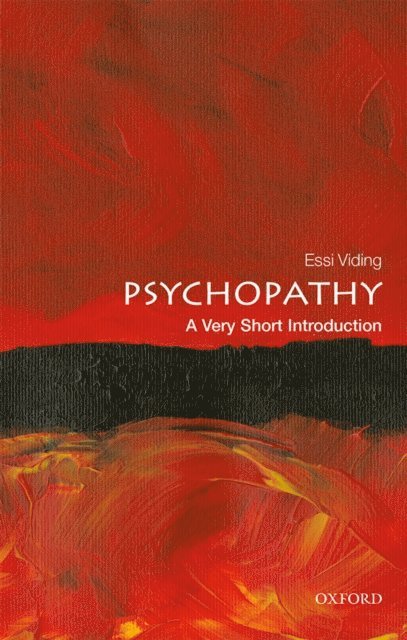
Psychopathy is a personality disorder that has long captured the public imagination. Newspaper column inches have been devoted to murderers with psychopathic features, and we also encounter psychopaths in films and books. Individuals with psychopathy are characterised in particular by lack of empathy and guilt, manipulation of other people and, in the case of criminal psychopathy, premeditated violent behaviour. They are dangerous and can incur immeasurable emotional, psychological, physical, and financial costs to their victims and their families. Despite the public fascination with psychopathy, there is often a very limited understanding of the condition, and several myths about psychopathy abound. For example, people commonly assume that all psychopaths are sadistic serial killers or that all violent and antisocial individuals are psychopaths. Yet, research shows that most psychopaths are not serial killers, and, equally, there are plenty of antisocial and violent offenders who are not psychopaths. This Very Short Introduction gives an overview of how we can identify individuals with or at risk of developing psychopathy, and how they differ from other people who display antisocial behavior. Essi Viding also explores the latest genetic, neuroscience, and psychology evidence in order to illuminate why psychopaths behave and develop the way they do, and considers whether it is possible to prevent or even treat psychopathy. ABOUT THE SERIES: The Very Short Introductions series from Oxford University Press contains hundreds of titles in almost every subject area. These pocket-sized books are the perfect way to get ahead in a new subject quickly. Our expert authors combine facts, analysis, perspective, new ideas, and enthusiasm to make interesting and challenging topics highly readable.
1 899 kr
Skickas inom 5-8 vardagar
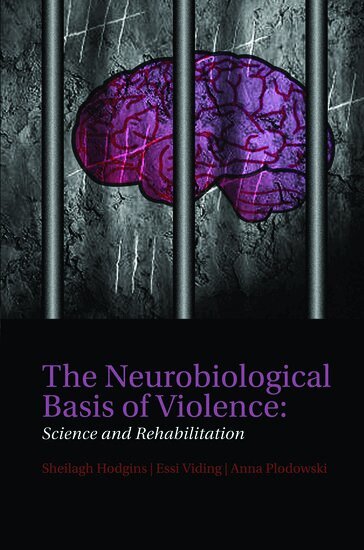
In recent years, there has been an explosion of knowledge concerning the developmental processes that lead to persistent violent offending, and in particular, the neurobiological determinants. However, the field of violence has suffered from a divide between basic laboratory neuroscience and clinical science. Hence, this new knowledge has hitherto had little impact on government policies, prevention programmes, and on the rehabilitation of offenders. This book embraces a translational approach to treating the problem of violent offending. It highlights some of the key scientific challenges, as well as the dilemmas and difficulties in the translation of scientific findings (whether basic or clinical) into policy and practice applications. Using findings derived from studies in molecular genetics, and brain imaging, it provides the latest field of knowledge about violent offending and how to treat and prevent this major problem.The book starts by examining what we know about the development of persistent violent offenders and the factors and mechanisms thought to underlie their pattern of aggressive behaviour. Subsequent chapters describe studies looking at the cognitive and neural functioning of persistent violent offenders, and the kind of children at risk of becoming violent offenders. The chapters in the latter part of the volume review the effectiveness of rehabilitation programmes for adult violent offenders. The book ends by focusing on the establishment of effective interventions for children at risk of becoming violent offenders and for mothers who are at risk of having at-risk children. Throughout, the volume emphasizes the need to consider both biological and non-biological factors as promoters of violence. For neuroscientists, criminologists, psychologists, and psychiatrists, this state of the art volume demonstrates just what can be achieved by integrating neuroscience with clinical practice, and presents a way forward for the development of effective treatments for persistent violent offending.