Esther Sánchez-Pardo - Böcker
Visar alla böcker från författaren Esther Sánchez-Pardo. Handla med fri frakt och snabb leverans.
6 produkter
6 produkter
1 804 kr
Skickas inom 3-6 vardagar
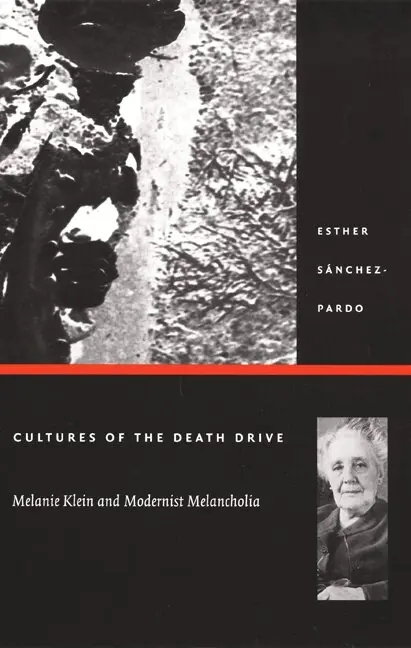
Cultures of the Death Drive is a comprehensive guide to the work of pioneering psychoanalyst Melanie Klein (1882–1960) and to developments in Kleinian theory to date. It is also an analysis and a demonstration of the distinctive usefulness of Klein’s thought for understanding modernist literature and visual art. Esther SÁnchez-Pardo examines the issues that the seminal discourses of psychoanalysis and artistic modernism brought to the fore in the early twentieth century and points toward the uses of Kleinian thinking for reconceptualizing the complexities of identity and social relations today. SÁnchez-Pardo argues that the troubled political atmosphere leading to both world wars created a melancholia fueled by “cultures of the death drive” and the related specters of object loss-loss of coherent and autonomous selves, of social orders where stability reigned, of metaphysical guarantees, and, in some cases, loss and fragmentation of empire. This melancholia permeated, and even propelled, modernist artistic discourses. SÁnchez-Pardo shows how the work of Melanie Klein, the theorist of melancholia par excellence, uniquely illuminates modernist texts, particularly their representations of gender and sexualities. She offers a number of readings-of works by Virginia Woolf, RenÉ Magritte, Lytton Strachey, Djuna Barnes, and Countee Cullen-that reveal the problems melancholia posed for verbal and visual communication and the narrative and rhetorical strategies modernist artists derived to either express or overcome them. In her afterword, SÁnchez-Pardo explicates the connections between modernist and contemporary melancholia.A valuable contribution to psychoanalytic theory, gender and sexuality studies, and the study of representation in literature and the visual arts, Cultures of the Death Drive is a necessary resource for those interested in the work of Melanie Klein.
339 kr
Skickas inom 7-10 vardagar
Cultures of the Death Drive is a comprehensive guide to the work of pioneering psychoanalyst Melanie Klein (1882–1960) and to developments in Kleinian theory to date. It is also an analysis and a demonstration of the distinctive usefulness of Klein’s thought for understanding modernist literature and visual art. Esther SÁnchez-Pardo examines the issues that the seminal discourses of psychoanalysis and artistic modernism brought to the fore in the early twentieth century and points toward the uses of Kleinian thinking for reconceptualizing the complexities of identity and social relations today. SÁnchez-Pardo argues that the troubled political atmosphere leading to both world wars created a melancholia fueled by “cultures of the death drive” and the related specters of object loss-loss of coherent and autonomous selves, of social orders where stability reigned, of metaphysical guarantees, and, in some cases, loss and fragmentation of empire. This melancholia permeated, and even propelled, modernist artistic discourses. SÁnchez-Pardo shows how the work of Melanie Klein, the theorist of melancholia par excellence, uniquely illuminates modernist texts, particularly their representations of gender and sexualities. She offers a number of readings-of works by Virginia Woolf, RenÉ Magritte, Lytton Strachey, Djuna Barnes, and Countee Cullen-that reveal the problems melancholia posed for verbal and visual communication and the narrative and rhetorical strategies modernist artists derived to either express or overcome them. In her afterword, SÁnchez-Pardo explicates the connections between modernist and contemporary melancholia.A valuable contribution to psychoanalytic theory, gender and sexuality studies, and the study of representation in literature and the visual arts, Cultures of the Death Drive is a necessary resource for those interested in the work of Melanie Klein.
579 kr
Skickas inom 10-15 vardagar
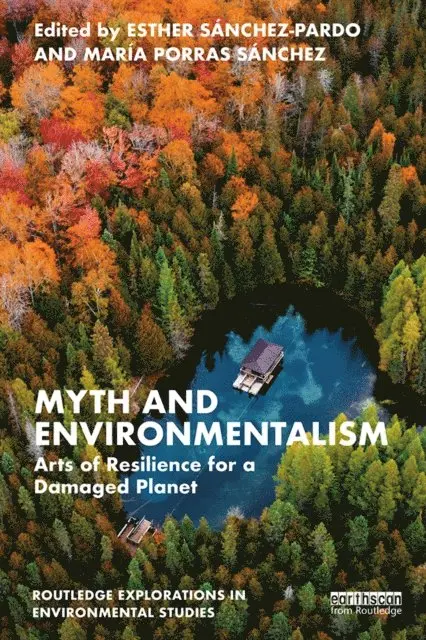
This volume traces the interconnections between myth, environmentalism, narrative, poetry, comics, and innovative artistic practice, using this as a framework through which to examine strategies for repairing our unhealthy relationship with the planet. Challenging late capitalist modes encouraging mindless consumption and the degradation of human–nature relations, this collection advocates a re-evaluation of the ethical relation to "living with" and sharing the Earth.Myth and the environment have shared a rich common cultural history travelling as far back as the times of storytelling and legend, with the environment often the central theme. Following a robust introduction, the book is organized into three main sections—Myth, Disaster, and Present-Day Views on Ecological Damage; Indigenous and Afro-diasporic Myths and Ecological Knowledge; Art Practices, Myth, and Environmental Resilience—and concludes with a Coda from Jeanette Hart-Mann. The methodology draws from diverse perspectives, such as ecocriticism, new materialism, and Anthropocene studies, offering a truly interdisciplinary discussion that reflects on the dialogue among environment and myth, and a broad range of contributions are included from Canada, the United States, the Caribbean, Ukraine, Japan, Morocco, and Brazil. The book joins a long line of approaches on the interrelations between ecological and mythical thinking and criticism that goes back to the early 20th century.This volume will be of interest to students, scholars, activists, and experts in environmental humanities, myth and myth criticism, literature and art on more-than human and nature interaction, ecocriticism, environmental activism, and climate change.
2 012 kr
Skickas inom 10-15 vardagar
This volume traces the interconnections between myth, environmentalism, narrative, poetry, comics, and innovative artistic practice, using this as a framework through which to examine strategies for repairing our unhealthy relationship with the planet. Challenging late capitalist modes encouraging mindless consumption and the degradation of human–nature relations, this collection advocates a re-evaluation of the ethical relation to "living with" and sharing the Earth.Myth and the environment have shared a rich common cultural history travelling as far back as the times of storytelling and legend, with the environment often the central theme. Following a robust introduction, the book is organized into three main sections—Myth, Disaster, and Present-Day Views on Ecological Damage; Indigenous and Afro-diasporic Myths and Ecological Knowledge; Art Practices, Myth, and Environmental Resilience—and concludes with a Coda from Jeanette Hart-Mann. The methodology draws from diverse perspectives, such as ecocriticism, new materialism, and Anthropocene studies, offering a truly interdisciplinary discussion that reflects on the dialogue among environment and myth, and a broad range of contributions are included from Canada, the United States, the Caribbean, Ukraine, Japan, Morocco, and Brazil. The book joins a long line of approaches on the interrelations between ecological and mythical thinking and criticism that goes back to the early 20th century.This volume will be of interest to students, scholars, activists, and experts in environmental humanities, myth and myth criticism, literature and art on more-than human and nature interaction, ecocriticism, environmental activism, and climate change.
Nomadic New Women
Exile and Border-Crossing between Spain and the Americas, Early to Mid-Twentieth Century
Inbunden, Engelska, 2024
1 625 kr
Skickas inom 10-15 vardagar
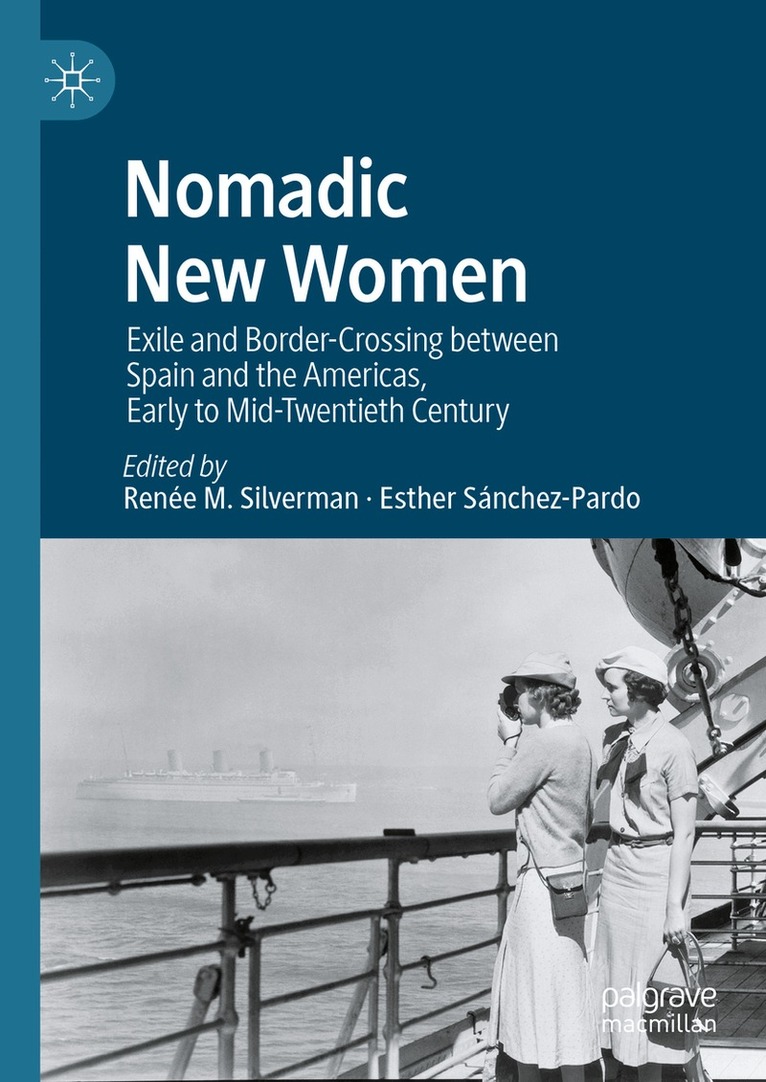
Nomadic New Women: Exile and Border-Crossing between Spain and the Americas, Early to Mid-Twentieth Century examines how gender and sexuality, border-crossing and exile intersect in women’s intellectual and artistic practices during the volatile historical period of the first half of the twentieth century, in and around Spain and the Americas. Each of the twelve chapters in this highly interdisciplinary volume analyzes the combined impact of gender and sexual identity, and the traversing of particular national and world-regional boundaries, on creative work. Together and separately, the contributors push the limits of past and present research on exile and migration, displacement and nomadism to reveal how the complex interrelationships among gender, sexuality, and cultural production come under intense pressure by the crossing of borders.
Nomadic New Women
Exile and Border-Crossing between Spain and the Americas, Early to Mid-Twentieth Century
Häftad, Engelska, 2025
1 625 kr
Skickas inom 10-15 vardagar
Nomadic New Women: Exile and Border-Crossing between Spain and the Americas, Early to Mid-Twentieth Century examines how gender and sexuality, border-crossing and exile intersect in women’s intellectual and artistic practices during the volatile historical period of the first half of the twentieth century, in and around Spain and the Americas. Each of the twelve chapters in this highly interdisciplinary volume analyzes the combined impact of gender and sexual identity, and the traversing of particular national and world-regional boundaries, on creative work. Together and separately, the contributors push the limits of past and present research on exile and migration, displacement and nomadism to reveal how the complex interrelationships among gender, sexuality, and cultural production come under intense pressure by the crossing of borders.