Renée M. Silverman - Böcker
Visar alla böcker från författaren Renée M. Silverman. Handla med fri frakt och snabb leverans.
6 produkter
6 produkter
616 kr
Skickas inom 10-15 vardagar
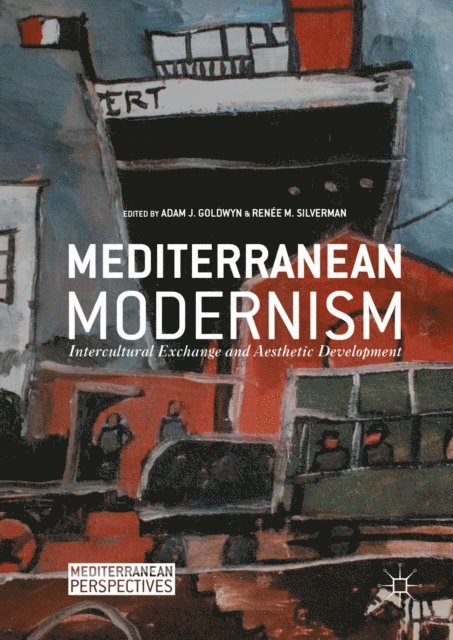
This book explores how Modernist movements all across the Mediterranean basin differed from those of other regions. The chapters show how the political and economic turmoil of a period marked by world war, revolution, decolonization, nationalism, and the rapid advance of new technologies compelled artists, writers, and other intellectuals to create a new hybrid Mediterranean Modernist aesthetic which sought to balance the tensions between local and foreign, tradition and innovation, and colonial and postcolonial.
616 kr
Skickas inom 10-15 vardagar
This book explores how Modernist movements all across the Mediterranean basin differed from those of other regions. The chapters show how the political and economic turmoil of a period marked by world war, revolution, decolonization, nationalism, and the rapid advance of new technologies compelled artists, writers, and other intellectuals to create a new hybrid Mediterranean Modernist aesthetic which sought to balance the tensions between local and foreign, tradition and innovation, and colonial and postcolonial.
Nomadic New Women
Exile and Border-Crossing between Spain and the Americas, Early to Mid-Twentieth Century
Inbunden, Engelska, 2024
1 625 kr
Skickas inom 10-15 vardagar
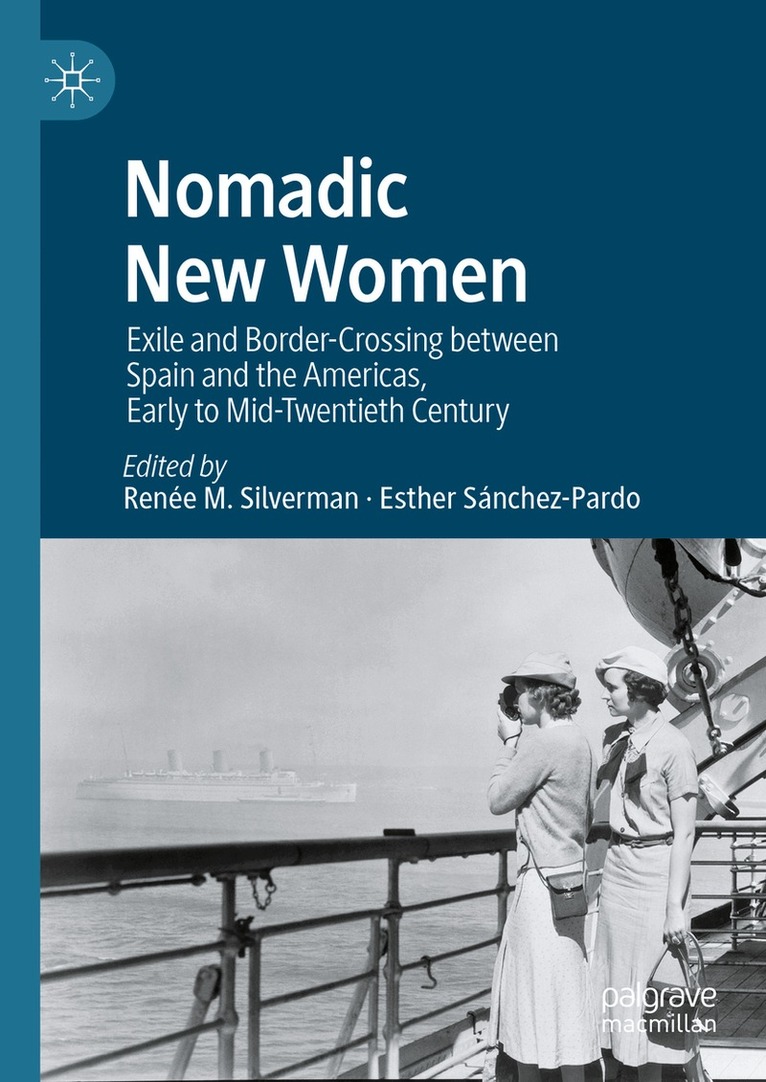
Nomadic New Women: Exile and Border-Crossing between Spain and the Americas, Early to Mid-Twentieth Century examines how gender and sexuality, border-crossing and exile intersect in women’s intellectual and artistic practices during the volatile historical period of the first half of the twentieth century, in and around Spain and the Americas. Each of the twelve chapters in this highly interdisciplinary volume analyzes the combined impact of gender and sexual identity, and the traversing of particular national and world-regional boundaries, on creative work. Together and separately, the contributors push the limits of past and present research on exile and migration, displacement and nomadism to reveal how the complex interrelationships among gender, sexuality, and cultural production come under intense pressure by the crossing of borders.
Nomadic New Women
Exile and Border-Crossing between Spain and the Americas, Early to Mid-Twentieth Century
Häftad, Engelska, 2025
1 625 kr
Skickas inom 10-15 vardagar
Nomadic New Women: Exile and Border-Crossing between Spain and the Americas, Early to Mid-Twentieth Century examines how gender and sexuality, border-crossing and exile intersect in women’s intellectual and artistic practices during the volatile historical period of the first half of the twentieth century, in and around Spain and the Americas. Each of the twelve chapters in this highly interdisciplinary volume analyzes the combined impact of gender and sexual identity, and the traversing of particular national and world-regional boundaries, on creative work. Together and separately, the contributors push the limits of past and present research on exile and migration, displacement and nomadism to reveal how the complex interrelationships among gender, sexuality, and cultural production come under intense pressure by the crossing of borders.
2 272 kr
Skickas inom 5-8 vardagar
Futurism Studies in its canonical form has followed in the steps of Marinetti's concept of Futurisme mondial, according to which Futurism had its centre in Italy and a large number of satellites around Europe and the rest of the globe. Consequently, authors of textbook histories of Futurism focus their attention on Italy, add a chapter or two on Russia and dedicate next to no attention to developments in other parts of the world. Futurism Studies tends to sees in Marinetti's movement the font and mother of all subsequent avant-gardes and deprecates the non-European variants as mere 'derivatives'. Vol. 7 of the International Yearbook of Futurism Studies will focus on one of these regions outside Europe and demonstrate that the heuristic model of centre – periphery is faulty and misleading, as it ignores the originality and inventiveness of art and literature in Latin America. Futurist tendencies in both Spanish and Portuguese-speaking countries may have been, in part, 'influenced' by Italian Futurism, but they certainly did no 'derive' from it. The shift towards modernity took place in Latin America more or less in parallel to the economic progress made in the underdeveloped countries of Europe. Italy and Russia have often been described as having originated Futurism because of their backwardness compared to the industrial powerhouses England, Germany and France. According to this narrative, Spain and Portugal occupied a position of semi-periphery. They had channelled dominant cultural discourses from the centre nations into the colonies. However, with the rise of modernity and the emergence of independence movements, cultural discourses in the colonies undertook a major shift. The revolt of the European avant-garde against academic art found much sympathy amongst Latin American artists, as they were engaged in a similar battle against the canonical discourses of colonial rule. One can therefore detect many parallels between the European and Latin American avant-garde movements. This includes the varieties of Futurism, to which Yearbook 2017 will be dedicated. In Europe, the avant-garde had a complex relationship to tradition, especially its 'primitivist' varieties. In Latin America, the avant-garde also sought to uncover and incorporate alternative, i.e. indigenous traditions. The result was a hybrid form of art and literature that showed many parallels to the European avant-garde, but also had other sources of inspiration. Given the large variety of indigenous cultures on the American continent, it was only natural that many heterogeneous mixtures of Futurism emerged there. Yearbook 2017 explores this plurality of Futurisms and the cultural traditions that influenced them. Contributions focus on the intertextual character of Latin American Futurisms, interpret works of literature and fine arts within their local setting, consider modes of production and consumption within each culture as well as the forms of interaction with other Latin American and European centres. 14 essays locate Futurism within the complex network of cultural exchange, unravel the Futurist contribution to the complex interrelations between local and the global cultures in Latin America and reveal the dynamic dialogue as well as the multiple forms of cross-fertilization that existed amongst them.
1 663 kr
Skickas inom 5-8 vardagar
The avant-garde has been popular for some time, but its popularity has tended to fly under the radar. This “popular avant-garde,” conceived as the meeting ground of the avant-garde and popular, avoids the divorce of art and praxis of which the avant-garde has been accused. The Popular Avant-Garde takes stock of the debates about both the “historical” (“modernist”) and posterior avant-gardes, and sets them in relation to popular culture and art forms. With a critical introduction that examines the concepts of “the avant-garde,” “the popular,” and “the popular avant-garde,” the series of essays analyzes the way in which the avant-garde employs popular genres for political purposes, as well as how the popular acquires a critical function with respect to the avant-garde. Each of the volume’s three sections considers a different aspect of the productive exchange between the avant-garde and popular: the popular avant-garde as a culturally hybrid and cross-border phenomenon; the play between the popular avant-garde and developments in media and technology; and the popular avant-garde’s upending of conventional ideas about “the people” and “the popular.” The Popular Avant-Garde takes a fresh look at the now canonical Dadaist, Futurist, and Surrealist movements from the perspectives of gender and sexuality, and cultural and critical theory, while at the same time exploring less well-known avant-garde work in literature, film, television, music, photography, dance, sculpture, and the graphic arts. This volume’s coverage of the American and Afro-American, Luso-Brazilian and Latin-American, East-European, and Scandinavian avant-gardes, in addition to the vanguards of Spain and other parts of Western Europe, will appeal to all those interested in avant-garde and popular art forms.