Eugene Finkel - Böcker
Visar alla böcker från författaren Eugene Finkel. Handla med fri frakt och snabb leverans.
6 produkter
6 produkter
929 kr
Skickas inom 7-10 vardagar
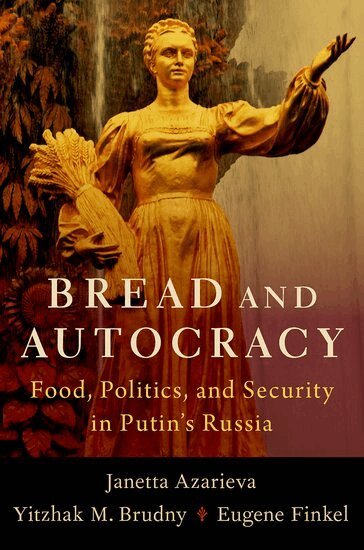
Food has been crucial to the functioning and survival of governments and regimes since the emergence of early states. Yet, only in a few countries is the connection between food and politics as pronounced as in Russia. Since the 1917 Revolution, virtually every significant development in Russian and Soviet history has been either directly driven by or closely associated with the question of food and access to it. In fact, food shortages played a critical role in the collapse of both the Russian Empire and the USSR. Under Putin's watch, Russia moved from heavily relying on grain imports to feed the population to being one of the world's leading food exporters.In Bread and Autocracy, Janetta Azarieva, Yitzhak M. Brudny, and Eugene Finkel focus on this crucial yet widely overlooked transformation, as well as its causes and consequences for Russia's domestic and foreign politics. The authors argue that Russia's food independence agenda is an outcome of a deliberate, decades-long policy to better prepare the country for a confrontation with the West. Moreover, they show that for the Kremlin, nutritional self-sufficiency and domestic food production is a crucial pillar of state security and regime survival. Azarieva, Brudny, and Finkel also make the case that Russia's focus on food independence also sets the country apart from almost all modern autocracies. While many authoritarian regimes have adopted industrial import-substitution policies, in Putin's Russia it is the substitution of food imports with domestically produced crops that is crucial for regime survival. As food reemerges as a key global issue and nations increasingly turn inwards, Bread and Autocracy provides a timely and comprehensive look into Russia's experience in building a nutritionally autarkic dictatorship.
282 kr
Skickas inom 5-8 vardagar
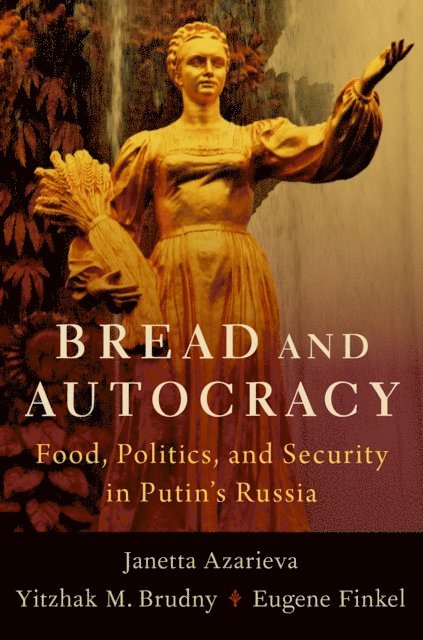
Food has been crucial to the functioning and survival of governments and regimes since the emergence of early states. Yet, only in a few countries is the connection between food and politics as pronounced as in Russia. Since the 1917 Revolution, virtually every significant development in Russian and Soviet history has been either directly driven by or closely associated with the question of food and access to it. In fact, food shortages played a critical role in the collapse of both the Russian Empire and the USSR. Under Putin's watch, Russia moved from heavily relying on grain imports to feed the population to being one of the world's leading food exporters.In Bread and Autocracy, Janetta Azarieva, Yitzhak M. Brudny, and Eugene Finkel focus on this crucial yet widely overlooked transformation, as well as its causes and consequences for Russia's domestic and foreign politics. The authors argue that Russia's food independence agenda is an outcome of a deliberate, decades-long policy to better prepare the country for a confrontation with the West. Moreover, they show that for the Kremlin, nutritional self-sufficiency and domestic food production is a crucial pillar of state security and regime survival. Azarieva, Brudny, and Finkel also make the case that Russia's focus on food independence also sets the country apart from almost all modern autocracies. While many authoritarian regimes have adopted industrial import-substitution policies, in Putin's Russia it is the substitution of food imports with domestically produced crops that is crucial for regime survival. As food reemerges as a key global issue and nations increasingly turn inwards, Bread and Autocracy provides a timely and comprehensive look into Russia's experience in building a nutritionally autarkic dictatorship.
256 kr
Skickas
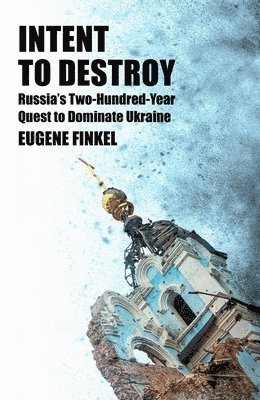
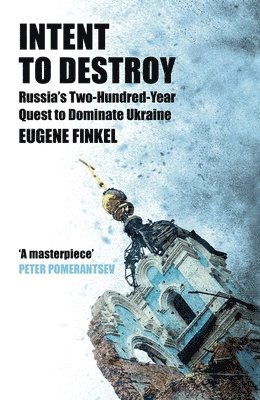
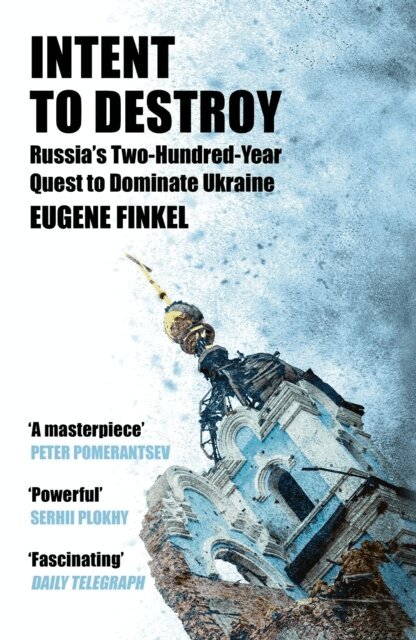
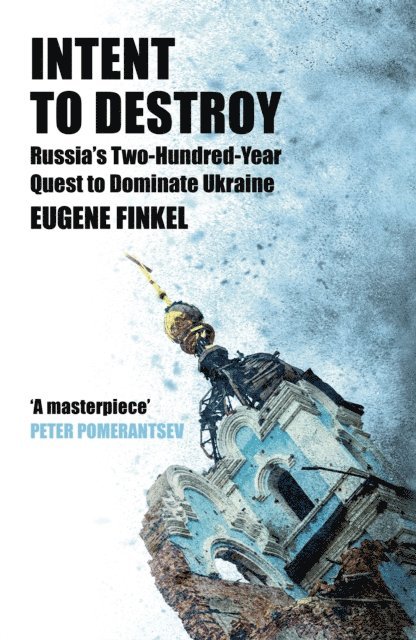
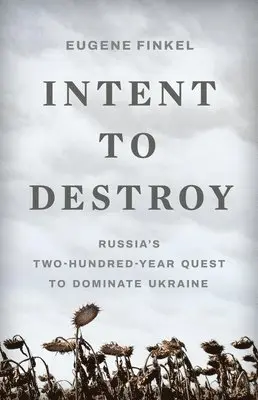
'A masterpiece' Peter Pomerantsev'Powerful' Serhii Plokhy'Fascinating' Daily TelegraphA history of Russian violence waged against Ukraine across the centuries. Russia's brutal invasion of Ukraine in February 2022 shocked the world. And yet this attack was in fact the latest episode in a centuries-long Russian campaign. In Intent to Destroy, leading scholar of genocide and Eastern Europe Eugene Finkel uncovers the deep roots of the Russo-Ukrainian War. Ever since the rise of Russian nationalism in the nineteenth century, the domination of this key borderland has become a cornerstone of Russian and Soviet policy. Using genocidal tactics - killings, deportations, starvation and cultural destruction - against ethnic Ukrainians and minorities including Tatars, Jews and Poles, Russia's long-standing policy has aimed to obliterate Ukrainian identity. This eradication has consistently been a part of the Kremlin playbook and leads inexorably to the violence we see today. Told with the astonishing power of Finkel's connection to this living history, and the authority of two decades of research, Intent to Destroy casts today's war it its broadest historical context, illuminating as never before Europe's bloodiest conflict since World War II.
182 kr
Skickas inom 7-10 vardagar
Dominating Ukraine has been the cornerstone of Russian policy for centuries - now, we are witnessing a genocide. The Russian invasion of Ukraine brought large-scale warfare to Europe, reshaped relations between key global players, and redefined existing alliances and international organizations, such as NATO and the European Union. It has killed tens of thousands, displaced millions, revived the threat of a nuclear war between Russia and the West and might unleash a global famine. Political scientist and historian of genocide Eugene Finkel zooms in on the intersection of one of the most important geopolitical events in recent decades and the most odious type of violence.Placing the war amid a long history of Russian political violence, he reveals how genocide and crimes against humanity have played a major role in Ukrainian history - both concepts were coined by scholars from Lviv, a city in western Ukraine and Finkel's hometown. Focusing on violence against civilians on the ground as a lens to understand the war, he argues that the violence we are witnessing is a direct continuation of the Kremlin's playbook when dealing with domestic and foreign opposition. He explores the challenges of historical memory, accountability for crimes committed by Russia, and what will be required for reconciliation between future generations of Ukrainians and Russians.Told with the astonishing power that comes from Finkel's personal connection to this living history, and the authority of a lifetime's research, Intent to Destroy is an ambitious account of the war in Ukraine, and how this violence will continue to shape global politics for decades to come.
127 kr
Skickas inom 7-10 vardagar
'A masterpiece' Peter Pomerantsev'Powerful' Serhii Plokhy'Fascinating' Daily TelegraphA history of Russian violence waged against Ukraine across the centuries.Russia's brutal invasion of Ukraine in February 2022 shocked the world. And yet this attack was in fact the latest episode in a centuries-long Russian campaign. In Intent to Destroy, leading scholar of genocide and Eastern Europe Eugene Finkel uncovers the deep roots of the Russo-Ukrainian War. Ever since the rise of Russian nationalism in the nineteenth century, the domination of this key borderland has become a cornerstone of Russian and Soviet policy. Using genocidal tactics - killings, deportations, starvation and cultural destruction - against ethnic Ukrainians and minorities including Tatars, Jews and Poles, Russia's long-standing policy has aimed to obliterate Ukrainian identity. This eradication has consistently been a part of the Kremlin playbook and leads inexorably to the violence we see today.Told with the astonishing power of Finkel's connection to this living history, and the authority of two decades of research, Intent to Destroy casts today's war it its broadest historical context, illuminating as never before Europe's bloodiest conflict since World War II.
362 kr
Skickas inom 3-6 vardagar