Eugene Victor Wolfenstein - Böcker
Visar alla böcker från författaren Eugene Victor Wolfenstein. Handla med fri frakt och snabb leverans.
5 produkter
5 produkter
811 kr
Skickas inom 3-6 vardagar
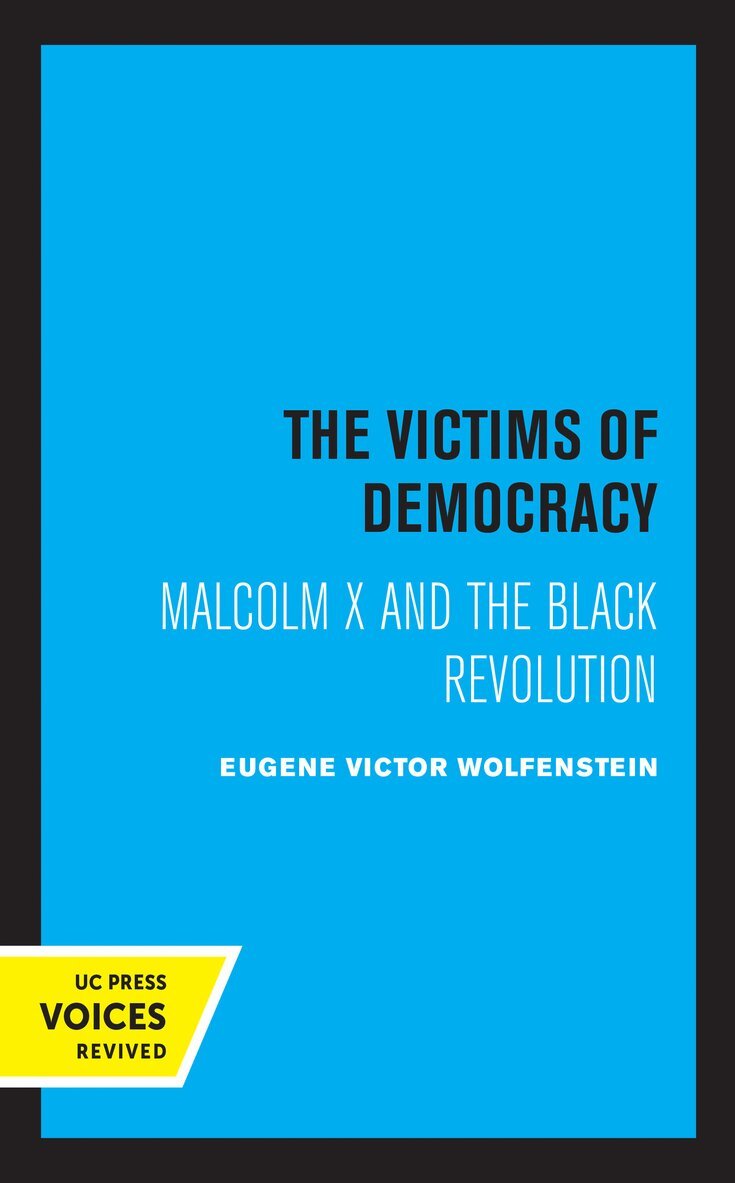
The Victims of Democracy: Malcolm X and the Black Revolution by Eugene Victor Wolfenstein is both an interpretation of Malcolm X’s life and thought and a meditation on how psychoanalysis and Marxism can illuminate revolutionary politics. Drawing on The Autobiography of Malcolm X and Malcolm’s collected speeches, Wolfenstein sets out not to replace those sources but to learn from them—placing Malcolm’s voice at the center while critically framing it through Freud and Marx.Trained in psychoanalytic theory but radicalized by the Vietnam War and the Black Revolution, Wolfenstein reorients his inquiry away from Weberian and Eriksonian models of identity and toward Marx’s dialectical analysis of social totalities. Freud’s insights into psychic life remain crucial, but the study resists reducing politics to private motives, instead tracing how political and historical forces are internalized, lived, and expressed. Along the way, Fanon’s anticolonial psychoanalysis provides a bridge between Malcolm’s revolutionary practice and Wolfenstein’s theoretical confrontation with the categories of race, class, and personality. The result is a book that engages Malcolm X not as an object of detached scholarship but as a revolutionary thinker whose lessons remain urgent for a society structured by racism. Part biography, part theory, and part critical self-reflection, The Victims of Democracy challenges readers to reconsider the relationship between psyche, politics, and the possibilities of liberation.This title is part of UC Press's Voices Revived program, which commemorates University of California Press’s mission to seek out and cultivate the brightest minds and give them voice, reach, and impact. Drawing on a backlist dating to 1893, Voices Revived makes high-quality, peer-reviewed scholarship accessible once again using print-on-demand technology. This title was originally published in 1981.
1 469 kr
Skickas inom 3-6 vardagar
The Victims of Democracy: Malcolm X and the Black Revolution by Eugene Victor Wolfenstein is both an interpretation of Malcolm X’s life and thought and a meditation on how psychoanalysis and Marxism can illuminate revolutionary politics. Drawing on The Autobiography of Malcolm X and Malcolm’s collected speeches, Wolfenstein sets out not to replace those sources but to learn from them—placing Malcolm’s voice at the center while critically framing it through Freud and Marx.Trained in psychoanalytic theory but radicalized by the Vietnam War and the Black Revolution, Wolfenstein reorients his inquiry away from Weberian and Eriksonian models of identity and toward Marx’s dialectical analysis of social totalities. Freud’s insights into psychic life remain crucial, but the study resists reducing politics to private motives, instead tracing how political and historical forces are internalized, lived, and expressed. Along the way, Fanon’s anticolonial psychoanalysis provides a bridge between Malcolm’s revolutionary practice and Wolfenstein’s theoretical confrontation with the categories of race, class, and personality. The result is a book that engages Malcolm X not as an object of detached scholarship but as a revolutionary thinker whose lessons remain urgent for a society structured by racism. Part biography, part theory, and part critical self-reflection, The Victims of Democracy challenges readers to reconsider the relationship between psyche, politics, and the possibilities of liberation.This title is part of UC Press's Voices Revived program, which commemorates University of California Press’s mission to seek out and cultivate the brightest minds and give them voice, reach, and impact. Drawing on a backlist dating to 1893, Voices Revived makes high-quality, peer-reviewed scholarship accessible once again using print-on-demand technology. This title was originally published in 1981.
843 kr
Skickas inom 10-15 vardagar
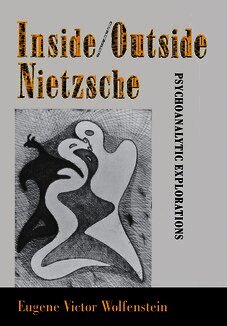
Friedrich Nietzsche is both subject and interlocutor in this innovative study. The book mirrors the psychoanalytic situation, mediating between the philosophical world that Nietzsche created for himself and the external world challenged by his philosophy.Eugene Victor Wolfenstein, a distinguished social theorist and practicing psychoanalyst, focuses on the opposition between the principles of psychoanalytic theory and Nietzsche's concepts of the will to power and perspectivism. Through critical engagement with these Nietzschean concepts, Wolfenstein brings them into the purview of psychoanalytic theory and practice.Using this revised version of psychoanalytic theory, Wolfenstein then conducts a psychobiography of Nietzsche's life. He contends that Nietzsche philosophized from within a transitional space between the maternal and paternal extremes of the male imaginary, a space in which gender identity is notably unstable, and sublimity consorts with the most abject misery. This psychic location is the impetus for Nietzsche's conceptions of eternal return and the feminine.Finally, Wolfenstein explores Nietzsche's genealogy of morals from a psychoanalytic perspective and in the light of Nietzsche's psychobiography. He concludes that Nietzsche's revaluation of values leaves us painfully short on both love and compassion. The whole book is also framed by a critical engagement with Michel Foucault's problematics of power/knowledge.
1 546 kr
Skickas inom 10-15 vardagar
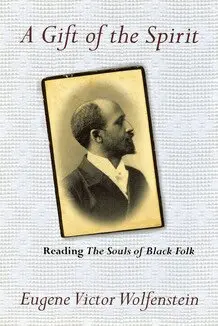
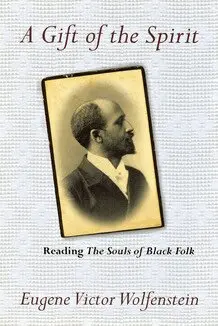
In A Gift of the Spirit, Eugene Victor Wolfenstein offers a reading of W. E. B. Du Bois's The Souls of Black Folk aimed at demonstrating its organic unity and coherence. He takes as his interpretive key the experience of the color line with which Du Bois's narrative begins—the incident from his youth in which a white girl refused his offer of a visiting card. Wolfenstein contends that this instance of misrecognition makes visible an aesthetic and affective configuration involving insult and injury, both racial and personal; anger as the immediate response to the humiliating wound; and, when that anger is suppressed, a melancholy retreat from the site of injury. As Wolfenstein reconstructs it, Souls tells the story of Du Bois's twofold approach to waging the battle for recognition: proud and disciplined resistance to the impositions and injustices of white supremacy; and the development of an intellectual station above the field of battle, where it could be surveyed from on high.With its serious and respectful approach to this canonical work in African American social theory, A Gift of the Spirit is a fitting tribute to the enduring relevance of Du Bois's singular achievement.
285 kr
Skickas inom 10-15 vardagar
In A Gift of the Spirit, Eugene Victor Wolfenstein offers a reading of W. E. B. Du Bois's The Souls of Black Folk aimed at demonstrating its organic unity and coherence. He takes as his interpretive key the experience of the color line with which Du Bois's narrative begins—the incident from his youth in which a white girl refused his offer of a visiting card. Wolfenstein contends that this instance of misrecognition makes visible an aesthetic and affective configuration involving insult and injury, both racial and personal; anger as the immediate response to the humiliating wound; and, when that anger is suppressed, a melancholy retreat from the site of injury. As Wolfenstein reconstructs it, Souls tells the story of Du Bois's twofold approach to waging the battle for recognition: proud and disciplined resistance to the impositions and injustices of white supremacy; and the development of an intellectual station above the field of battle, where it could be surveyed from on high.With its serious and respectful approach to this canonical work in African American social theory, A Gift of the Spirit is a fitting tribute to the enduring relevance of Du Bois's singular achievement.