Eva-Maria Maggi – författare
Visar alla böcker från författaren Eva-Maria Maggi. Handla med fri frakt och snabb leverans.
3 produkter
Hush of the Land
A Lifetime in the Bob Marshall Wilderness
Av Arnold "Smoke" Elser, Eva-Maria Maggi
Häftad, 2024
288 kr
Lägg i varukorg
This inspirational memoir chronicles the six-decade quest of packer and outfitter Arnold “Smoke” Elser to protect wild lands by bringing thousands of people deep into the mountains of Montana on horseback. With limited financial means and while still in college, the young man from Ohio decided …
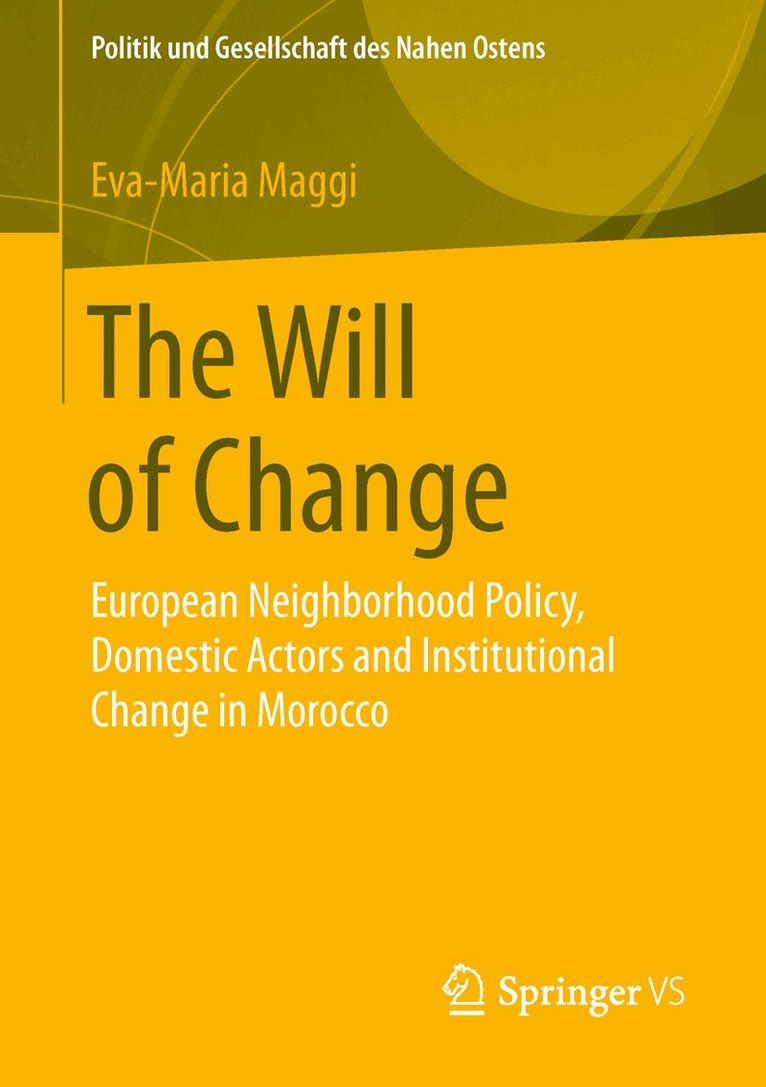
Will of Change
European Neighborhood Policy, Domestic Actors and Institutional Change in Morocco
Häftad, 2015
552 kr
Lägg i varukorg
In this book, Eva-Maria Maggi argues that the European Union (EU) had an impact on institutional reform processes in North Africa in cases where major domestic actors agreed. She analyzes how political actors in Morocco used EU neighborhood policies to shape economic and environmental policy …
Will of Change
European Neighborhood Policy, Domestic Actors and Institutional Change in Morocco
E-bok, 2015
734 kr
Lägg i varukorg
In this book, Eva-Maria Maggi argues that the European Union (EU) had an impact on institutional reform processes in North Africa in cases where major domestic actors agreed. She analyzes how political actors in Morocco used EU neighborhood policies to shape economic and environmental policy …