Evan Watkins - Böcker
Visar alla böcker från författaren Evan Watkins. Handla med fri frakt och snabb leverans.
8 produkter
8 produkter
1 291 kr
Skickas inom 10-15 vardagar
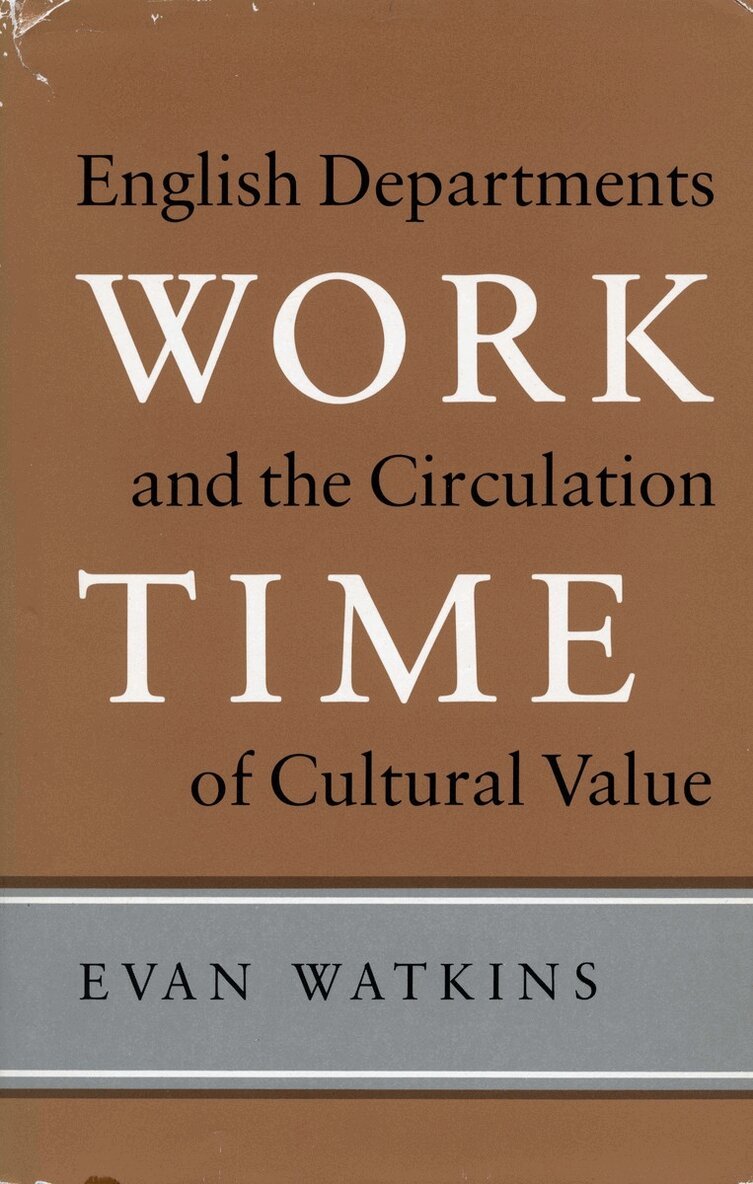
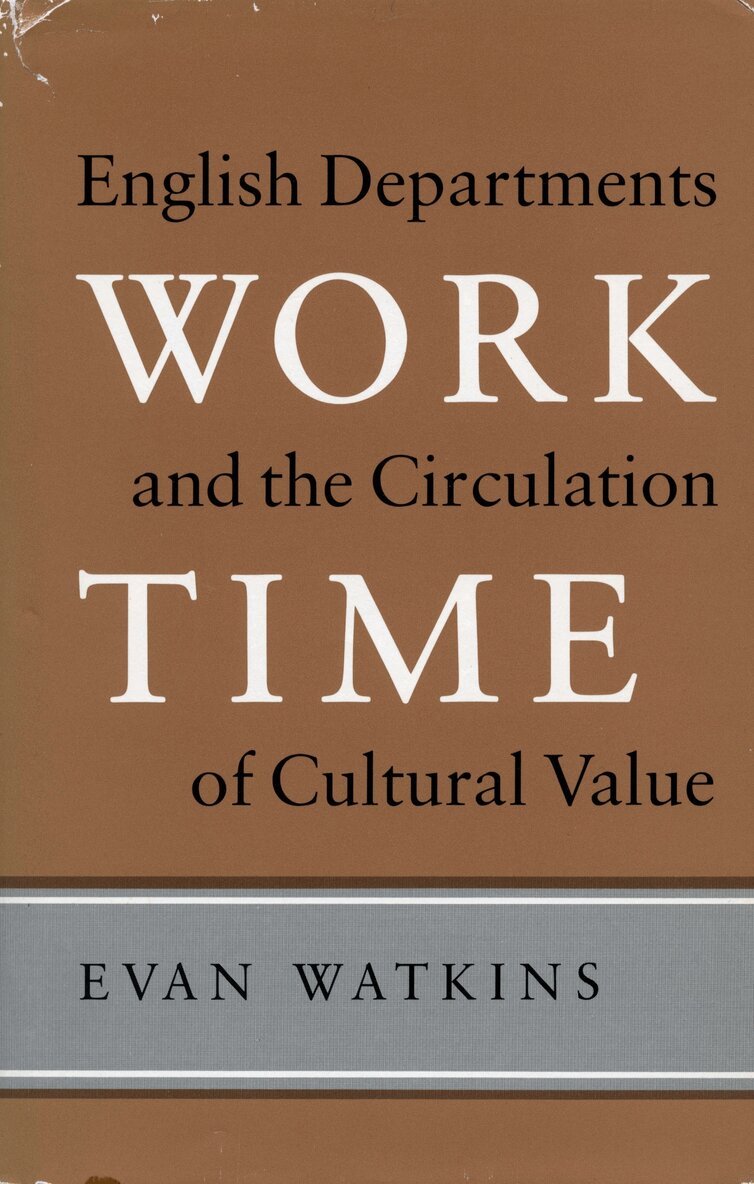
This book shares with a number of recent studies an interest in the historical development of English in the United States, in how it became a central discipline in the humanities, and in what the ideological affiliations of literature and literary study might be. It is strikingly original, however, in that instead of focusing on the subject matter of English (e.g., the canon or critical positions), as most recent studies, it examines precisely how work time is spent within English departments, as well as what circulates through them, and to where. For in terms of immediate social authority, such activities as writing letters of recommendation are more directly relevant than critical methodology.The author concludes by locating cultural work in English between such massively capitalized sites of cultural production as television and advertising, and "popular cultures," meaning what people do every day with whatever is cheaply available to them. English is like the former in that it requires highly developed, socially certified skills and knowledges. Like popular cultures, however, work in English is carried out with readily available material means. By recognizing this actual situation, he argues, one can view English as not just passively reproducing the existing system of social values, but as working within popular culture to provide the possibility of meaningful political opposition.
354 kr
Skickas inom 7-10 vardagar
This book shares with a number of recent studies an interest in the historical development of English in the United States, in how it became a central discipline in the humanities, and in what the ideological affiliations of literature and literary study might be. It is strikingly original, however, in that instead of focusing on the subject matter of English (e.g., the canon or critical positions), as most recent studies, it examines precisely how work time is spent within English departments, as well as what circulates through them, and to where. For in terms of immediate social authority, such activities as writing letters of recommendation are more directly relevant than critical methodology.The author concludes by locating cultural work in English between such massively capitalized sites of cultural production as television and advertising, and "popular cultures," meaning what people do every day with whatever is cheaply available to them. English is like the former in that it requires highly developed, socially certified skills and knowledges. Like popular cultures, however, work in English is carried out with readily available material means. By recognizing this actual situation, he argues, one can view English as not just passively reproducing the existing system of social values, but as working within popular culture to provide the possibility of meaningful political opposition.
283 kr
Skickas inom 7-10 vardagar
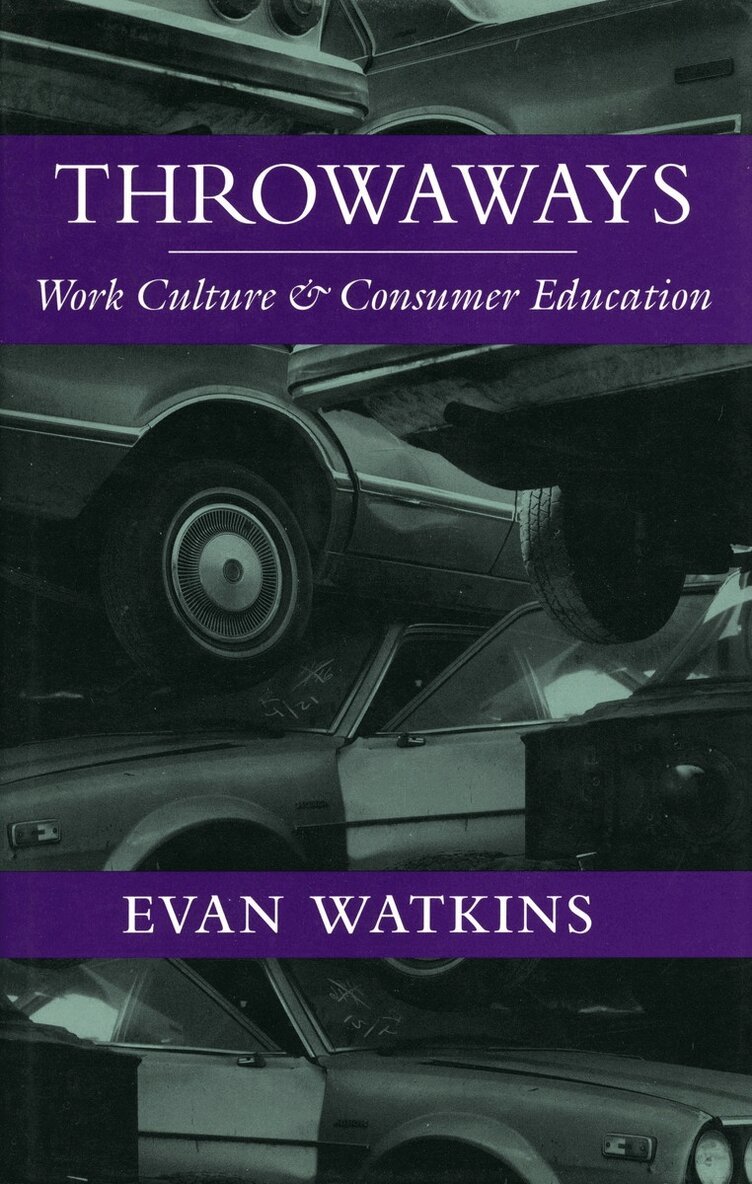
This innovative approach to consumer culture places less emphasis on ideological representations and resistances to ideology than on the educative powers of mass culture and the way that social position is determined through the politics of consumer culture. Thus the wide-ranging material studied includes such 'odd' and peripheral fields as car maintenance literature, and more familiar forms, such as television programming.
1 123 kr
Skickas inom 10-15 vardagar
This strikingly original work challenges a familiar assumption within cultural studies: that cultural practices happen in an everyday realm that is potentially open-ended, involving everyone; whereas economics, by contrast, is alien, a force field determined by international financial interests and legitimized by the arid discourses of professional economists. The author argues that, in fact, for most people, most of the time, economic issues are a central part of everyday life.Separating economics from everyday practices has resulted in seemingly interminable debates over the relative importance of economic conditions and cultural factors in determining the "real" configurations of power relations; it has also reinforced the perception that the capitalist marketplace, now global, permits no alternatives. The author shows instead that a kind of economic sense-making is at work, a "common sense" that conditions a great deal about how many people organize their lives and understand their powers as social agents. "Common sense," Gramsci recognized, is always equivocal, multiform, even contradictory, and economic sense-making is no exception. Thus the author pays special attention to conflicting currents of economic sense-making and their social effects, thereby showing how false the assumption of a monolithic and uniform Market actually is. He looks at a wide range of economic practices and assumptions, from transnational corporations and human resources management in the university, to the organization of such very specific markets as the breeding and sale of show dogs.But Gramsci also understood that, no matter how equivocal and conflicted, common sense imposes parameters of possibility. No political direction is likely to be realized if it is not in some way deeply engaged in mobilizing some aspect of everyday common sense. Accordingly, the author's ultimate concern in this book is to challenge what he calls "capitalist common sense," to find, in the complex ensemble of often-conflicting assumptions that consolidate the processes of everyday life into "common sense," alternative economies to capitalism—alternatives that are already here, in operation, every day.In conclusion, the author argues for ways such everyday economic practices could be mobilized toward a countercolonial economics that might lead to the further invention of new and decidedly noncapitalist forms of economic organization.
270 kr
Skickas inom 7-10 vardagar
This strikingly original work challenges a familiar assumption within cultural studies: that cultural practices happen in an everyday realm that is potentially open-ended, involving everyone; whereas economics, by contrast, is alien, a force field determined by international financial interests and legitimized by the arid discourses of professional economists. The author argues that, in fact, for most people, most of the time, economic issues are a central part of everyday life.Separating economics from everyday practices has resulted in seemingly interminable debates over the relative importance of economic conditions and cultural factors in determining the "real" configurations of power relations; it has also reinforced the perception that the capitalist marketplace, now global, permits no alternatives. The author shows instead that a kind of economic sense-making is at work, a "common sense" that conditions a great deal about how many people organize their lives and understand their powers as social agents. "Common sense," Gramsci recognized, is always equivocal, multiform, even contradictory, and economic sense-making is no exception. Thus the author pays special attention to conflicting currents of economic sense-making and their social effects, thereby showing how false the assumption of a monolithic and uniform Market actually is. He looks at a wide range of economic practices and assumptions, from transnational corporations and human resources management in the university, to the organization of such very specific markets as the breeding and sale of show dogs.But Gramsci also understood that, no matter how equivocal and conflicted, common sense imposes parameters of possibility. No political direction is likely to be realized if it is not in some way deeply engaged in mobilizing some aspect of everyday common sense. Accordingly, the author's ultimate concern in this book is to challenge what he calls "capitalist common sense," to find, in the complex ensemble of often-conflicting assumptions that consolidate the processes of everyday life into "common sense," alternative economies to capitalism—alternatives that are already here, in operation, every day.In conclusion, the author argues for ways such everyday economic practices could be mobilized toward a countercolonial economics that might lead to the further invention of new and decidedly noncapitalist forms of economic organization.
Class Degrees
Smart Work, Managed Choice, and the Transformation of Higher Education
Inbunden, Engelska, 2008
923 kr
Skickas inom 7-10 vardagar
A current truism holds that the undergraduate degree today is equivalent to the high-school diploma of yesterday. But undergraduates at a research university would probably not recognize themselves in the historical mirror of high-school vocational education. Students in a vast range of institutions are encouraged to look up the educational social scale, whereas earlier vocational education was designed to "cool out" expectations of social advancement by training a working class prepared for massive industrialization.In Class Degrees, Evan Watkins argues that reforms in vocational education in the 1980s and 1990s can explain a great deal about the changing directions of class formation in the United States, as well as how postsecondary educational institutions are changing. Responding to a demand for flexibility in job skills and reflecting a consequent aspiration to choice and perpetual job mobility, those reforms aimed to eliminate the separate academic status of vocational education. They transformed it from a "cooling out" to a "heating up" of class expectations. The result has been a culture of hyperindividualism. The hyperindividual lives in a world permeated with against-all-odds plots, from "beat the odds" of long supermarket checkout lines by using self-checkout and buying FasTrak transponders to beat the odds of traffic jams, to the endless superheroes on film and TV who daily save various sorts of planets and things against all odds.Of course, a few people can beat the odds only if most other people do not. As choice begins to replace the selling of individual labor at the core of contemporary class formation, the result is a sort of waste labor left behind by the competitive process. Provocatively, Watkins argues that, in the twenty-first century, academic work in the humanities is assuming the management function of reclaiming this waste labor as a motor force for the future.
1 047 kr
Skickas inom 10-15 vardagar
In recent years, a number of books in the field of literacy research have addressed the experiences of literacy users or the multiple processes of learning literacy skills in a rapidly changing technological environment. In contrast to these studies, this book addresses the subjects of literacy. In other words, it is about how literacy workers are subjected to the relations between new forms of labor and the concept of human capital as a dominant economic structure in the United States. It is about how literacies become forms of value producing labor in everyday life both within and beyond the workplace itself.As Evan Watkins shows, apprehending the meaning of literacy work requires an understanding of how literacies have changed in relation to not only technology but also to labor, capital, and economics. The emergence of new literacies has produced considerable debate over basic definitions as well as the complexities of gain and loss. At the same time, the visibility of these debates between advocates of old versus new literacies has obscured the development of more fundamental changes. Most significantly, Watkins argues, it is no longer possible to represent human capital solely as the kind of long-term resource that Gary Becker and other neoclassical economists have defined. Like corporate inventory and business management practices, human capital—labor—now also appears in a "just-in-time" form, as if a power of action on the occasion rather than a capital asset in reserve.Just-in-time human capital valorizes the expansion of choice, but it depends absolutely on the invisible literacy work consigned to the peripheries of concentrated human capital. In an economy wherein peoples' attention begins to eclipse information as a primary commodity, a small number of choices appear with an immensely magnified intensity while most others disappear entirely. As Literacy Work in the Reign of Human Capital deftly illustrates, the concentration of human labor in the digital age reinforces and extends a class division of winners on the inside of technological innovation and losers everywhere else.
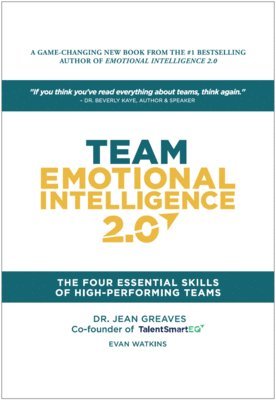
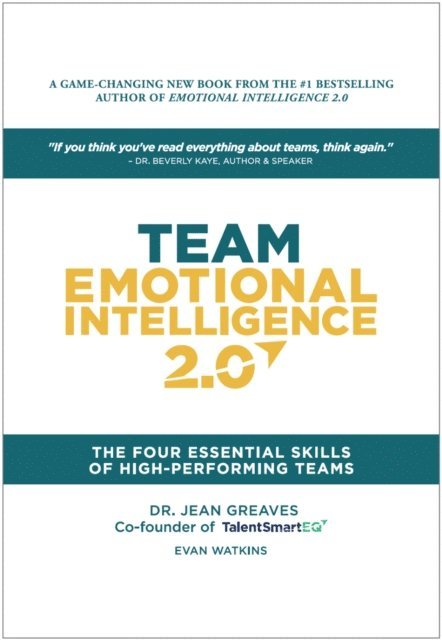
Team Emotional Intelligence 2.0
The Four Essential Skills of High Performing Teams
Inbunden, Engelska, 2022
224 kr
Skickas inom 5-8 vardagar
As organizations shift to depend more on team-basedstructures, the pressure to develop high-performing teams is more critical thanever. In the modern work environment, teams are expected to embrace change,navigate complexity, and collaborate well under pressure ―all while deliveringexceptional results and forming productive relationships.While it is crucial to have talented, bright people within ateam, there is a dynamic that is even more essential to overall teameffectiveness. This dynamic is “Team Emotional Intelligence” (Team EQ). Whilemost people are familiar with emotional intelligence (EQ) when it comes toindividuals, the power of how EQ relates to the entire team has not beenwell-understood until now.Insights from the latest research on team emotionalintelligence and TalentSmartEQ’s research trends from working with over 200teams (with 2000+ team members) combine to bring EQ know-how to the team level.Team Emotional Intelligence 2.0 delivers practical strategies and showcases howan emotionally intelligent team is far more than the sum of its parts. Thisbook focuses on the four key skill areas of Team EQ:Team Emotion AwarenessTeam Emotion ManagementInternal Team RelationshipsExternal TeamRelationshipsIt delivers 53 strategies and a step-by-step process forincreasing team EQ skills so team leaders and anyone who’s a member of a teamcan achieve peak performance and reach their goals.Dr. Greaves, Evan Watkins, and their contributing team ofexperts begin with a life and death story of team failure that illustrates howemotions can drive team decisions and lead to disaster. They share a provenapproach to helping teams understand Team EQ skills, build these skills intostrengths, and use them to sustain positive momentum and achieve peakperformance. Strategies for remote and hybrid teams working virtually offertargeted approaches to bonding, communicating, tough conversations, anddecision making as modern workplaces transform.Like she did with the best-sellingEmotional Intelligence 2.0 (at 3 million copies sold and counting), Dr. Greavesand her team take complex concepts and translate them into easy-to-understandskills that can be used immediately and developed further over time. Asorganizations increasingly rely on getting work done through teams, theunderstanding and development of team EQ skills is more relevant and impactfulthan ever.