Evgeny Morozov - Böcker
Visar alla böcker från författaren Evgeny Morozov. Handla med fri frakt och snabb leverans.
5 produkter
5 produkter
126 kr
Skickas
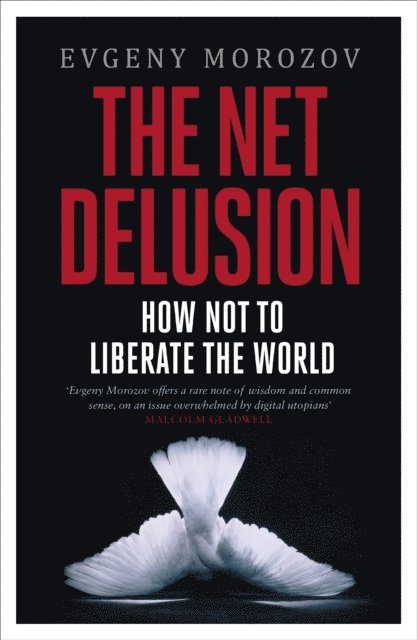
In The Net Delusion: How Not to Liberate the World Evgeny Morozov argues that our utopian, internet-centric thinking holds devastating consequences for the future of democracy.We were promised that the internet would set us free. From the Middle East's 'twitter revolution' to Facebook activism, technology would spread democracy and bring us together as never before.We couldn't have been more wrong. In The Net Delusion Evgeny Morozov shows why internet freedom is an illusion. Not only that - in many cases the net is actually helping oppressive regimes to stifle dissent, track dissidents and keep people pacified, with companies such as Google and Amazon helping them do it. This book shows that free information doesn't mean free people - and that, right now, everyone's liberty is at stake. 'Offers a rare note of wisdom and common sense, on an issue overwhelmed by digital utopians' Malcolm Gladwell'Passionate, admirable and important' Observer'The book is a wake-up call to those who think the internet is the solution to all our problems' Daily Telegraph'A delight ... his demolition job on the embarrassments of "internet freedom" is comprehensive' Independent'A compelling rebuff ... required reading for everyone' Sunday Times'Piercing ... convincing ... timely' Financial TimesEvgeny Morozov is a contributing editor to Foreign Policy and runs the magazine's influential and widely-quoted 'Net Effect' blog about the Internet's impact on global politics. Morozov is currently a Yahoo! fellow at the Institute for the Study of Diplomacy at Georgetown University.
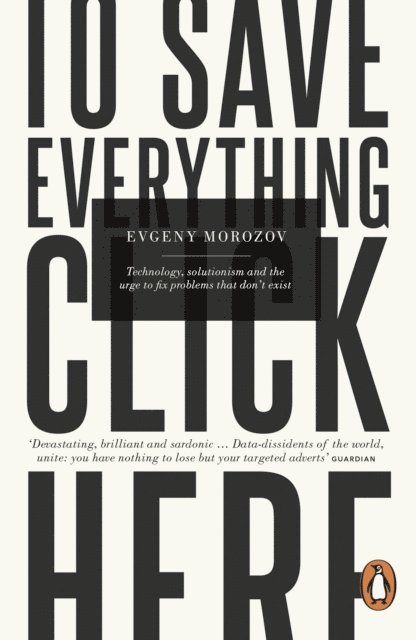
To Save Everything, Click Here
Technology, Solutionism, and the Urge to Fix Problems that Don't Exist
Häftad, Engelska, 2014
148 kr
Skickas
Our gadgets are getting smarter. Technology can log what we buy, customize what we consume and enable us to save and share every aspect of our existence. In the future, we're told, it will even make public life - from how we're governed to how we record crime - better. But can the digital age fix everything? Should it? By quantifying our behaviour, Evgeny Morozov argues, we are profoundly reshaping society - and risk losing the opacity and imperfection that make us human.
279 kr
Kommande
213 kr
Skickas inom 10-15 vardagar
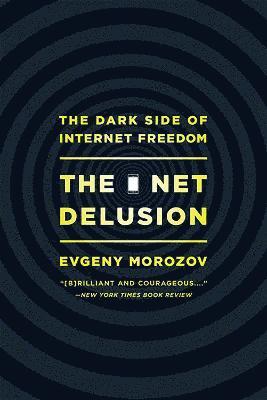
Updated with a new Afterword "The revolution will be Twittered!” declared journalist Andrew Sullivan after protests erupted in Iran. But as journalist and social commentator Evgeny Morozov argues in The Net Delusion , the Internet is a tool that both revolutionaries and authoritarian governments can use. For all of the talk in the West about the power of the Internet to democratize societies, regimes in Iran and China are as stable and repressive as ever. Social media sites have been used there to entrench dictators and threaten dissidents, making it harder- not easier- to promote democracy. Marshalling a compelling set of case studies, The Net Delusion shows why the cyber-utopian stance that the Internet is inherently liberating is wrong, and how ambitious and seemingly noble initiatives like the promotion of"Internet freedom” are misguided and, on occasion, harmful.
267 kr
Skickas inom 3-6 vardagar
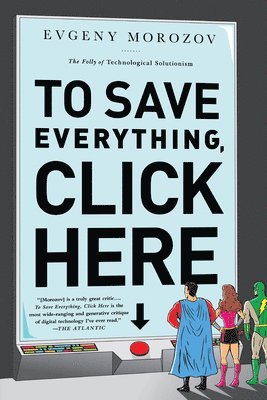
In the very near future, smart" technologies and big data" will allow us to make large-scale and sophisticated interventions in politics, culture, and everyday life. Technology will allow us to solve problems in highly original ways and create new incentives to get more people to do the right thing. But how will such solutionism" affect our society, once deeply political, moral, and irresolvable dilemmas are recast as uncontroversial and easily manageable matters of technological efficiency? What if some such problems are simply vices in disguise? What if some friction in communication is productive and some hypocrisy in politics necessary? The temptation of the digital age is to fix everything,from crime to corruption to pollution to obesity,by digitally quantifying, tracking, or gamifying behaviour. But when we change the motivations for our moral, ethical, and civic behaviour we may also change the very nature of that behaviour. Technology, Evgeny Morozov proposes, can be a force for improvement,but only if we keep solutionism in check and learn to appreciate the imperfections of liberal democracy. Some of those imperfections are not accidental but by design.Arguing that we badly need a new, post-Internet way to debate the moral consequences of digital technologies, To Save Everything, Click Here warns against a world of seamless efficiency, where everyone is forced to wear Silicon Valley's digital straitjacket.