Faith Smith – författare
Visar alla böcker från författaren Faith Smith. Handla med fri frakt och snabb leverans.
6 produkter
6 produkter
Inbunden, Engelska, 2002
892 kr
Skickas inom 10-15 vardagar
John Jacob Thomas (1841-1889) was one of the leading members of a newly emergent intelligentsia in nineteenth-century Trinidad - a group that could be identified as both ""Victorian"" and ""Pan-Africanist"" - who not only challenged British imperialist accounts of Trinidad but also tried to show the interconnections, bloodlines, and origins of ""Caribbean"" and ""English"" identities usually perceived as separate and distinct. As a member of that emerging black lower middle class, Thomas was well known for his 1869 study of Trinidad's Creole language, as well as for Froudacity (1889), his pointed and witty response to the travel narrative of the Victorian James Anthony Froude, an early example of ""writing back to empire."" Responding to Trinidad's transformation by significant migrations from the eastern Caribbean, West Africa, and the Indian subcontinent, he sought to ""tame"" the working-class energies that radicalized his work and to bring them in line with ""modern"" conceptions of the nation. As a defender of francophone cultural production in a British colony, though a loyal subject of Queen Victoria, and as a pan-Africanist whose commitments were simultaneously diasporic and local, Thomas complicates current discussions of colonial and postcolonial intellectuals, Black Atlantic paradigms, and Victorian intellectual life. In Creole Recitations, the first full-length study of Thomas, Faith Smith puts his texts in dialogue with other narratives by local and international Pan-Africanists, Victorian intellectuals, and local and regional blacks, coloreds, and whites. Shedding light on the intellectual terrain of the late nineteenth century, she provides an important context for better-known figures of twentieth-century Caribbean literature such as C. L. R. James, V. S. Naipaul, and Jamaica Kincaid.
Inbunden, Engelska, 2023
1 118 kr
Skickas inom 10-15 vardagar
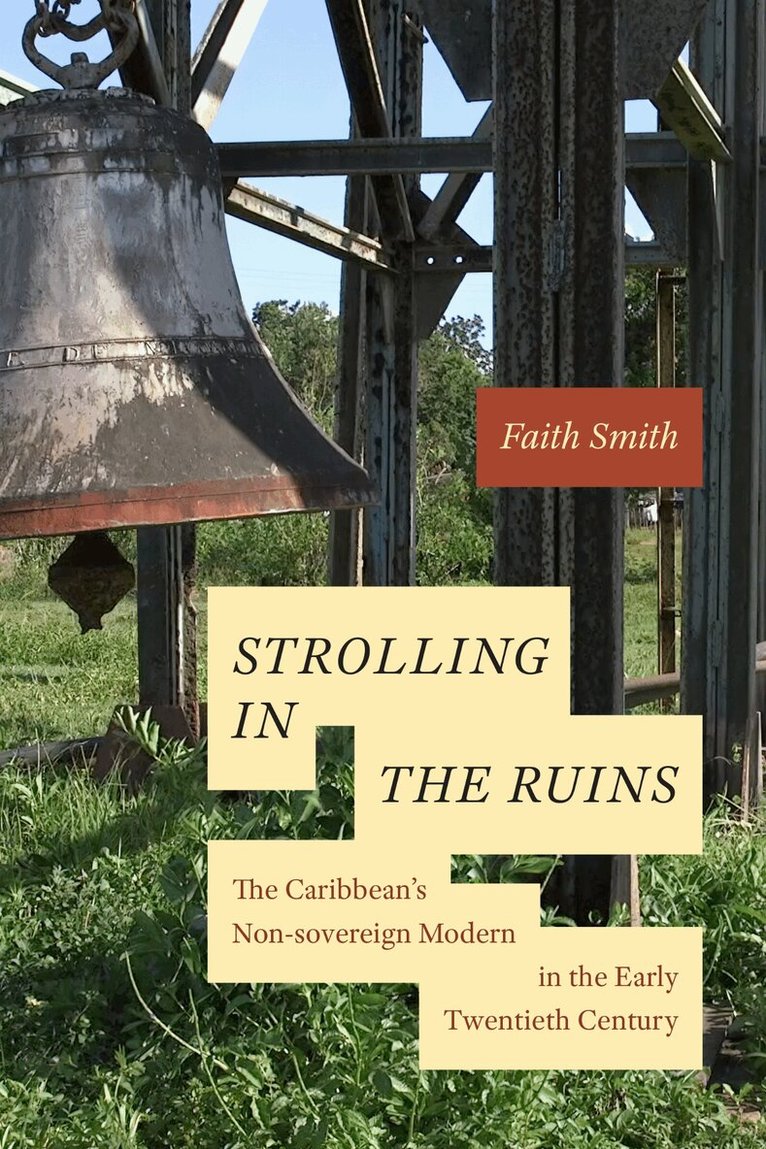
In Strolling in the Ruins Faith Smith engages with a period in the history of the Anglophone Caribbean often overlooked as nondescript, quiet, and embarrassingly pro-imperial within the larger narrative of Jamaican and Trinidadian nationalism. Between the 1865 Morant Bay Rebellion and World War I, British imperialism was taken for granted among both elites and ordinary people, while nationalist discourses would not begin to shape political imagination in the West Indies for decades. Smith argues that this moment, far from being uneventful, disrupts the inevitability of nationhood in the mid-twentieth century and anticipates the Caribbean’s present-day relationship to global power. Smith assembles and analyzes a diverse set of texts, from Carnival songs, poems, and novels to newspapers, photographs, and gardens, to examine theoretical and literary-historiographic questions concerning time and temporality, empire and diaspora, immigration and indigeneity, gender and the politics of desire, Africa’s place within Caribbeanist discourse, and the idea of the Caribbean itself. Closely examining these cultural expressions of apparent quiescence, Smith locates the quiet violence of colonial rule and the insistence of colonial subjects on making meaningful lives.
Häftad, Engelska, 2023
281 kr
Skickas inom 5-8 vardagar
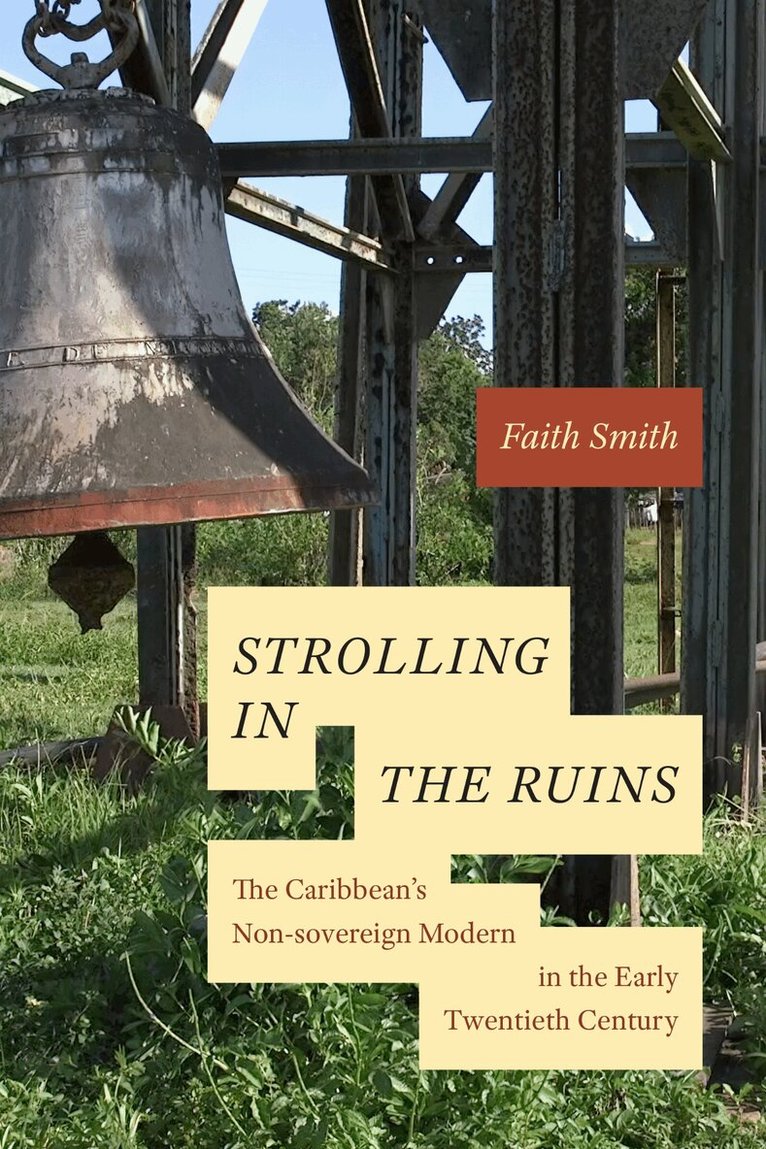
In Strolling in the Ruins Faith Smith engages with a period in the history of the Anglophone Caribbean often overlooked as nondescript, quiet, and embarrassingly pro-imperial within the larger narrative of Jamaican and Trinidadian nationalism. Between the 1865 Morant Bay Rebellion and World War I, British imperialism was taken for granted among both elites and ordinary people, while nationalist discourses would not begin to shape political imagination in the West Indies for decades. Smith argues that this moment, far from being uneventful, disrupts the inevitability of nationhood in the mid-twentieth century and anticipates the Caribbean’s present-day relationship to global power. Smith assembles and analyzes a diverse set of texts, from Carnival songs, poems, and novels to newspapers, photographs, and gardens, to examine theoretical and literary-historiographic questions concerning time and temporality, empire and diaspora, immigration and indigeneity, gender and the politics of desire, Africa’s place within Caribbeanist discourse, and the idea of the Caribbean itself. Closely examining these cultural expressions of apparent quiescence, Smith locates the quiet violence of colonial rule and the insistence of colonial subjects on making meaningful lives.
E-bok
PDF, Engelska, 2023427 kr
Läs direkt efter köp
In Strolling in the Ruins Faith Smith engages with a period in the history of the Anglophone Caribbean often overlooked as nondescript, quiet, and embarrassingly pro-imperial within the larger narrative of Jamaican and Trinidadian nationalism. Between the 1865 Morant Bay Rebellion and World War I, British imperialism was taken for granted among both elites and ordinary people, while nationalist discourses would not begin to shape political imagination in the West Indies for decades. Smith argues that this moment, far from being uneventful, disrupts the inevitability of nationhood in the mid-twentieth century and anticipates the Caribbean’s present-day relationship to global power. Smith assembles and analyzes a diverse set of texts, from Carnival songs, poems, and novels to newspapers, photographs, and gardens, to examine theoretical and literary-historiographic questions concerning time and temporality, empire and diaspora, immigration and indigeneity, gender and the politics of desire, Africa’s place within Caribbeanist discourse, and the idea of the Caribbean itself. Closely examining these cultural expressions of apparent quiescence, Smith locates the quiet violence of colonial rule and the insistence of colonial subjects on making meaningful lives.
Häftad, Engelska, 2017
262 kr
Skickas inom 5-8 vardagar
E-bok
Engelska, 201759 kr
Läs direkt efter köp
This book is a variety of emotions on stories behind each poem. Theyve been created of flashbacks from past traumas Ive encountered, new beginnings, and the changes of life. Some are dark, but others are very light and warm. Although I do believe many can relate to one or more. They all come straight from the heart. Not one poem I had to sit and change and correct. Theyve each been written as soon as they cross my mind. I dont even realize whats being said in them until I go back and reread whats just been written. Pure emotion and energy is intertwined deep within the words. Theyve touched the lives that have heard of them already, and I hope for the readers to feel the same.