Farid Hafez - Böcker
Visar alla böcker från författaren Farid Hafez. Handla med fri frakt och snabb leverans.
9 produkter
9 produkter
929 kr
Kommande
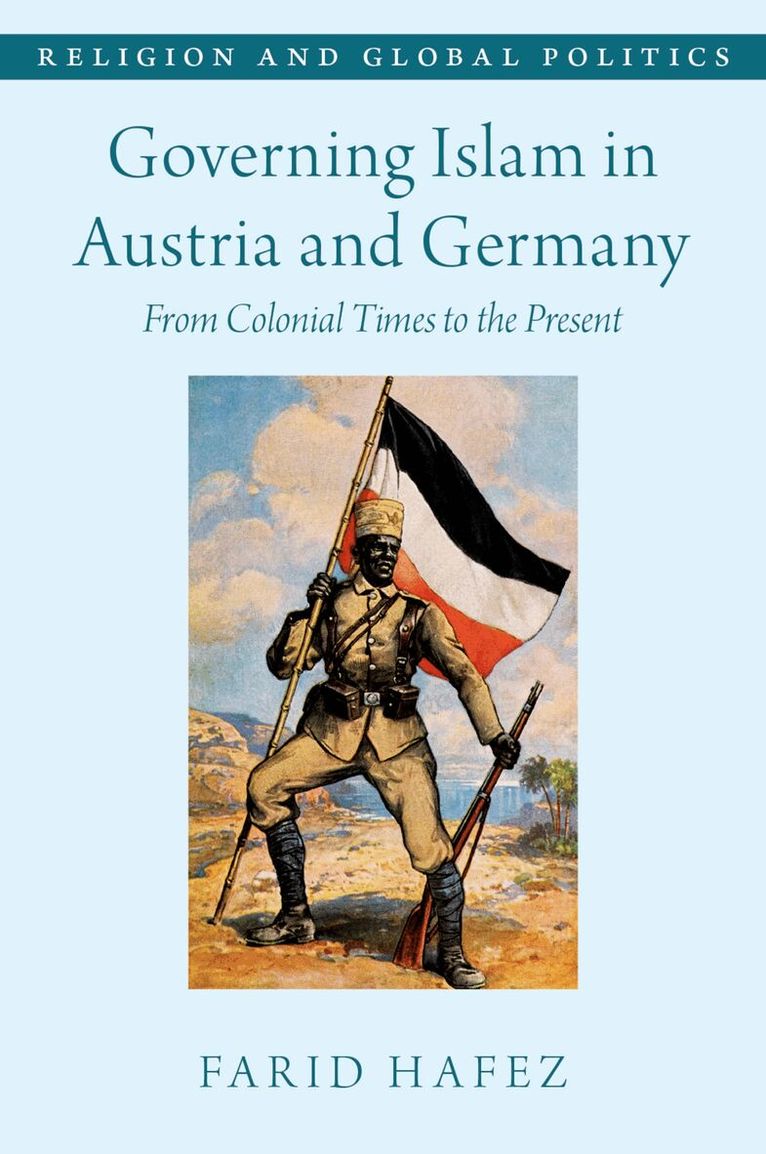
Governing Islam in Austria and Germany argues that the foundations of contemporary policies towards Islam in Austria and Germany are deeply rooted in colonial practices from the late 19th and early 20th centuries. Author Farid Hafez traces how colonial knowledge and governing techniques vis-à-vis Muslims--acquired during the Austro-Hungarian occupation of Bosnia and Herzegovina and the German Kaiserreich's rule over Tanzania and parts of Togo and Cameroon--shaped both the Nazi regime's approach to Muslims and postwar European policies. Hafez introduces the theory of Islampolitik, a concept that examines how modern European states regulate and govern their Muslim populations.Islampolitik is not simply administrative or cultural policy; it is a mode of governance aimed at managing a constructed, racialized version of Muslim identity and Islam. Colonial legacies still inform the racial politics of religion in Europe, positioning Muslim populations as subjects of control. Governing Islam in Austria and Germany: From Colonial Times to the Present offers a new methodological lens to analyze Austria and Germany's contemporary policies toward Muslims, uncovering the ways in which past imperial logics underpin state administration and religious education. Bridging colonial history, racial politics, and contemporary politics, Hafez shows how Muslim communities were not only managed but strategically incorporated into imperial and national frameworks.
644 kr
Skickas inom 10-15 vardagar
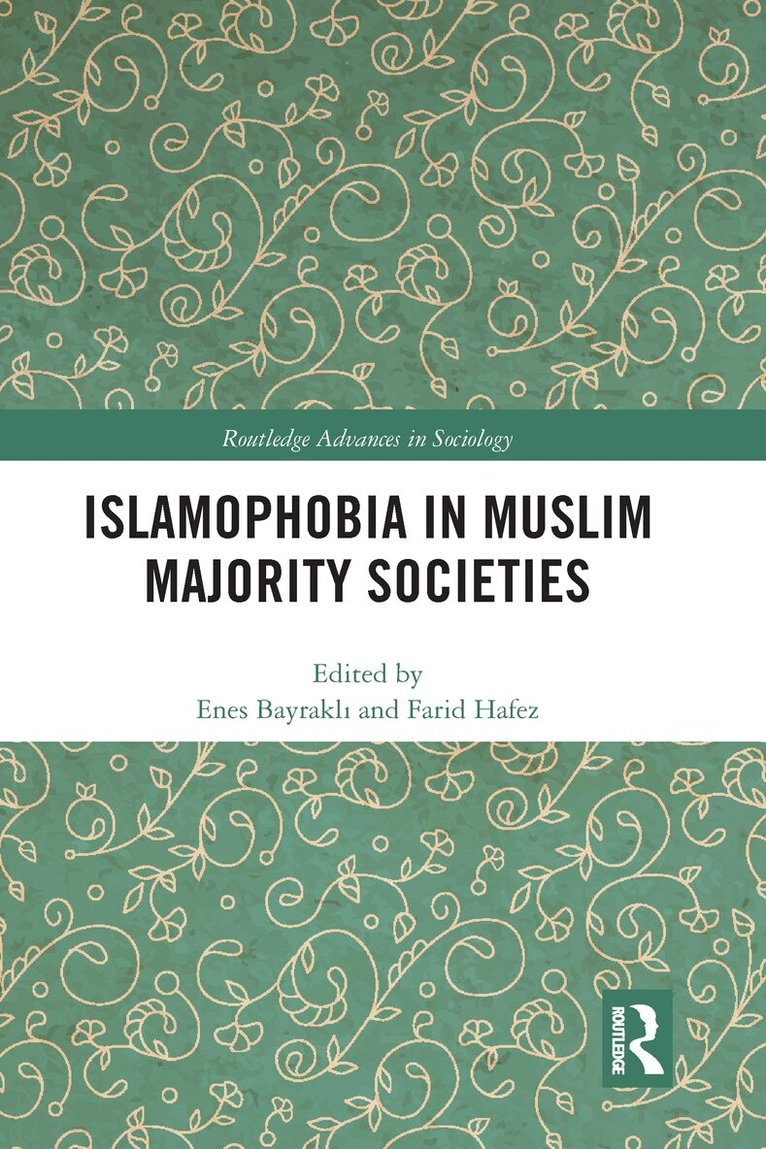
In the last decade, Islamophobia in Western societies, where Muslims constitute the minority, has been studied extensively. However, Islamophobia is not restricted to the geography of the West, but rather constitutes a global phenomenon. It affects Muslim societies just as much, due to various historical, economic, political, cultural and social reasons.Islamophobia in Muslim Majority Societies constitutes a first attempt to open a debate about the understudied phenomenon of Islamophobia in Muslim majority societies. An interdisciplinary study, it focuses on socio-political and historical aspects of Islamophobia in Muslim majority societies.This volume will appeal to students, scholars and general readers who are interested in Racism Studies, Islamophobia Studies, the Middle East and North Africa (MENA) region, Islam and Politics.
2 088 kr
Skickas inom 10-15 vardagar
In the last decade, Islamophobia in Western societies, where Muslims constitute the minority, has been studied extensively. However, Islamophobia is not restricted to the geography of the West, but rather constitutes a global phenomenon. It affects Muslim societies just as much, due to various historical, economic, political, cultural and social reasons.Islamophobia in Muslim Majority Societies constitutes a first attempt to open a debate about the understudied phenomenon of Islamophobia in Muslim majority societies. An interdisciplinary study, it focuses on socio-political and historical aspects of Islamophobia in Muslim majority societies.This volume will appeal to students, scholars and general readers who are interested in Racism Studies, Islamophobia Studies, the Middle East and North Africa (MENA) region, Islam and Politics.
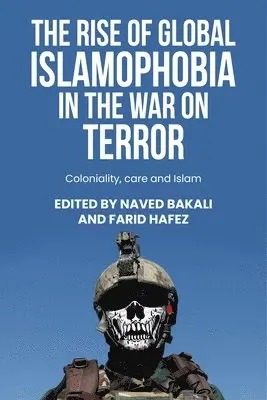
Rise of Global Islamophobia in the War on Terror
Coloniality, Race, and Islam
Inbunden, Engelska, 2022
1 227 kr
Skickas
The ‘War on Terror’ ushered in a new era of anti-Muslim bias and racism. Anti-Muslim racism, or Islamophobia, is influenced by local economies, power structures and histories. However, the War on Terror, a conflict undefined by time and place, with a homogenised Muslim ‘Other’ framed as a perpetual enemy, has contributed towards a global Islamophobic narrative. This edited international volume examines the connections between interpersonal and institutional anti-Muslim racism that have contributed to the growth and emboldening of nativist and populist protest movements globally. It maps out categories of Islamophobia, revealing how localised histories, conflicts and contemporary geopolitical realities have textured the ways that Islamophobia has manifested across the global North and South. At the same time, it seeks to highlight activism and resistance confronting Islamophobia.
346 kr
Skickas
The ‘War on Terror’ ushered in a new era of anti-Muslim bias and racism. Anti-Muslim racism, or Islamophobia, is influenced by local economies, power structures and histories. However, the War on Terror, a conflict undefined by time and place, with a homogenised Muslim ‘Other’ framed as a perpetual enemy, has contributed towards a global Islamophobic narrative. This edited international volume examines the connections between interpersonal and institutional anti-Muslim racism that have contributed to the growth and emboldening of nativist and populist protest movements globally. It maps out categories of Islamophobia, revealing how localised histories, conflicts and contemporary geopolitical realities have textured the ways that Islamophobia has manifested across the global North and South. At the same time, it seeks to highlight activism and resistance confronting Islamophobia.
362 kr
Skickas inom 7-10 vardagar
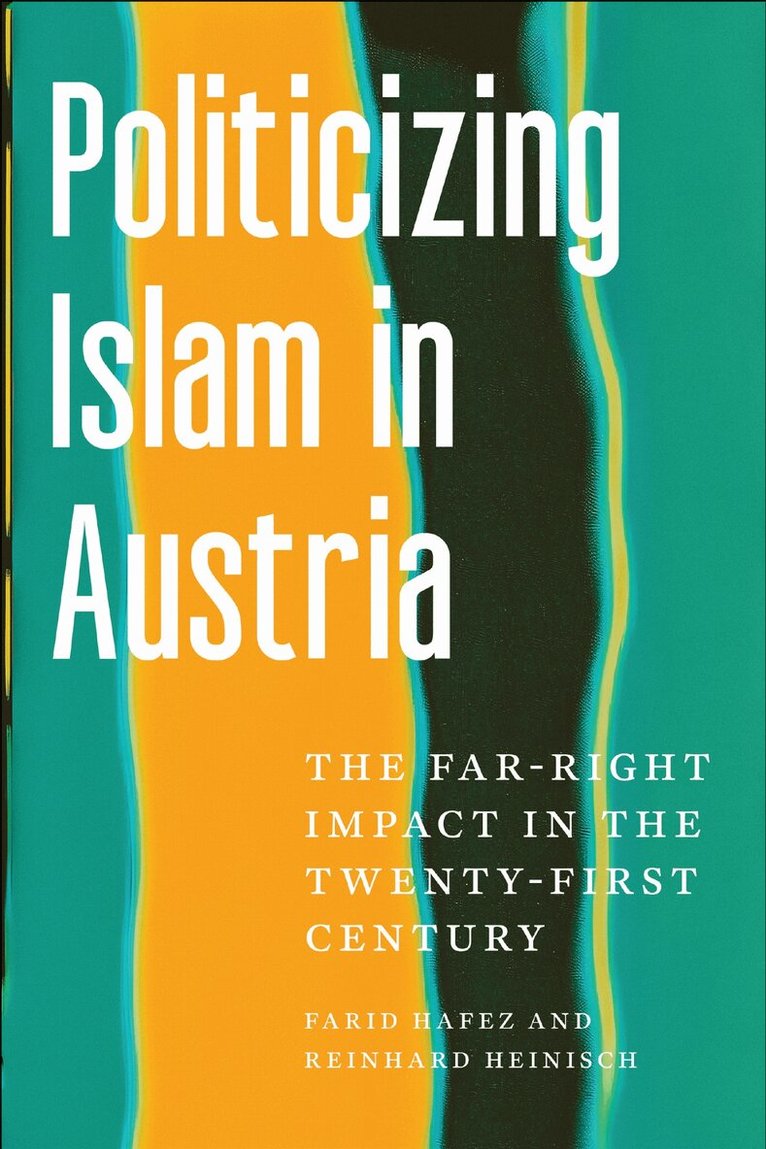
Among its Continental peers, Austria has stood out for its longstanding state recognition of the Muslim community as early as 1912. A shift has occurred more recently, however, as populist far-right voices within the Austrian government have redirected public discourse and put into question Islam’s previously accepted autonomous status within the country. Politicizing Islam in Austria examines this anti-Muslim swerve in Austrian politics through a comprehensive analysis of government policies and regulations, as well as party and public discourses. In their innovative study, Hafez and Heinisch show how the far-right Austrian Freedom Party (FPÖ) adapted anti-Muslim discourse to their political purposes and how that discourse was then appropriated by the conservative center-right Austrian People’s Party (ÖVP). This reconfiguration of the political landscape prepared the way for a right-wing coalition government between conservatives and far-right actors that would subsequently institutionalize anti-Muslim political demands and change the shape of the civic conditions and public perceptions of Islam and the Muslim community in the republic.
Politicizing Islam in Austria
The Far-Right Impact in the Twenty-First Century
Inbunden, Engelska, 2024
1 269 kr
Skickas inom 7-10 vardagar
Among its Continental peers, Austria has stood out for its longstanding state recognition of the Muslim community as early as 1912. A shift has occurred more recently, however, as populist far-right voices within the Austrian government have redirected public discourse and put into question Islam’s previously accepted autonomous status within the country. Politicizing Islam in Austria examines this anti-Muslim swerve in Austrian politics through a comprehensive analysis of government policies and regulations, as well as party and public discourses. In their innovative study, Hafez and Heinisch show how the far-right Austrian Freedom Party (FPÖ) adapted anti-Muslim discourse to their political purposes and how that discourse was then appropriated by the conservative center-right Austrian People’s Party (ÖVP). This reconfiguration of the political landscape prepared the way for a right-wing coalition government between conservatives and far-right actors that would subsequently institutionalize anti-Muslim political demands and change the shape of the civic conditions and public perceptions of Islam and the Muslim community in the republic.
Islamophober Populismus
Moschee- und Minarettbauverbote österreichischer Parlamentsparteien
Häftad, Tyska, 2010
452 kr
Skickas inom 10-15 vardagar
Österreichs Politik hat ein Thema, das alt und neu zugleich ist: Der Islam in Öst- reich. Inzwischen bereits die zweitgrößte Religionsgemeinschaft – allerdings weit abgeschlagen hinter der nach wie vor dominanten römisch-katholischen Kirche, hat der Islam aufgehört, ein bloßes Randphänomen mit exotischem Anstrich zu sein. Als Resultat einer Migration, die vor allem in den 1960er Jahren einsetzte, ist der Islam in Österreich sichtbar geworden. Und doch hat der Austro-Islam eine alte Tradition. Im Ersten Weltkrieg wurden moslemische Soldaten der österreichisch-ungarischen Armee von Militärimamen betreut. Diese gehörten ebenso zur Normalität der österreichisch-ungarischen Stre- kräfte wie christliche Pfarrer und die jüdischen Rabbiner. Schon vor 1914 hatte der Islam des „hanefitischen Ritus“ den Status einer staatlich anerkannten Religio- gesellschaft erhalten und war damit grundsätzlich auf einer Stufe mit den größeren Kirchen und der jüdischen Glaubensgemeinschaft. Doch der Islam heute wird von vielen in Österreich nicht als Teil pluralistischer Normalität, sondern als Bedrohung empfunden. Hier mischen sich freilich kultur- le und ethnische Bestimmungsfaktoren, die „Religion“ sagen – und nur zu oft etwas meinen, was nicht salonfähig ist, z.B. „Rasse“. Der Diskurs um den Islam in Österreich hat, weil dieser de facto heute weitgehend ein Produkt der Zuwanderung des letzten halben Jahrhunderts ist, eine eminente so- ale und sozialpsychologische Komponente. Ängste können mobilisiert werden: – Die Furcht vor dem sozialen Abstieg: Die „billigen“ Zuwanderer nehmen „uns“ die Arbeitsplätze weg. – Die Furcht vor abnehmender Berechenbarkeit des Lebens: Das Sozialgefüge in der Nachbarschaft verschiebt sich.
Islamisch-politische Denker
Eine Einfuehrung in die islamisch-politische Ideengeschichte
Häftad, Tyska, 2015
404 kr
Skickas inom 5-8 vardagar