
Farid Matuk – författare
Visar alla böcker från författaren . Handla med fri frakt och snabb leverans.
2 produkter
2 produkter
Häftad, Engelska, 2025
178 kr
Skickas inom 5-8 vardagar
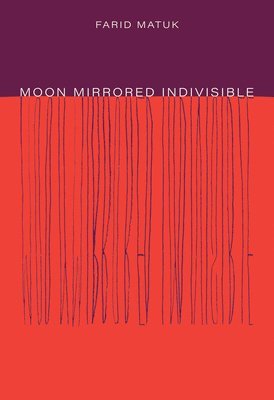
Multilayered lyric poems that resist systems of power and foster intimacy. An inheritor of lineages marked by colonial and gendered violence, Farid Matuk approaches the musical capacities of verse not as mere excitation or decoration, but as forms that reclaim pleasure and presence. Entering the sonic constellations of Moon Mirrored Indivisible, the reader finds relief from nesting layers of containment that systems of power impose on our bodies and imaginations. In this hall of historical mirrors, fictions of identity are refracted, reflected, and multiplied into a vast field of possibilities. Matuk’s meditations on place and power offer experiments in self-understanding, moving through expansive conversations between a lyric “I” and others, including poets, the speaker’s partner, ancestors, and the reader, and creating spaces for strange intimacy. Each of the book’s four sections of poems builds on the other to ask how we might form a collective—a people—not founded in orthodoxies of originality but in the mutual work of mirroring one another.
Häftad, Engelska, 2018
215 kr
Skickas inom 11-20 vardagar
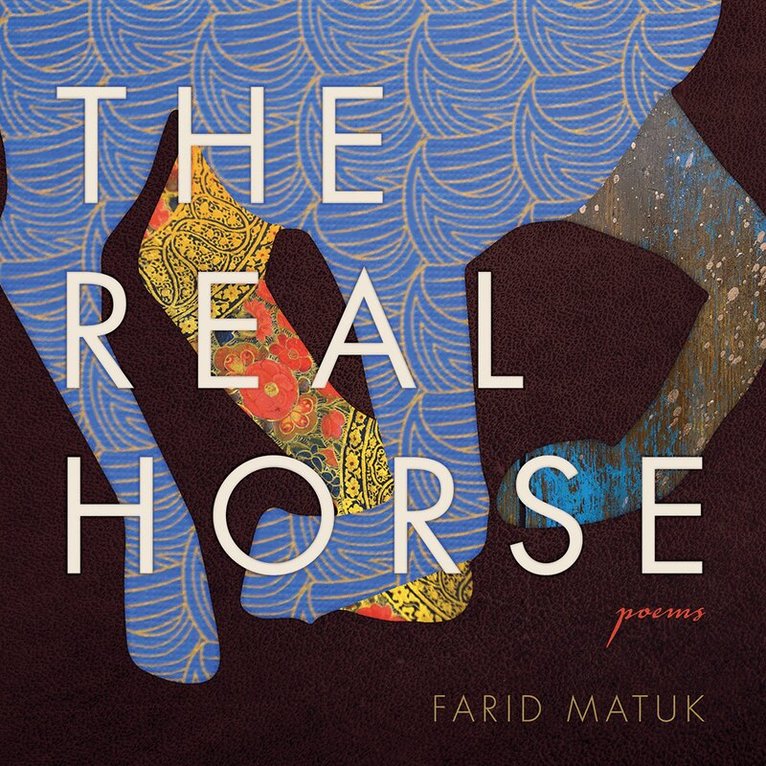
A sustained address to the poet’s daughter, The Real Horse takes its cues from the child’s unapologetic disregard for things as they are, calling forth the adult world as accountable for its flaws and as an occasion for imagining otherwise. Offering a handbook on the possibilities of the verse line, this collection is precise in its figuring, searching in its intellect, and alert in its music. Here lyric energy levitates into constellations that hold their analytic composure, inviting readers into a shared practice of thinking and feeling that interrogates the confounding intersections of gender, race, class, and national status not as abstract concepts but as foundational intimacies. Matuk’s interrogations of form cut a path through the tangle of a daughter’s position as a natural-born female citizen of the “First World” and of the poet’s position as a once-undocumented immigrant of mixed ethnicity whose paternity is unavoidably implicated in patriarchy. Rejecting nostalgia for homelands, notions of embodied value (self-made or otherwise), and specious ideas of freedom, these luminously multifaceted poem sequences cast their lot with the lyric voice, trusting it to hold a space where we might follow the child’s ongoing revolution against the patrimony of selfhood and citizenship.