Fatma Muge Gocek – författare
Visar alla böcker från författaren Fatma Muge Gocek. Handla med fri frakt och snabb leverans.
16 produkter
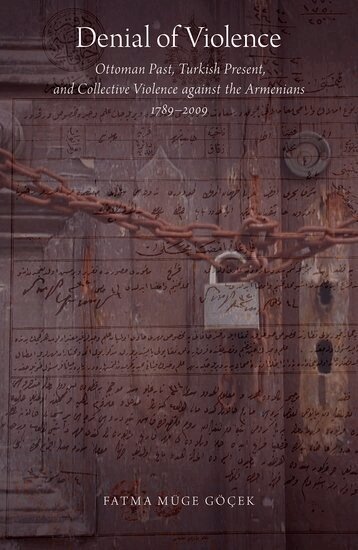
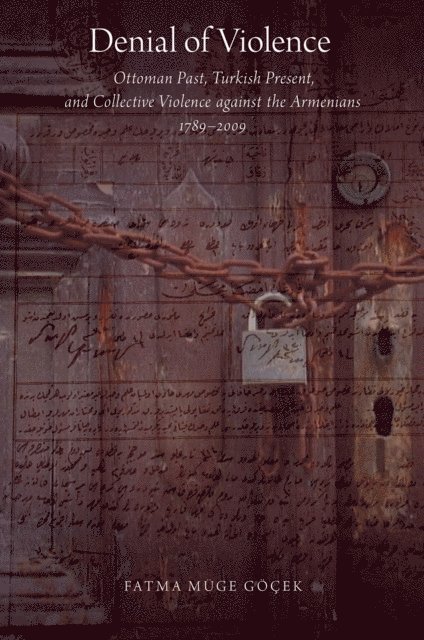
Denial of Violence
Ottoman Past, Turkish Present, and Collective Violence against the Armenians, 1789-2009
Häftad, 2016
1167 kr
Lägg i varukorg
While much of the international community regards the forced deportation of Armenian subjects of the Ottoman Empire in 1915, where approximately 800,000 to 1.5 million Armenians perished, as genocide, the Turkish state still officially denies it. In Denial of Violence, Fatma Müge Göçek seeks to …
Rise of the Bourgeoisie, Demise of Empire
Ottoman Westernization and Social Change
E-bok, 1996
1662 kr
Lägg i varukorg
What are the causes of imperial decline? This work studies the Ottoman empire in the 18th and 19th centuries to argue that the Ottoman imperial decline resulted from a combination of Ottoman internal dynamics with external influences. Specifically, it contends that the split within the Ottoman …
East Encounters West
France and the Ottoman Empire in the Eighteenth Century
E-bok, 1987
2199 kr
Lägg i varukorg
In 1720, an Ottoman ambassador was sent to the court of the Child King Louis XV to observe Western civilization and report on what he saw and how it could be applied in the Ottoman Empire. Based on the accounts of this ambassador, East Encounters West studies the impact of the West on the Ottoman …
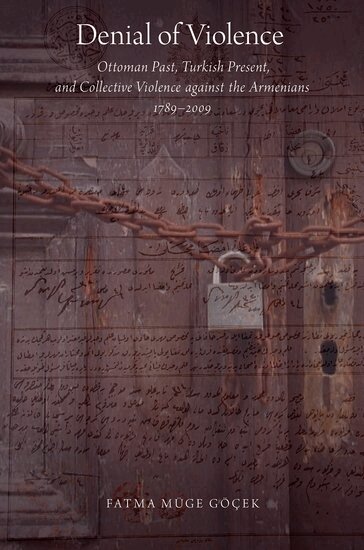
Denial of Violence
Ottoman Past, Turkish Present, and Collective Violence against the Armenians, 1789-2009
Inbunden, 2014
2186 kr
Lägg i varukorg
While much of the international community regards the forced deportation of Armenian subjects of the Ottoman Empire in 1915, where approximately 800,000 to 1.5 million Armenians perished, as genocide, the Turkish state still officially denies it. In Denial of Violence, Fatma Müge Göçek seeks to …
Denial of Violence
Ottoman Past, Turkish Present, and Collective Violence against the Armenians, 1789-2009
E-bok, 2014
812 kr
Lägg i varukorg
While much of the international community regards the forced deportation of Armenian subjects of the Ottoman Empire in 1915, where approximately 800,000 to 1.5 million Armenians perished, as genocide, the Turkish state still officially denies it. In Denial of Violence , Fatma Müge Göçek seeks to …
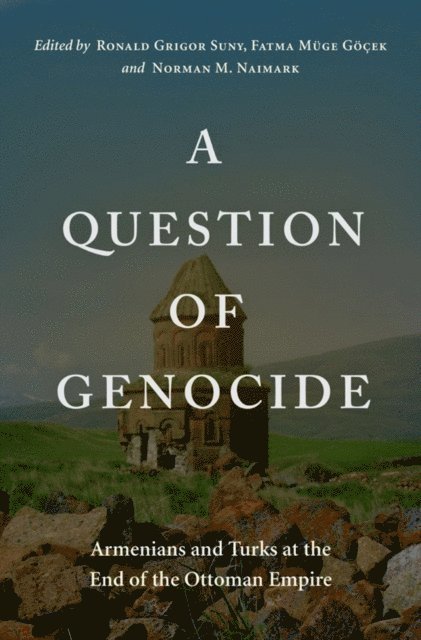
Question of Genocide
Armenians and Turks at the End of the Ottoman Empire
Av Norman M. Naimark, Fatma Muge Gocek m. fl.
E-bok, 2011
504 kr
Lägg i varukorg
One hundred years after the deportations and mass murder of Armenians, Greeks, Assyrians, and other peoples in the final years of the Ottoman Empire, the history of the Armenian genocide is a victim of historical distortion, state-sponsored falsification, and deep divisions between Armenians and …
Question of Genocide
Armenians and Turks at the End of the Ottoman Empire
Av Norman M. Naimark, Fatma Muge Gocek m. fl.
E-bok, 2011
504 kr
Lägg i varukorg
One hundred years after the deportations and mass murder of Armenians, Greeks, Assyrians, and other peoples in the final years of the Ottoman Empire, the history of the Armenian genocide is a victim of historical distortion, state-sponsored falsification, and deep divisions between Armenians and …
Reconstructing Gender in Middle East
Tradition, Identity, and Power
Av Fatma Muge Gocek, Balaghi Shiva
Häftad, 1995
264 kr
Lägg i varukorg
Employing a broad, interdisciplinary perspective on gender relations, "Reconstructing Gender in the Middle East" questions long-standing stereotypes about the traditional subordination of women in the region. With essays on gender construction in Iran, Turkey, Israel, Morocco, Egypt, Lebanon, and …
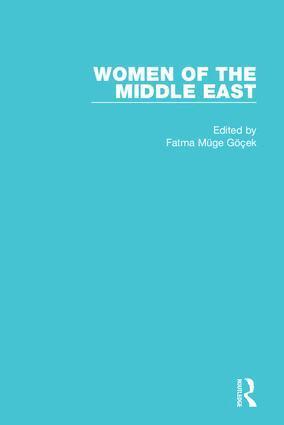
Women of the Middle East
2015
23357 kr
Lägg i varukorg
The academic study of women in the Middle East grew from traditional branches of learning such as history, anthropology, politics, and literary studies. More recently, it has incorporated cutting-edge areas of academic endeavour, including critical theory and new thinking on sexuality, labour, …
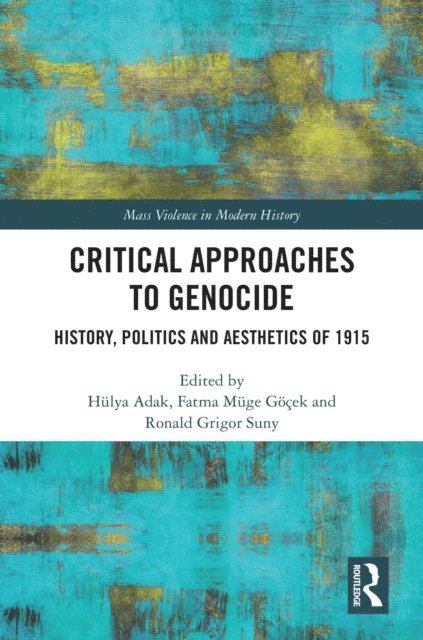
Critical Approaches to Genocide
History, Politics and Aesthetics of 1915
Av Ronald Grigor Suny, Fatma Muge Gocek m. fl.
E-bok, 2023
838 kr
Lägg i varukorg
The study of genocide has been appropriate in emphasizing the centrality of the Holocaust; yet, other preceding episodes of mass violence are of great significance. Taking a transnational and transhistorical approach, this volume redresses and replaces the silencing of the Armenian Genocide. …
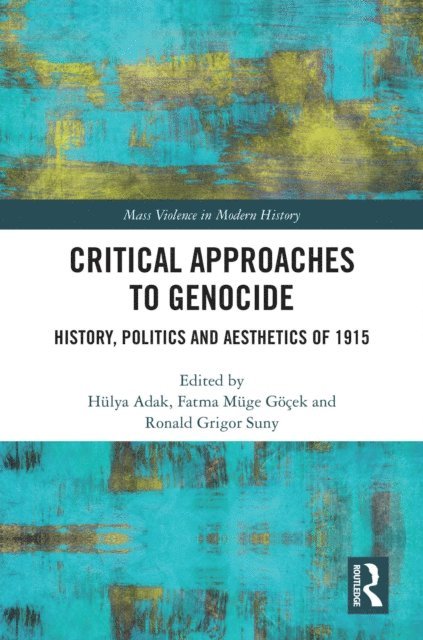
Critical Approaches to Genocide
History, Politics and Aesthetics of 1915
Av Ronald Grigor Suny, Fatma Muge Gocek m. fl.
E-bok, 2023
856 kr
Lägg i varukorg
The study of genocide has been appropriate in emphasizing the centrality of the Holocaust; yet, other preceding episodes of mass violence are of great significance. Taking a transnational and transhistorical approach, this volume redresses and replaces the silencing of the Armenian Genocide. …
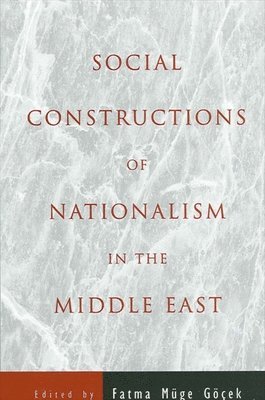
Social Constructions of Nationalism in the Middle East
Häftad, 2002
463 kr
Lägg i varukorg
A comparative analysis of the social and cultural dimensions of nationalism in the Middle East.While Middle Eastern nationalism is most often examined from the political viewpoint, this book adds a fresh perspective by exploring the social and cultural dimensions. Although most scholars agree that …
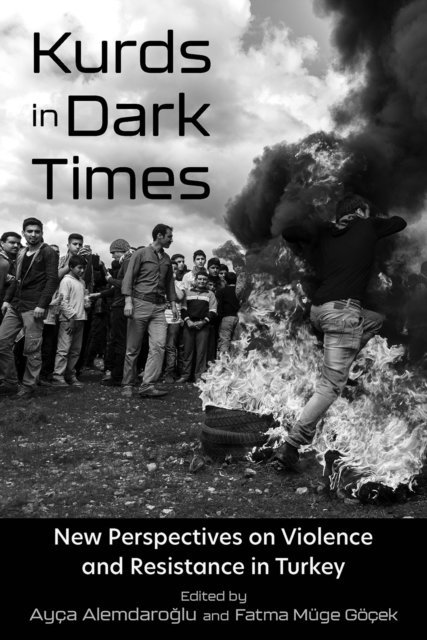
Kurds in Dark Times
New Perspectives on Violence and Resistance in Turkey
Av Fatma Muge Gocek, Ayca Alemdaroglu
E-bok, 2023
589 kr
Lägg i varukorg
With an estimated population of 35 million, Kurds are the largest ethnic group in the world without an independent state of their own. Kurds constitute about 20 percent of Turkey, the largest Kurdish population in the region. The history of the Kurds in Turkey is marked by state violence against …
Cultural Violence and the Destruction of Human Communities
New Theoretical Perspectives
Av Fatma Muge Gocek, Fiona Greenland
E-bok, 2020
831 kr
Lägg i varukorg
This volume brings together leading sociologists and anthropologists to break new ground in the study of cultural violence. First sketched in Raphael Lemkin’s seminal writings on genocide, and later systematically defined by peace studies scholar Johan Galtung, the concept of cultural violence …
Cultural Violence and the Destruction of Human Communities
New Theoretical Perspectives
Av Fatma Muge Gocek, Fiona Greenland
E-bok, 2020
807 kr
Lägg i varukorg
This volume brings together leading sociologists and anthropologists to break new ground in the study of cultural violence. First sketched in Raphael Lemkin’s seminal writings on genocide, and later systematically defined by peace studies scholar Johan Galtung, the concept of cultural violence …
Social Constructions of Nationalism in the Middle East
Inbunden, 2002
1111 kr
Tillfälligt slut
A comparative analysis of the social and cultural dimensions of nationalism in the Middle East.While Middle Eastern nationalism is most often examined from the political viewpoint, this book adds a fresh perspective by exploring the social and cultural dimensions. Although most scholars agree that …