Faye Duchin - Böcker
Visar alla böcker från författaren Faye Duchin. Handla med fri frakt och snabb leverans.
2 produkter
2 produkter
948 kr
Skickas inom 5-8 vardagar
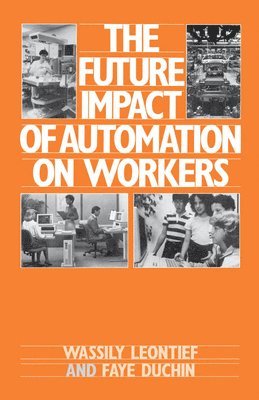
While the computer revolution has created hundreds of thousands of new jobs, it has threatened as many other jobs with obsolescence and has often caused the displacement of workers by computer-based machines. Here, Nobel Prize-winning economist Wassily Leontief and Faye Duchin use the input-output approach, a method that has been widely applied in examining structural economic change, to analyze the complex issues surrounding the impact of computer-driven automationon employment. Following a general discussion of the impact of automation on employment, they focus on four specific sectors within the economy--manufacturing, office work, education, and health care.The input-output approach makes it possible to draw conclusions regarding both overall employment and the prospects for individual occupations. Taking account of the increased need for workers in the production of computer-based equipment, the authors conclude that by the year 2000 automation will not cause dramatic unemployment if the economy is able to achieve a smooth transition from the old to new technologies.
1 391 kr
Skickas inom 5-8 vardagar
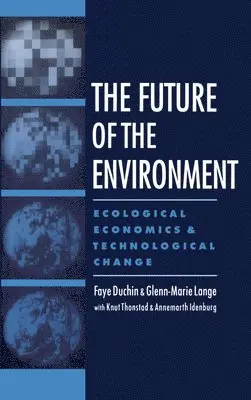
One of the most important and complex problems facing both developing and industrialized nations is how to sustain economic growth without harming the environment. Faye Duchin and Glenn-Marie Lange address this issue in a practical and realistic way: through a detailed evaluation of the well-known approach to sustainable development outlined in the Brundtland Report, Our Common Future. Taking issue with the Brundtland Report's optimistic and widely accepted assumptions, the authors show that the positive effects of recycling, increased fuel-efficiency, and other technological adjustments will not go far enough to provide for truly sustainable development in the long term. Through a new, broad-based empirical analysis, they argue that unless there are significant changes in the use of technologies, continued environmental degradation cannot be avoided. They warn that the trend of making only slight adjustments in the use of technologies, while feasible from an economic point of view for industrialized nations, will undoubtedly lead to further environmental damage. In addition to offering a clear and unflinching look at what development is really doing to the global environment, the unique conceptual framework developed for this analysis provides an invaluable basis for analysis for the new, multidisciplinary field of ecological economics. Duchin and Lange describe how this new methodology will enable economists and policy-makers to evaluate our options for the future and choose those that most effectively reduce environmental degradation and achieve sustainable development.