Federico Barbierato – författare
Visar alla böcker från författaren Federico Barbierato. Handla med fri frakt och snabb leverans.
7 produkter
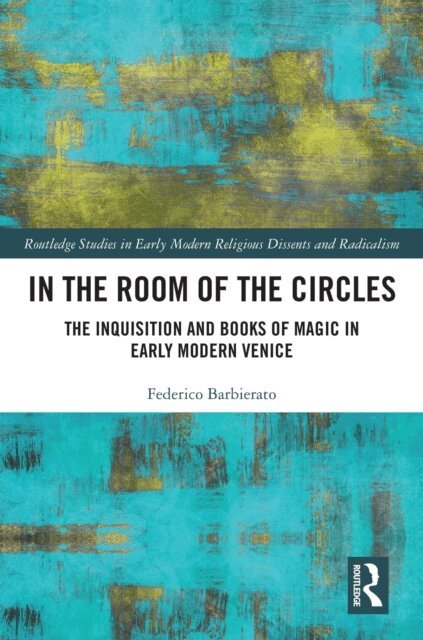
In the Room of the Circles
The Inquisition and Books of Magic in Early Modern Venice
E-bok, 2025
935 kr
Lägg i varukorg
This book investigates the circulation, regulation, and interpretation of magical texts, focusing on the Clavicula Salomonis (Key of Solomon), one of the most sought-after and feared books of the time. Drawing on inquisitorial records, trial proceedings, and archival sources, Federico Barbierato …
In the Room of the Circles
The Inquisition and Books of Magic in Early Modern Venice
E-bok, 2025
831 kr
Lägg i varukorg
This book investigates the circulation, regulation, and interpretation of magical texts, focusing on the Clavicula Salomonis (Key of Solomon), one of the most sought-after and feared books of the time. Drawing on inquisitorial records, trial proceedings, and archival sources, Federico Barbierato …
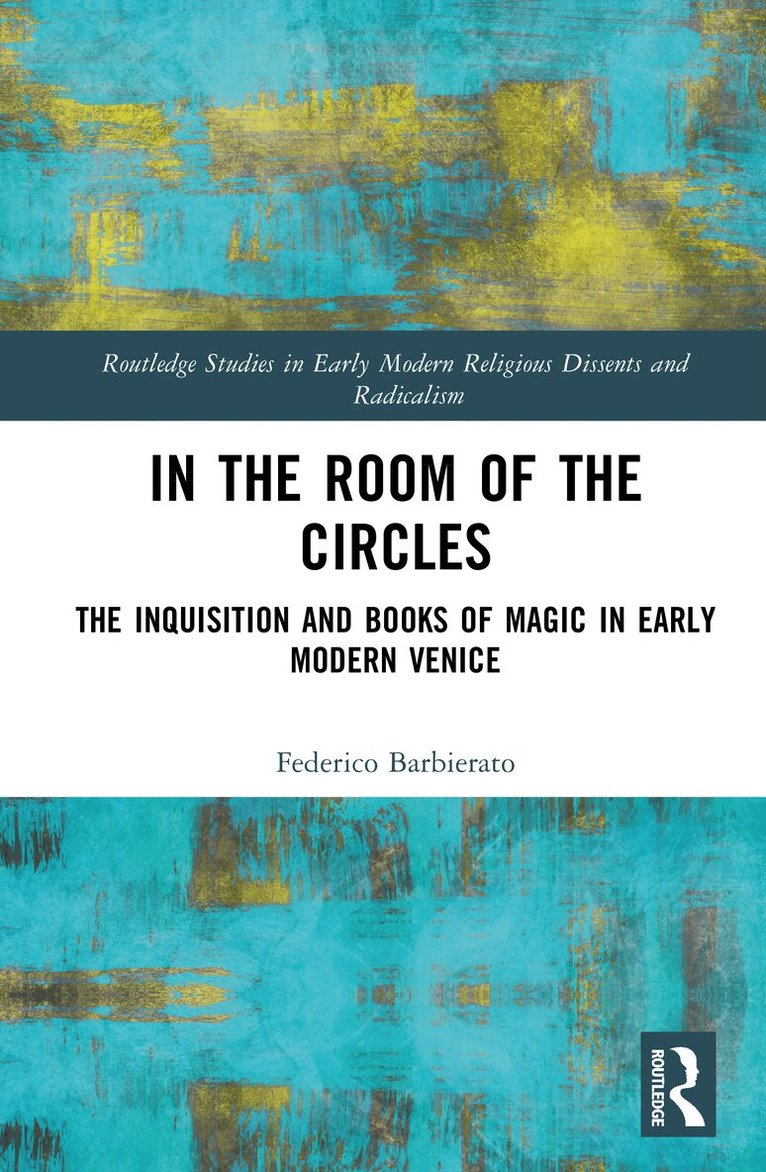
In the Room of the Circles
The Inquisition and Books of Magic in Early Modern Venice
Inbunden, 2025
2504 kr
Lägg i varukorg
This book investigates the circulation, regulation, and interpretation of magical texts, focusing on the Clavicula Salomonis (Key of Solomon), one of the most sought-after and feared books of the time. Drawing on inquisitorial records, trial proceedings, and archival sources, Federico Barbierato …
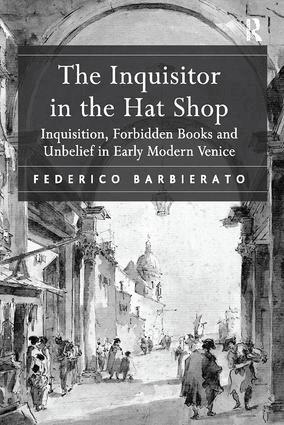
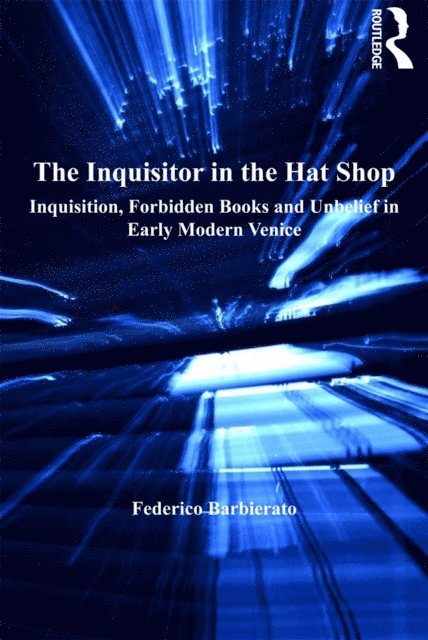
Inquisitor in the Hat Shop
Inquisition, Forbidden Books and Unbelief in Early Modern Venice
Häftad, 2017
785 kr
Lägg i varukorg
Early modern Venice was an exceptional city. Located at the intersection of trade routes and cultural borders, it teemed with visitors, traders, refugees and intellectuals. It is perhaps unsurprising, then, that such a city should foster groups and individuals of unorthodox beliefs, whose views and …
Inquisitor in the Hat Shop
Inquisition, Forbidden Books and Unbelief in Early Modern Venice
E-bok, 2016
881 kr
Lägg i varukorg
Early modern Venice was an exceptional city. Located at the intersection of trade routes and cultural borders, it teemed with visitors, traders, refugees and intellectuals. It is perhaps unsurprising, then, that such a city should foster groups and individuals of unorthodox beliefs, whose views and …
Inquisitor in the Hat Shop
Inquisition, Forbidden Books and Unbelief in Early Modern Venice
E-bok, 2016
881 kr
Lägg i varukorg
Early modern Venice was an exceptional city. Located at the intersection of trade routes and cultural borders, it teemed with visitors, traders, refugees and intellectuals. It is perhaps unsurprising, then, that such a city should foster groups and individuals of unorthodox beliefs, whose views and …
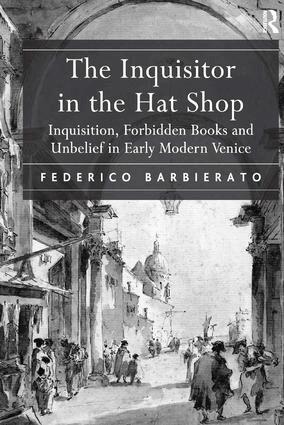
Inquisitor in the Hat Shop
Inquisition, Forbidden Books and Unbelief in Early Modern Venice
Inbunden, 2012
2818 kr
Lägg i varukorg
Early modern Venice was an exceptional city. Located at the intersection of trade routes and cultural borders, it teemed with visitors, traders, refugees and intellectuals. It is perhaps unsurprising, then, that such a city should foster groups and individuals of unorthodox beliefs, whose views and …