Fernando Bouza – författare
Visar alla böcker från författaren Fernando Bouza. Handla med fri frakt och snabb leverans.
8 produkter
Communication, Knowledge, and Memory in Early Modern Spain
Inbunden, 2004
572 kr
Lägg i varukorg
In a provocative attempt to outline a history of communication during the Spanish Golden Age, Communication, Knowledge, and Memory in Early Modern Spain examines how speech, visual images, and written texts all interact as manifestations of the human desire to know and remember. Seeking to address …
Iberian World
1450–1820
Av Antonio Feros, Pedro Cardim m. fl.
E-bok, 2019
907 kr
Lägg i varukorg
The Iberian World: 1450–1820 brings together, for the first time in English, the latest research in Iberian studies, providing in-depth analysis of fifteenth- to early nineteenth-century Portugal and Spain, their European possessions, and the African, Asian, and American peoples that were under …
Iberian World
1450–1820
Av Antonio Feros, Pedro Cardim m. fl.
E-bok, 2019
907 kr
Lägg i varukorg
The Iberian World: 1450–1820 brings together, for the first time in English, the latest research in Iberian studies, providing in-depth analysis of fifteenth- to early nineteenth-century Portugal and Spain, their European possessions, and the African, Asian, and American peoples that were under …
Iberian World
1450–1820
Av Fernando Bouza, Pedro Cardim m. fl.
Häftad, 2021
787 kr
Lägg i varukorg
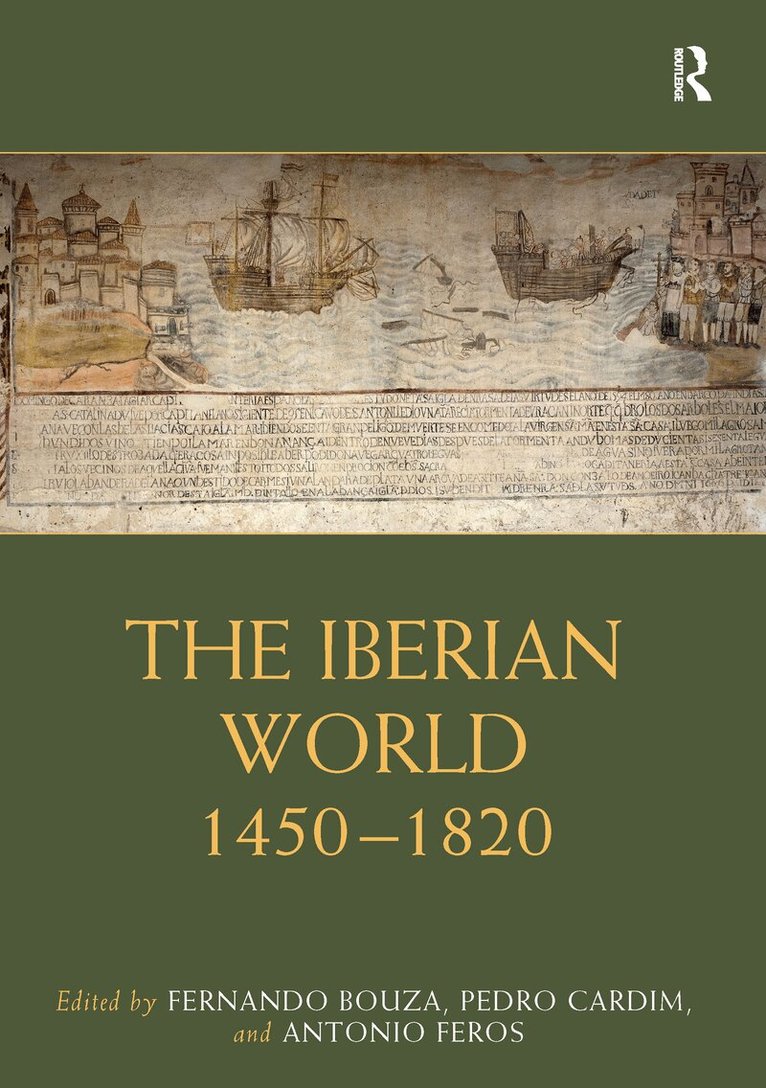
The Iberian World: 1450–1820 brings together, for the first time in English, the latest research in Iberian studies, providing in-depth analysis of fifteenth- to early nineteenth-century Portugal and Spain, their European possessions, and the African, Asian, and American peoples that were under …
Iberian World
1450–1820
Av Fernando Bouza, Pedro Cardim m. fl.
Inbunden, 2019
3906 kr
Lägg i varukorg
The Iberian World: 1450–1820 brings together, for the first time in English, the latest research in Iberian studies, providing in-depth analysis of fifteenth- to early nineteenth-century Portugal and Spain, their European possessions, and the African, Asian, and American peoples that were under …
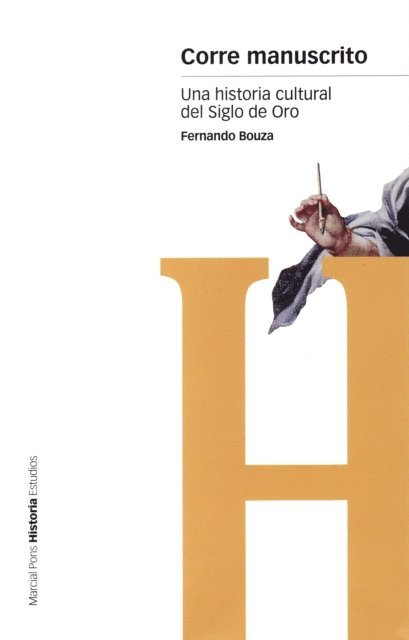
Corre manuscrito
Una historia cultural del Siglo de Oro
E-bok, 2016
109 kr
Lägg i varukorg
La circulación de manuscritos es un fenómeno que alcanzó una dimensión considerable en la España de los siglos XVI y XVII, aunque, por desgracia, no suele figurar como merece en los estudios sobre la cultura del Siglo de Oro, centrados especialmente en trazar los innegables progresos de la …
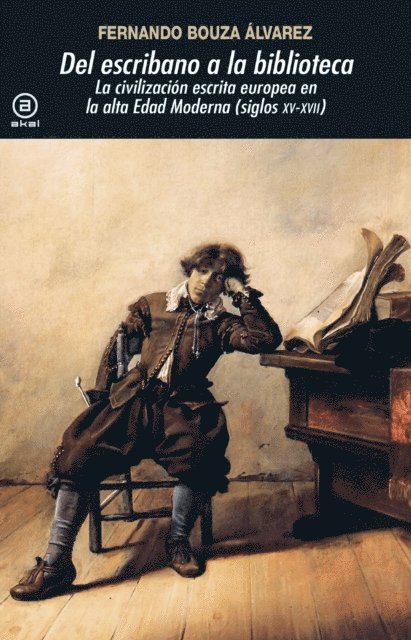
Del escribano a la biblioteca
La civilización escrita europea en la Alta Edad Moderna (siglos XV-XVII)
E-bok, 2018
113 kr
Lägg i varukorg
Entre los siglos XVy XVII, Europa asistió a la construcción de una civilización escrita gracias sobre todo al progresivo afianzamiento de la escritura como medio de difusión del conocimiento. Para seguir la progresiva implantación de una civilización escrita en Europa se ha elegido lo que se podría …
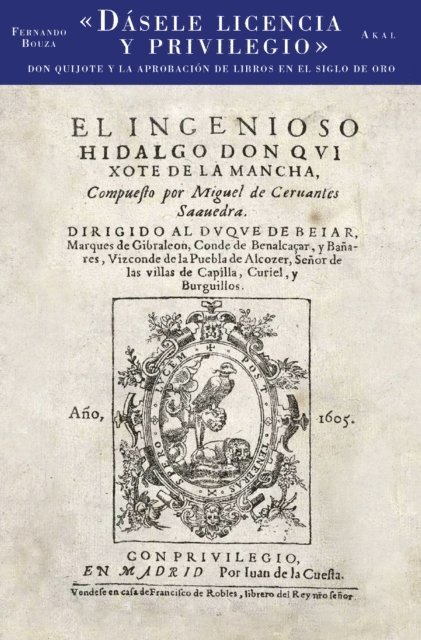
Dásele licencia y privilegio
Don Quijote y la aprobación de libros en el Siglo de Oro
E-bok, 2020
91 kr
Lägg i varukorg
Todo empezó con un simple memorial de petición para imprimir un libro firmado por Miguel de Cervantes que fue elevado al Consejo Real de Castilla a través de la secretaría de Juan Gallo y del que el alto tribunal de gobierno empezó a ocuparse el 20 de julio de 1604. El consejero Gil Ramírez de …