Fernando Degiovanni – författare
Visar alla böcker från författaren Fernando Degiovanni. Handla med fri frakt och snabb leverans.
4 produkter
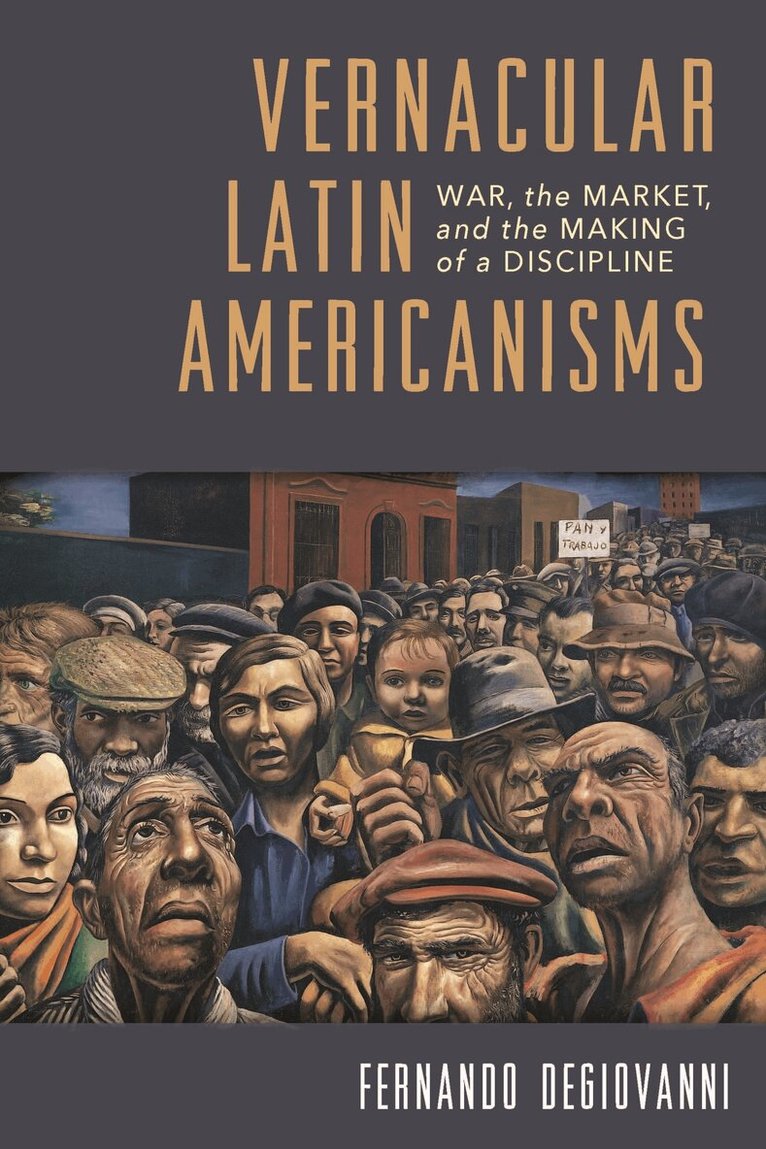
Vernacular Latin Americanisms
War, the Market, and the Making of a Discipline
Häftad, 2018
965 kr
Lägg i varukorg
In Vernacular Latin Americanisms, Fernando Degiovanni offers a long-view perspective on the intense debates that shaped Latin American studies and still inform their function in the globalized and neoliberal university of today. By doing so he provides a reevaluation of a field whose …
Latin American Literature in Transition 1870-1930
Av Fernando Degiovanni, Javier Uriarte
Inbunden, 2022
1872 kr
Lägg i varukorg
Latin American Literature in Transition 1870-1930 examines how the circulation of goods, people, and ideas permeated every aspect of the continent's cultural production at the end of the nineteenth century. It analyzes the ways in which rapidly transforming technological and labour conditions …
Latin American Literature in Transition 1870-1930
Av Javier Uriarte, Fernando Degiovanni
E-bok, 2022
1856 kr
Lägg i varukorg
Latin American Literature in Transition 1870-1930 examines how the circulation of goods, people, and ideas permeated every aspect of the continent''s cultural production at the end of the nineteenth century. It analyzes the ways in which rapidly transforming technological and labour conditions …
Latin American Literature in Transition 1870-1930
Av Javier Uriarte, Fernando Degiovanni
E-bok, 2022
1856 kr
Lägg i varukorg
Latin American Literature in Transition 1870-1930 examines how the circulation of goods, people, and ideas permeated every aspect of the continent''s cultural production at the end of the nineteenth century. It analyzes the ways in which rapidly transforming technological and labour conditions …